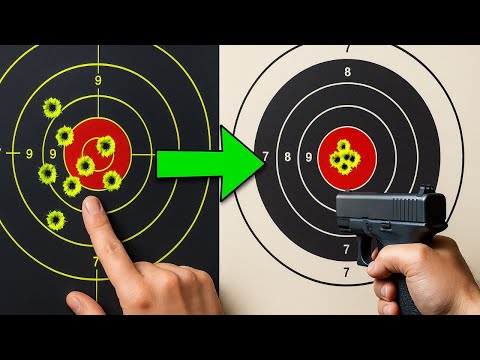
UNBELIEVABLE Pistol Accuracy with ONE Simple Adjustment

Published on April 21, 2026
Duration: 10:32

This video details the 'crush grip' technique, a method used by legendary shooters like Bill Jordan and Rob Leatham, to combat low-left misses caused by sympathetic movement. By maximizing grip pressure with all non-trigger fingers, shooters can stabilize the hand and allow the trigger finger to operate in isolation, leading to significantly tighter groups. The guide includes specific dry fire and live fire drills to ingrain this technique.


Quick Summary

The 'low left' shooting error in pistols is often caused by sympathetic movement, where hand and forearm muscles fire together during the trigger pull. The 'crush grip' technique, advocated by experts like Bill Jordan and Rob Leatham, combats this by maximizing grip pressure with all non-trigger fingers, stabilizing the hand and allowing the trigger finger to move in isolation for improved accuracy.

Chapters

  1. 00:00Introduction: The Low Left Problem
  2. 00:34The Overnight Change: Grip Tweak
  3. 00:59Understanding Sympathetic Movement
  4. 01:15Fighting Anatomy vs. Working With It
  5. 01:25Total Grip Pressure: The Key
  6. 01:45Grip Drills and Group Improvement
  7. 01:59Why We Miss Low Left Explained
  8. 02:10Sympathetic Movement and Enslaving Effect
  9. 02:37Proving the Twitch: Middle Finger Test
  10. 02:54Grip as Part of the Trigger System
  11. 03:00Dry Fire and One-Handed Drills
  12. 03:11Universality Across Pistols and Calibers
  13. 03:29Why Common Fixes Aren't Enough
  14. 03:32Slowing Trigger vs. Grip Isolation
  15. 04:02The Hand as a System
  16. 04:05Maxing Pressure to Stabilize
  17. 04:13Coaches Teach Isolation and Pressure
  18. 04:25The Combo: Grip and Trigger Interaction
  19. 04:30Competition Drills and Focused Practice
  20. 04:32Noticing Sight Wobble Drop
  21. 04:34Expect Shaking, Then Steadying
  22. 04:40Trigger Finger Relaxed, Non-Trigger Fingers Crushing
  23. 04:46One-Handed Strength and Ball/Dummy
  24. 04:56Train the Hand as One System
  25. 05:03The One Grip Change
  26. 05:06Locking Down the Crush Grip
  27. 05:13Grip Details: Squeeze Hard
  28. 05:21Stabilizing Hand Structure
  29. 05:27Competitive Shooter Insights
  30. 05:34Independent Trigger Finger Movement
  31. 05:39Creating a Rigid Platform
  32. 05:44Equalizing Tension
  33. 05:47Strong Hand Placement
  34. 05:52Support Hand Wrap and Thumbs
  35. 05:57Squeeze Until Forearms Tense
  36. 06:0360/40 Pressure Split
  37. 06:16Why the Crush Grip Works
  38. 06:20Making Sympathetic Movement Impossible
  39. 06:26Tricking the Nervous System
  40. 06:29Obvious Results: Dry Fire and Live Fire
  41. 06:33Muzzle Stays Still
  42. 06:37Recoil Impulse Felt Cleaner
  43. 06:39Heavier Calibers Snap Straight Up
  44. 06:46Faster Split Times
  45. 06:50Biomechanics Confirm Grip Pressure Benefits
  46. 06:58Trembling is Muscle Adaptation
  47. 07:05Full Power Grip Becomes Natural
  48. 07:13The Training Plan
  49. 07:16Start with Dry Fire
  50. 07:25Building the Motor Pathway
  51. 07:28Ball and Dummy Work
  52. 07:33Exposing Recoil Anticipation and Flinch
  53. 07:39Three Magazines: Live and Dummy
  54. 07:43One-Handed Drills are Essential
  55. 07:46Strong Hand Only and Support Hand Only
  56. 07:50Developing Isolation and Wrist Strength
  57. 07:555 by 10 Per Hand, Twice Weekly
  58. 07:58Accelerating Grip Consistency
  59. 08:02Simple Live Fire Progression
  60. 08:04Slow Aim Shots
  61. 08:09Controlled Normal Pace
  62. 08:11Introduce Reloads or Movement
  63. 08:13Track Groups and Log Changes
  64. 08:16Weekly Benchmarks: Dry Reps and Ball/Dummy
  65. 08:24If Your Hands Tremble
  66. 08:27Reduce Session Length, Add Strength Work
  67. 08:31Stick With the Plan for Measurable Results
  68. 08:40Results, Pitfalls, and Close
  69. 08:43Day One Results: Tighter Groups, Calmer Sight
  70. 08:50Expect Tremors at First
  71. 08:55Shorten Sets, Rest Between Reps
  72. 09:03Track Groups with Tape or Grid
  73. 09:06Log Horizontal and Vertical Dispersion
  74. 09:09Method Works Across Pistols and Calibers
  75. 09:16From 8-Inch to 3-Inch Groups
  76. 09:20Avoid Common Mistakes
  77. 09:22Don't Let Trigger Finger Curl
  78. 09:30Watch Thumb Placement
  79. 09:35Resist Support Hand Overpowering
  80. 09:39Aim for Balanced Pressure
  81. 09:42Trigger Reset Work
  82. 09:48Simple Timeline: Week One
  83. 09:59Week Two: Controlled Live Magazines
  84. 10:03Month One: Crush Grip Automatic
  85. 10:07Recoil Return and Split Times Improve
  86. 10:09Measure, Log, and Adjust
  87. 10:16Diagnose Problems and Improve Together
  88. 10:19Next Clip: Common Errors in Slow Motion

Frequently Asked Questions

What causes the common 'low left' shooting error in pistols?

The 'low left' error is primarily caused by sympathetic movement, where the muscles and tendons in the hand and forearm fire together when the trigger is pulled. This involuntary action prevents the index finger from moving in true isolation, leading to a slight pull of the firearm off target.

How does the 'crush grip' technique improve pistol accuracy?

The crush grip involves squeezing the pistol as hard as possible with all non-trigger fingers. This maximizes pressure in the flexor muscles, stabilizing the hand and wrist. This stabilization allows the trigger finger to operate independently, preventing the sympathetic movements that cause misses.

What are effective drills for practicing the crush grip?

Effective drills include dry fire with a focus on a steady sight picture through the trigger break, ball and dummy drills to expose flinching, and one-handed shooting exercises to build isolation and grip strength. Live fire progression from slow shots to faster drills reinforces the technique.

Can the crush grip technique be applied to different pistol calibers?

Yes, the crush grip technique is universally applicable across various pistol calibers, from small .22LR to larger .45 ACP or .357 Magnum. The underlying hand anatomy and tendon coupling are the same, meaning the principle of stabilizing the hand through maximum non-trigger finger pressure remains effective.

More Training & Techniques Videos You Might Like

More from Line45

View all →