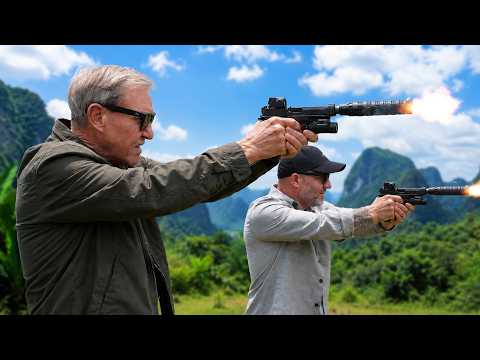
What drill do I do?

Published on August 16, 2024
Duration: 4:22

This video by Ben Stoeger explains that the effectiveness of a shooting drill is not inherent to the drill itself, but rather how it's used to address specific shooting flaws. Competent shooters don't ask 'what drill to fix X,' but rather identify their issue and consciously focus on the corrective cue during any relevant shooting activity. The drill's purpose is to set conditions that highlight or punish specific errors, allowing for focused practice.


Quick Summary

Ben Stoeger advises that the key to fixing shooting flaws isn't finding the 'right' drill, but rather identifying your specific error and consciously focusing on a corrective cue during any shooting. Drills are valuable for setting conditions that expose or penalize these errors, facilitating targeted practice and habit change.

Chapters

  1. 00:01Introduction: The Common Question
  2. 00:29Example 1: Pushing Down on the Gun
  3. 01:28Fixing the Flaw: Conscious Focus
  4. 01:32Example 2: Throwing the Gun
  5. 02:15The Drill's True Purpose
  6. 02:30How Drills Set Conditions
  7. 03:03Transition Drill Example
  8. 03:13Accuracy Drill Example
  9. 03:45Understanding Your Own Needs
  10. 04:08Conclusion: Focus on Cues, Not Just Drills

Frequently Asked Questions

What is the most effective way to fix a shooting flaw according to Ben Stoeger?

Ben Stoeger emphasizes that instead of asking for a specific drill, you should identify your shooting flaw and then consciously focus on a corrective cue while performing any relevant shooting activity. The drill's role is to create conditions that highlight or punish that specific error, allowing for targeted practice and habit change.

Why is asking 'what drill should I do?' often the wrong question for improving shooting?

According to Ben Stoeger, asking 'what drill should I do?' implies a lack of understanding about how to diagnose and correct personal shooting issues. Competent shooters know that the drill's value is in setting conditions to address their specific problem, not in being a universal solution. The focus should be on the corrective cue, not the drill itself.

How do shooting drills help improve marksmanship?

Shooting drills are effective because they set specific conditions that either highlight or punish particular shooting flaws. For example, a drill with fast transitions between close targets will naturally expose transition-related problems, while a precision drill at distance can punish aggressive trigger manipulation. The drill creates the environment for focused practice on a specific issue.

What is a common shooting error related to recoil management?

A very common shooting error is pushing down into the gun to anticipate recoil. This action, often done unconsciously, can cause the shooter to 'shank' the shot, significantly impacting accuracy. To correct this, one must consciously focus on keeping the hand steady during the shot release.

More Training & Techniques Videos You Might Like

More from Ben Stoeger

View all →