This comprehensive video delves into the iconic Colt Single Action Army (SAA) revolver, exploring its history, evolution, and cultural impact. It covers the SAA's lineage from early Colt revolvers, its adoption by the US military, and its enduring legacy as the 'gun that won the West.' The video also features detailed discussions on various SAA configurations, historical context, shooting techniques, and its prominent role in popular culture, particularly Western films.
This video showcases the highly decorated Model 1869 Gasser revolver, a massive firearm from the late 1800s. While historically used by the Austro-Hungarian Empire, many were later customized. The speaker, representing Legacy Collectibles, highlights its ornate silver engraving and jeweled grips, noting its poor mechanical condition despite its extravagant appearance.
This guide details the field stripping process for the Mazzocchi Pinfire Revolver, a 9mm single-action firearm used by the Papal Gendarmerie. It highlights unique features like the upward-lifting loading gate and the lanyard ring serving as an ejector rod. The disassembly process, influenced by Lefaucheux designs, involves unscrewing the barrel and removing a side plate to access internal V-springs. Expert instruction is provided on handling these delicate components.
This guide details the disassembly and reassembly of the British Enfield MkI revolver, focusing on its complex lockwork and unique extraction system. It highlights the modified Warnant mechanism, the role of the fifth component, and the selective extraction feature. Proper tools and caution are advised due to the intricate nature of the firearm's internal components.
This entry details the Smith & Wesson No. 3 New Model, Japan's first military revolver adopted in 1878. Expert Ian McCollum highlights its historical significance, adoption context following Commodore Perry's arrival, and the extensive import history. The entry covers model variations, specific naval markings like the Kure Naval Base anchor, and the revolver's enduring service through WWII, underscoring its robust design and importance in Japanese military history.
This expert-level review details the S&W No. 3 Russian Revolver manufactured at the Tula Arsenal. It highlights the revolver's unique features like the grip knuckle and finger hook, its top-break action with automatic ejection, and its historical context as a cavalry sidearm. The review also touches upon its caliber, production period, and rarity in the US market.
This guide, based on insights from hickok45, details essential maintenance for firearms with distressed or 'no finish' aesthetics, focusing on rust prevention. It emphasizes the importance of regular lubrication with products like Ballistol to protect exposed metal. hickok45, with his extensive shooting experience and historical firearm knowledge, provides practical advice for preserving the unique look and functionality of these replicas.
This video provides an expert-level look at a rare Winchester Swing-Out Cylinder Revolver from the 1870s, presented by firearms historian Keith Ford. The demonstration highlights its unique right-side swing-out cylinder, superior mechanics compared to the Colt SAA, and historical context, including patent agreements of the era. It's noted as one of only four known examples with this feature.
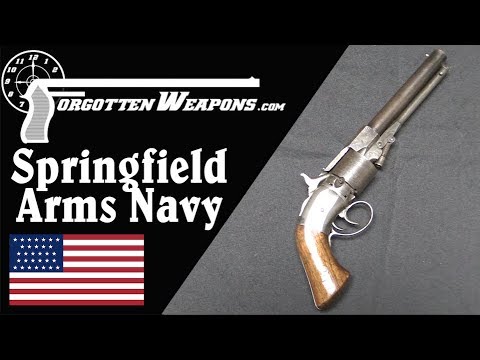
This guide details the simple field stripping procedure for the Springfield Arms Double Trigger Navy Revolver, as demonstrated by Ian McCollum. The process involves removing a single screw, rotating the barrel, and sliding it off the frame, allowing access to the internal 'hand' mechanism. This is a rare example of 19th-century American firearm design and manufacturing.
This entry details the mechanical operation of the Smith & Wesson No. 3 Russian revolver, focusing on its top-break action, single-action mechanism, and automatic ejection system as shown in a 3D animation. It also touches upon the historical context of its development, including the crucial Rollin White patent and the evolution of Russian variants. The information is presented with a high degree of technical detail, reflecting the channel's recognized authority on historical firearms.
This guide details the operation and disassembly of the rare Butterfield Army Revolver, focusing on its innovative automatic pellet priming system. Expert Ian McCollum demonstrates the mechanism, its advantages in preventing jams, and its disadvantages regarding primer fragility and water resistance. The video also covers the revolver's basic specifications, patent markings, and historical production context, highlighting its significance as a collector's item due to limited production runs.
This entry details the unique forward-sliding barrel and cylinder extraction mechanism of the Russian M1870 Galand Revolver, as explained by firearms expert Ian McCollum. It covers the historical context, production details, and mechanical operation of this rare firearm, highlighting its innovative design compared to contemporary revolvers. The information is presented with high authority, drawing on deep historical and mechanical knowledge.
Gun Laws by State
Read firearms regulations for all 50 states + D.C.
Find Gun Dealers
Search licensed FFL dealers near you.