History Primer 067: Russian S&W No.3 Documentary

Published on January 2, 2018
Duration: 52:31

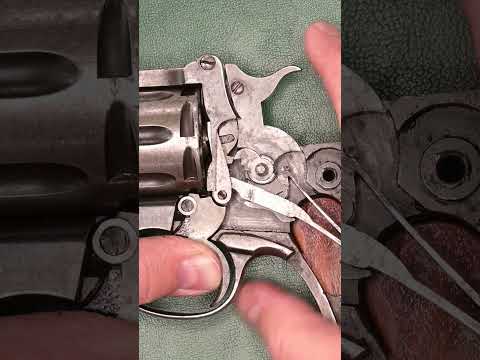
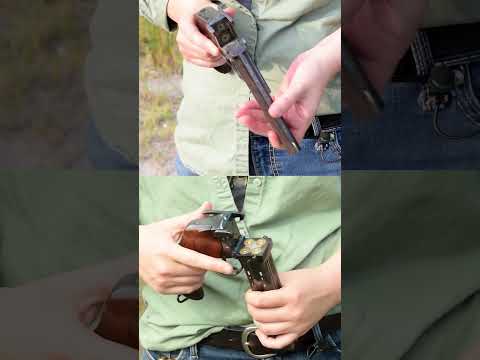
This entry details the mechanical operation of the Smith & Wesson No. 3 Russian revolver, focusing on its top-break action, single-action mechanism, and automatic ejection system as shown in a 3D animation. It also touches upon the historical context of its development, including the crucial Rollin White patent and the evolution of Russian variants. The information is presented with a high degree of technical detail, reflecting the channel's recognized authority on historical firearms.


Quick Summary

The Smith & Wesson No. 3 Russian (3rd Model) is a single-action, top-break revolver chambered in 11x25mmR (.44 Russian) with a 6.5-inch barrel, weighing 2.51 lbs and holding 6 rounds. Its .44 Russian cartridge featured an internally lubricated bullet, a key improvement over older designs. The Rollin White patent enabled bored-through cylinders for metallic cartridges, a major innovation.

Chapters

  1. 00:00Introduction to the Russian S&W No.3
  2. 01:18Origins of Smith & Wesson
  3. 04:30The Rollin White Patent
  4. 07:12Development of the No. 3 Top Break
  5. 10:25The Russian Contract and General Gorlov
  6. 13:12Technical Improvements and .44 Russian
  7. 14:41Evolution of Russian Models
  8. 17:47Global Production and Service
  9. 20:04Mechanical Animation
  10. 23:09Range Review and Ergonomics

Frequently Asked Questions

What were the key technical specifications of the Smith & Wesson No. 3 Russian (3rd Model)?

The S&W No. 3 Russian (3rd Model) is a single-action, top-break revolver chambered in 11x25mmR (.44 Russian). It features a 6.5-inch barrel, an overall length of 12.2 inches, and weighs approximately 2.51 lbs (1.13 kg), with a cylinder capacity of 6 rounds.

How did the .44 Russian cartridge differ from earlier revolver cartridges?

The .44 Russian cartridge was a significant advancement because it utilized an internally lubricated bullet. This design was cleaner and more efficient than the older 'heeled' bullet designs, which had the case rim outside the bullet diameter.

What was the significance of the Rollin White patent for Smith & Wesson?

The Rollin White patent, licensed by Smith & Wesson, allowed for cylinders to be bored completely through. This innovation was crucial for the development and widespread adoption of self-contained metallic cartridges, giving S&W a major advantage.

What ergonomic features did the S&W No. 3 Russian possess?

The S&W No. 3 Russian incorporated ergonomic enhancements such as a grip knuckle and a trigger guard spur. These features provided users with exceptional control and leverage, particularly during the single-action cocking process.

More Gunsmithing & DIY Videos You Might Like

More from C&Rsenal

View all →