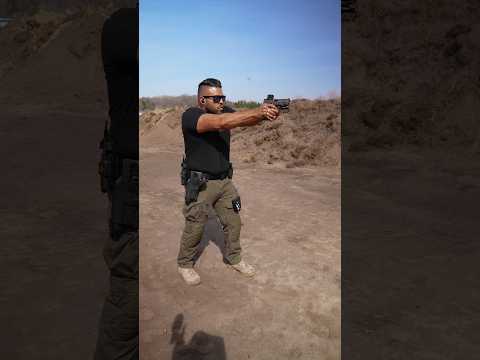
This video demonstrates a cold start Bill Drill at 70 yards, emphasizing the challenge of performing the drill without a warm-up. The instructor highlights issues with draw stroke and accuracy, noting misses and a 50% hit rate in initial attempts. The analysis includes a discussion of target zones and the difficulty of achieving centered hits under time pressure.
This video by Tap Rack Bang, LLC, explains the concept of 'throttle control' in firearm training, drawing parallels between competitive shooting (USPSA) and defensive scenarios. It details how different target types and scoring zones influence the shooter's rate of fire and accuracy requirements. The instructor demonstrates how to adapt shooting speed based on target presentation, cover, and the presence of non-threats, emphasizing that competitive target engagement strategies have direct validity in enhancing defensive shooting capabilities.
This guide, from expert firearms instructor Joel Park, details how to maximize indoor range training. It emphasizes focusing on fundamental marksmanship and reactive shooting drills due to the limitations of target transitions in single-lane setups. The guide contrasts dry fire and live fire roles, recommending dry fire for practicing complex transitions and sight tracking at home, while live fire should focus on core marksmanship and basic drills. Specific strategies for simulating depth and practicing dot awareness during transitions are provided.
This video details the 'Track The A Zone' drill, a competitive shooting exercise designed to improve target tracking and movement efficiency. Expert instruction from Hwansik Kim, a recognized professional shooting instructor, guides viewers through setup, execution, and analysis of common errors like horizontal and vertical shot spread. The drill emphasizes maintaining stationary shooting speed while moving and provides a clear method for diagnosing and correcting performance issues.
This video argues that hit factor math in USPSA is primarily relevant for the top 1-2% of competitors aiming to win major matches. For most B, C, and even A-class shooters, focusing on fundamentals, speed, and accuracy is more productive than complex hit factor calculations during a stage. The instructor believes many trainers resistant to teaching it simply don't understand it themselves, and dedicating class time to it is often a waste.
This video introduces the TA Targets C-Zone cardboard target as an improvement over traditional USPSA targets. It features two sides: one for familiar competitive drills and another with a variety of precision training zones, including circles, a triangle, and diamonds for scope testing. The target is designed to be more cost-effective and versatile for a wide range of shooters and disciplines.
This video addresses the challenge of picking a precise aiming point on targets, especially at distance or when identifying marks are absent. Instructor Joel Park emphasizes that the solution lies in training the shooter to mentally create or recall the desired aiming point, rather than relying solely on visible target features. He suggests using temporary aids like Sharpie marks or pasters during training to build this mental map, eventually transitioning to shooting clean targets by focusing on the established point of aim.
This video demonstrates a progressive return fundamentals exercise focused on improving grip and target acquisition under varied engagement lengths. Instructor Ben Stoeger highlights the common issue of increased hand tension when changing round counts and emphasizes the benefit of a loose grip for better gun tracking and faster splits. The drill involves reacting to a beep, varying shot strings, and aggressively engaging the A-zone, with a progression towards faster shooting if accuracy is maintained.
This video explains the concept of 'gross sight pictures' for red dot equipped pistols, focusing on how to achieve a better index for faster and more accurate shots. It details three primary gross sight pictures: using the back plate, the optic housing, and the 'guillotine' method of bisecting the A-zone. The instructor emphasizes that these gross sight pictures are about making appropriately accurate shots at speed, not necessarily tight groups.
This video discusses the "wobble zone" as a fundamental concept for improving shooting on the move. It emphasizes that rigidly holding a pistol is impossible and instead advocates for understanding motion. The key takeaway is to keep the red dot sight within an acceptable accuracy standard, specifically within the "A-zone," regardless of how much the gun moves during dynamic shooting. The video promotes a mindset and tactical skill development, likely aimed at improving practical shooting proficiency.
This YouTube video focuses on a "RETENTION DRILL" for firearm training. The drill involves drawing and firing two or three shots from a retention position, followed by turning and engaging a 30-yard A Zone target. The description also mentions "#Floridaheat", potentially indicating the location or environmental conditions during the training.
This YouTube video focuses on "Tracking the A zone," a crucial concept in competitive shooting, particularly within disciplines like USPSA or IDPA. The description directs viewers to the Practical Shooting Training Group (PSTG) website for in-person classes and digital coaching, suggesting a strong emphasis on training and skill development. It also provides links to Ben Stoeger's books on Amazon and the PSTG podcast, indicating resources for further learning about practical shooting and firearm proficiency. The content is geared towards individuals looking to improve their accuracy and speed in practical shooting scenarios.
Gun Laws by State
Read firearms regulations for all 50 states + D.C.
Find Gun Dealers
Search licensed FFL dealers near you.