This guide outlines a 10-minute monthly maintenance routine for AR-15 owners to ensure longevity and prevent malfunctions. It emphasizes proper lubrication of the bolt carrier group (BCG) and strategic cleaning, rather than excessive scrubbing. Key steps include the gas ring test and careful barrel cleaning to avoid damaging the crown.
The Geissele Super 42 Buffer Spring and Buffer Combo utilizes a three-strand braided wire design to act as a harmonic damper and energy absorber. This design aims to displace excess energy, reduce spring failure, improve reliability, and decrease operational 'twang'. It offers increased strength and a 15% stronger return force compared to standard springs. However, it is explicitly not recommended for use with 300 Blackout ammunition.
This guide details the process of replacing the buffer and spring assembly in an AR-15 platform rifle. It covers disassembly, removal of the old components, installation of new parts like the Kynshot RB5000 hydraulic buffer or the Geissele Super 42 system, and reassembly with a function check. The video emphasizes proper technique and the benefits of upgraded components for recoil management and reliability.
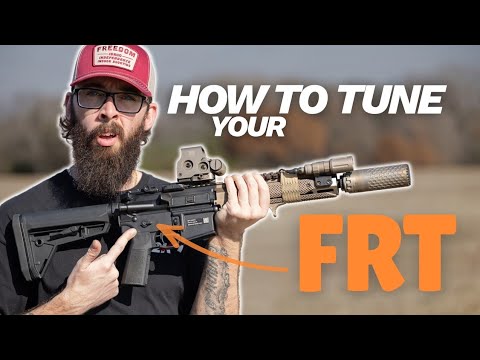
This guide details how to troubleshoot and tune an AR-15 equipped with a Forced Reset Trigger (FRT) that experiences a 'one click' failure. Expert instructor Brody from Juicey Media explains the importance of BCG velocity and dwell time, demonstrating how buffer weights, springs, and buffer systems like the VLTOR A5 can resolve cycling issues, especially when using suppressors. The video emphasizes that each rifle requires individual tuning to find its optimal 'sweet spot' for reliable FRT operation.
This guide details the comparison and installation of the BCM MK2 Recoil Mitigation System against traditional carbine and rifle-length systems. The video, presented by Appalachian Smokewagon, highlights the MK2 system's unique buffer and tube lengths, designed to improve recoil management, particularly for budget or over-gassed AR-15 platforms. It emphasizes how the system contributes to a flatter shooting rifle, keeping sights on target during rapid fire.
This video provides an in-depth analysis of AR-15 buffer weights and their role in managing gas system dynamics, particularly in overgassed or improperly gassed firearms. The instructor, with extensive experience in military and manufacturer settings, explains how buffer weights affect bolt velocity, carrier bounce, and overall firearm reliability. He emphasizes that buffers are for mechanical tuning, not recoil management, and advises on selecting appropriate weights based on ammunition type and firearm configuration to ensure optimal function across various conditions.
This guide, based on expert instruction from Dirty Civilian, details how to install a Sprinco Red or Red/White buffer spring to mitigate issues caused by overgassed AR-15 platforms, particularly when suppressed. The process involves replacing the standard carbine spring with a heavier-duty option to better manage bolt velocity and reduce gas blowback, enhancing shooting comfort and component longevity.
This video demonstrates the perceived improvement in recoil impulse and overall feel when using a Cook Spring Company buffer spring in an AR-15 A5 system. The speaker notes a significant difference, describing the new spring as much looser and comparable to a carbine buffer spring in an A5 system, leading to a smoother shooting experience.
This video explains the advantages of the A5 buffer system over traditional carbine buffers. It highlights how the A5 system allows for more mass without overbuffering by distributing it over a longer spring, leading to a smoother compression and decompression cycle. This contrasts with heavier carbine buffers which require more gas to operate effectively, potentially making the gun's cycle more abrupt.
This video reviews a Centurion Arms AR-15 rifle featuring a Surefire SOCOM muzzle brake. The presenter, Joel Park, discusses his initial impressions of the rifle's recoil characteristics and the effectiveness of the muzzle brake. He notes that while the rifle shoots softly, the sight tracking indicates a slight downward dip, suggesting potential tuning needs for optimal flat shooting. Park plans to research and potentially upgrade the buffer and buffer spring system, possibly with a JP Silent Capture System, to further reduce recoil and improve cycling speed.
This video provides an expert-level breakdown of AR-15 buffer systems, comparing standard components with premium upgrades like flat wire springs, hydraulic buffers, and captured systems. The instructor, demonstrating high authority through detailed technical explanations and brand comparisons, guides viewers on managing overgassed rifles and determining if costly upgrades offer tangible benefits in recoil reduction and cycling smoothness.
This guide details the installation of the Armaspec Stealth Recoil Spring (SRS) on an AR-15 platform, as demonstrated by AT3 Tactical. The video highlights the audible difference between a standard buffer spring and the SRS, emphasizing reduced felt recoil and elimination of spring noise. The process involves a simple field strip and component swap, making it an accessible modification for AR-15 owners seeking a smoother shooting experience.
Gun Laws by State
Read firearms regulations for all 50 states + D.C.
Find Gun Dealers
Search licensed FFL dealers near you.