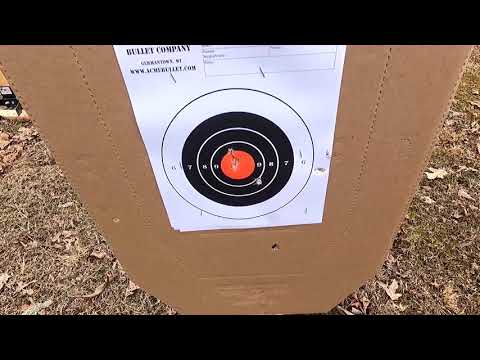
This video provides an in-depth accuracy test of the .338 ARC cartridge fired from a CMMG Descent SBR with a 10.5-inch barrel and 1:8 twist rate. The instructor compares the performance of Hornady's 175-grain supersonic hollow points and 307-grain subsonic sub-x ammunition. While the supersonic rounds demonstrated good accuracy, the heavier subsonic bullets showed signs of poor stabilization, leading to larger groups and elongated bullet holes.
This guide, based on expert instruction from GUNBROS, explains how to choose the best AR-15 barrel twist rate for your needs. It details how twist rates like 1:7, 1:8, and 1:9 affect the stabilization of different bullet weights, offering practical advice for optimizing performance with 5.56 NATO ammunition.
This guide details how to test firearm barrel twist rates for accuracy, as demonstrated by Military Arms Channel. It covers selecting appropriate firearms, ammunition, and testing equipment, then outlines the process of firing, measuring groups, and analyzing results to understand how twist rates affect bullet stabilization and accuracy with different bullet weights. The expert analysis highlights the versatility of 1:7 twist for modern ammunition compared to the 1:12 twist's suitability for lighter, vintage projectiles.
This guide, presented by a firearms instructor, details the critical relationship between AR-15 barrel twist rates and bullet stabilization. It explains how twist rate affects accuracy with different bullet weights, covers historical context from the M16 to modern ARs, and provides practical advice for selecting the appropriate twist rate for various ammunition types, emphasizing the 1:7 twist's versatility.
This video features an interview with Ryan McBeth, a former anti-tank and heavy weapons infantryman, discussing the performance of commercial AR-15 rifles and their suitability for export to Ukraine. Key takeaways include the significant performance difference between 1:9 twist barrels and faster twists (1:8 and 1:7), with 1:9 being deemed inadequate for modern ammunition. The discussion also delves into the nuances of rifle zeroing, debunking the common trope of a 25-meter zero being perfectly aligned with the muzzle at 250 meters, and highlighting the importance of understanding bullet trajectory and stabilization.
This comprehensive analysis of the 6.8 Western cartridge, presented by a seasoned firearms expert, delves into its ballistics, practical applications, and comparisons with established calibers like the .270 Winchester. The expert advises potential buyers to consider their specific hunting needs and the long-term viability of the cartridge before purchasing, highlighting factors such as ammunition cost and recoil.
This video explains the concept of rifle barrel twist rate, defining it as the speed at which the rifling causes the bullet to rotate. It emphasizes that twist rate is crucial for stabilizing bullets, especially longer and heavier ones, to ensure accuracy. The speaker notes that factory guns and ammunition typically match, but understanding twist rate is important when selecting specific bullet weights for different calibers to avoid instability and poor performance.
This video provides an in-depth comparison of the .280 Ackley Improved and 7 SAUM cartridges, favored for long-range precision. The analysis, presented by an authority on ballistics, details velocity, powder capacity, and practical considerations like magazine fit and handloading requirements. It highlights the 7 SAUM's advantages in neck length for high-BC bullets and its popularity in competitive shooting disciplines like F-Class and ELR, while also discussing the .280 AI's factory support and magazine capacity benefits.
This video provides a basic explanation of rifle barrel twist rates and their relationship to bullet weight. It clarifies that twist rate indicates how many inches of barrel length are required for a bullet to complete one full rotation. While any bullet grain can technically be fired through any twist rate, optimal accuracy and performance are achieved when the twist rate is matched to the bullet's weight and length, particularly for more precise shooting applications.
This video details a firearms instructor's testing of various 10mm loads in a Glock 29, specifically focusing on bullet stabilization issues with plated projectiles in its polygonal rifling. The instructor compares results with a conventionally rifled XDM and identifies specific bullet types and velocities that perform poorly, leading to keyholing and poor accuracy. The conclusion is that a barrel swap to conventional rifling is necessary for optimal performance with desired carry ammunition.
This expert-level guide, informed by Brownells' Smyth Busters series, debunks the myth that longer barrels are always more accurate. It details how factors like powder burn, bullet stabilization, twist rate, and sight radius are more critical. The guide emphasizes that optimal barrel length is cartridge-specific and that excessive velocity doesn't always translate to tighter groups, highlighting the importance of finding an accuracy 'sweet spot'.
This guide details troubleshooting bullet stabilization issues with .300 Blackout subsonic loads, specifically using 220gr Nosler Ballistic Tip bullets. It covers critical steps from measuring OAL and selecting appropriate powders like Hodgdon CFE BLK to diagnosing keyholing and analyzing bullet performance in ballistic gel. The expert instruction emphasizes methodical testing and component selection for achieving reliable results, even when initial attempts fail.
Gun Laws by State
Read firearms regulations for all 50 states + D.C.
Find Gun Dealers
Search licensed FFL dealers near you.