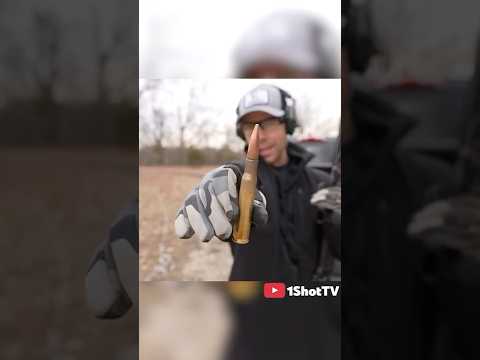
This video tests the bullet resistance of a sledgehammer against various calibers, from .22 LR to .50 BMG. The sledgehammer demonstrates significant resistance, with no caliber achieving a complete pass-through. Notably, even larger calibers like 7.62x39mm and 5.56x45mm NATO caused significant denting and bullet fragmentation, while the .50 BMG created a substantial divot. The experiment concludes that a sledgehammer is effectively bulletproof against the tested rounds.
This video features an "insane test" to determine if an axe (machado) is bulletproof, involving a LAPG (likely referring to a brand of tactical gear or a similar entity). While the title doesn't explicitly mention firearms by name, the context of testing an axe against bullets strongly implies firearm use. The experiment is framed as a unique and potentially destructive evaluation, aiming to discover the resilience of a common tool against projectile impact. The use of "insane test" suggests an entertainment-focused approach, likely aimed at viewers interested in durability, impact testing, or unique comparisons.
This video tests the ballistic resistance of NeeDoh stress balls against various firearm calibers, from .22LR up to .50 BMG. The presenter, from Demolition Ranch, demonstrates how the squishy material behaves like a non-Newtonian fluid, hardening under impact but ultimately failing to stop larger calibers. High-speed footage reveals projectile disintegration and energy transfer.
This YouTube Short title poses the question "Are Cups Bulletproof?" with a dramatic emoji, suggesting a test or demonstration involving cups and potentially firearms, although no specific firearms or calibers are mentioned in the title or description. The content likely aims to be sensational or educational by testing the ballistic resistance of everyday objects.
This video features a ballistic test comparing a .50 BMG rifle round against a seemingly inexpensive Chinese-made Level IV rifle plate, likely sourced from TEMU. The experiment aims to determine the effectiveness and durability of this budget body armor when subjected to high-powered rifle fire. The description highlights the affordability of the armor, positioning it as the "cheapest Body Armor."
This video features a humorous test of a Labubu doll's durability against firearms, starting with a .22LR and culminating with a .50 BMG round from a Raptor 50 rifle. The host, identified as a Firearms Content Creator and Enthusiast, demonstrates proper range safety and discusses the affordability of the .50 BMG rifle. The content includes a giveaway for viewers.
This video tests the ballistic resistance of Miracle-Gro gardening soil against various firearm calibers, from .22 LR to 7.62x54R. Four bags of soil were used, with results showing that even powerful rifle rounds like the 7.62x54R were stopped within three bags. The test surprisingly indicated the .45 ACP had slightly more penetration than the Mosin Nagant in this specific setup.
This video title, "Essas Coisas São à Prova de Bala???" (Are These Things Bulletproof???), suggests a test of the bullet resistance of various items, likely including firearms or related equipment. Given the title's phrasing, the content probably explores the durability and protective capabilities of these objects when subjected to ballistic testing. The video's appeal would be to those interested in ballistics, the performance of different materials under impact, and potentially firearm-related safety or testing protocols.
This video from Civilian Tactical tests the bulletproof capabilities of a drum cymbal against various firearm calibers, from .22 LR up to 7.62x39mm. The experiment, conducted by a high-authority tactical content creator, demonstrates how penetration increases with caliber, with 9mm and larger rounds successfully piercing the cymbal. The results provide practical insights into ballistic performance and material resistance.
The Táctica Civil channel conducted a ballistic test on a medieval 'Pigface' helmet. Using a crossbow, shotgun, handguns (.380 Auto, 9mm), and rifles (.223, 7.62x39), the host determined the helmet offered protection up to 9mm rounds, with rifle calibers easily penetrating. The test highlights the helmet's limitations against modern firearms despite its historical design.
This video tests the durability of a YouTube gold plaque against a .50 caliber sniper rifle. The host demonstrates that the plaque is not bulletproof, as the .50 BMG round completely penetrates it. A previously shot silver plaque is shown for comparison, highlighting the destructive power of the rifle.
This video tests the bullet-stopping capability of a pocket Bible by comparing its penetration resistance to notebooks of similar thickness. Various calibers, from .22 LR to .50 BMG, were fired. The results indicate that while a Bible might stop a ricocheted or low-velocity bullet, it offers minimal protection against direct impacts from common handgun and rifle rounds.
Gun Laws by State
Read firearms regulations for all 50 states + D.C.
Find Gun Dealers
Search licensed FFL dealers near you.