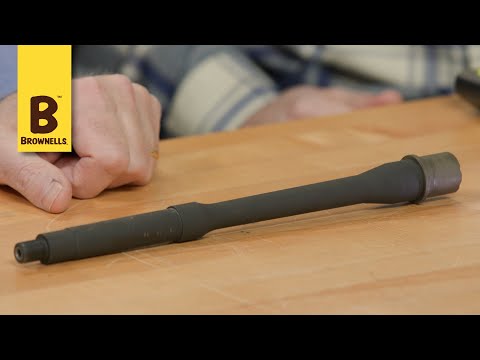
This video highlights a common mistake in firearm cleaning: using a chamber brush for the entire barrel bore. The instructor demonstrates the correct use of a brass jag for bore cleaning and a chamber brush specifically for the chamber and feed lips on a 5.56 AR-15. While the mistake did not damage the high-quality barrel, it's emphasized that this is not the proper procedure.
This video demonstrates a comprehensive cleaning process for a neglected AR-15 bolt carrier group and upper receiver. It highlights the effectiveness of extended soaking, various brush types, and specialized cleaners like Otis MC7 for removing heavy fouling. The guide also covers cleaning the chamber and charging handle raceway, concluding with proper lubrication and reassembly for restored functionality.
This guide details a comprehensive cleaning and maintenance procedure for an AR-15 style rifle, demonstrated by Clint Morgan. It covers disassembly, thorough cleaning of all components including the bolt carrier group, upper and lower receivers, and barrel, using specialized tools from Otis Technology and common cleaning agents like CLP. The process emphasizes removing carbon buildup and debris, followed by proper lubrication to ensure reliable function and longevity of the firearm. The guide concludes with reassembly and a function check.
Jerry Miculek, a seasoned competitor, details common malfunction causes in AR-15s and shotguns. For AR-15s, he emphasizes inspecting gas tubes for wear, gas block alignment, and bolt carrier group gas rings. For shotguns, he highlights the importance of extractor maintenance, chamber cleanliness, and magazine spring quality. Regular inspection and maintenance are key to preventing failures.
This video debunks the myth that new firearm barrels do not require cleaning. Brownells Gun Techs Steve and Caleb use a borescope to demonstrate that factory-new barrels, particularly AR-15s, often contain grease in the bore and chamber. This grease can cause extraction failures, pressure issues leading to malfunctions, and in extreme cases, a catastrophic weapon failure or 'KA-BOOM.' The experts advise a simple cleaning with solvent to remove this protective shipping grease before firing the first round, regardless of whether the barrel is a replacement or part of a new firearm.
This guide details a comprehensive cleaning process for a Hatsan Escort shotgun, emphasizing the use of 'CHISTOSTVOL' brand cleaning products. It covers partial disassembly, thorough cleaning of the barrel and chamber with specific brushes and oils, and application of a protective cream to prevent rust and moisture. The process concludes with reassembly and a final check.
This guide details a rapid, field-expedient cleaning and oiling method for both primary (rifle) and secondary (pistol) weapon systems, focusing on critical nodes that can cause failure. The technique emphasizes using minimal tools and time, relying on gravity to distribute lubricant to essential areas like rails, extractors, and ejectors, while avoiding over-lubrication of sensitive components like the firing pin.
This comprehensive guide details the easiest method for cleaning and lubricating an AR-15, presented by an expert from Tactical Toolbox. It covers essential safety precautions, including the use of PPE to prevent lead exposure, and provides a step-by-step process for disassembly, thorough cleaning of all components (especially the BCG and chamber), and proper reassembly. The instruction emphasizes using specialized tools for efficiency and effectiveness, ensuring your AR-15 remains in optimal condition.
This guide, drawing from the expertise of Brownells representatives, details essential firearm chamber cleaning techniques. It emphasizes the importance of dedicated chamber brushes for AR-15 platforms to maintain bolt function and addresses carbon ring issues in revolvers. A specific tip is provided for .22 rimfire firearms, highlighting how a bore brush can suffice for chamber cleaning.
This guide details how to clean an AR-15/M4/M16 rifle, emphasizing that while these rifles are robust and tolerate some neglect, regular cleaning is essential. Key areas to focus on include the bolt carrier group, chamber, and barrel. The instructor highlights the importance of inspecting critical components like bolt lugs and gas rings, and advises against over-cleaning parts that can lead to wear or out-of-tolerance issues. Proper lubrication of the bolt carrier group is stressed for reliable function.
This guide provides a detailed, step-by-step process for cleaning and maintaining the Ruger-57 pistol, presented by Ruger Firearms. It covers essential safety precautions, proper techniques for barrel and chamber cleaning using specific brush sizes, slide and frame cleaning, and critical lubrication points. The instruction emphasizes thoroughness to ensure reliable firearm function.
James O'Neill of O'Neill Ops provides a detailed guide on cleaning a custom 22-250 rifle barrel. He emphasizes the importance of a barrel break-in procedure to facilitate easier cleaning and reduce copper fouling. The process involves using specific tools like caliber-specific rods, proof positive jags and brushes, and a rod guide to maintain bore alignment. O'Neill demonstrates a multi-step cleaning process using Bore-Tech products, including washing the bore with solvent, brushing, and patching, followed by a final conditioning step and thorough chamber cleaning.
Gun Laws by State
Read firearms regulations for all 50 states + D.C.
Find Gun Dealers
Search licensed FFL dealers near you.