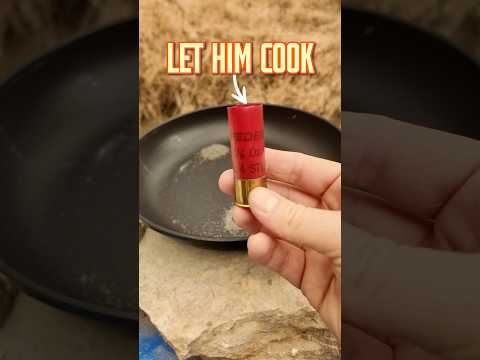
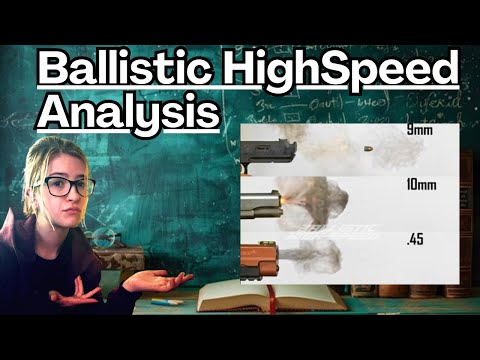
This video demonstrates the ignition properties of pistol, rifle, and shotgun powders by heating them in a pan on a camping stove. The experiment, presented by Civilian Tactical, shows that rifle powder ignites first with a large flash, followed by shotgun powder, while pistol powder ignites slowest with a smaller flash. The presenter, exhibiting experienced authority, clarifies the difference between a flash and an explosion, highlighting the educational content available at SDI.TODAY.
This video, titled "This Wood Starts Fires Instantly," focuses on a specific type of material or technique that enables rapid fire ignition. While the title doesn't explicitly mention firearms, the subject matter of starting fires instantly can have applications in survival, bushcraft, or even historical reenactment contexts where firearms might be used. The lack of a transcript makes it impossible to determine if any firearm-related content is present, but the title itself suggests a focus on ignition and combustion.
This video, titled 'Pólvora Explode Violentamente? (Teste em Desenho)', appears to be a visual demonstration or simulation of gunpowder's explosive properties, likely in a stylized or animated format rather than a live-fire test. The title suggests an investigation into the violent nature of gunpowder, presented through a drawing or animation. It is not a direct demonstration of firearm functionality but rather an exploration of a core component of ammunition.
This video delves into the complex physics of muzzle flash, breaking it down into five distinct components: pre-flash, primary flash, muzzle glow, intermediate flash, and secondary flash. It explains the phenomena of shock tubes, shock bottles, and expansion fans, and discusses how muzzle devices like brakes and blast deflectors are designed to manage muzzle flow for recoil reduction, flash suppression, and noise mitigation.
This video provides an educational demonstration on how gunpowder works, presented by a knowledgeable host from Backfire. It clarifies that smokeless powder burns steadily in open air, while muzzleloader powder burns more aggressively but still without explosion when unconfined. The key takeaway is that gunpowder requires confinement under pressure within a firearm to achieve the rapid expansion necessary for projectile propulsion.
This video features testing of a flamethrower, specifically highlighting the capabilities of the device from Exothermic Technologies. The content likely focuses on the performance, operation, and potential applications of the flamethrower, providing viewers with a demonstration of its flame-throwing power.
This YouTube Short explores the reaction of lighting black powder. While not demonstrating specific firearms or calibers, the content directly relates to historical firearms and ammunition types. The visual experiment likely showcases the rapid combustion and energetic nature of black powder, offering a quick educational glimpse into its properties. This type of content appeals to enthusiasts interested in historical firearms, pyrotechnics, and the fundamental components of early gunpowder weaponry.
This YouTube Shorts video features a comparison between flaming buckshot and a gasoline jug, likely demonstrating their reaction to ignition. The title and content suggest a visual experiment involving projectiles and flammable materials, with an emphasis on the dramatic "flaming" aspect of the buckshot. The use of a gas jug implies a controlled or semi-controlled environment for this demonstration.
This YouTube Short features the "Exothermic Pulsefire Flamethrower." While not a traditional firearm, flamethrowers share some overlap with firearm enthusiasts due to their technological nature and destructive potential. The video likely showcases the device's operation, focusing on its impressive exothermic reaction and fiery output. Given the nature of the device and its potential for impressive visuals, it could appeal to a niche audience interested in unique mechanical devices, pyrotechnics, or even as a novelty item with a destructive capability.
You've reached the end! 9 videos loaded.
Gun Laws by State
Read firearms regulations for all 50 states + D.C.
Find Gun Dealers
Search licensed FFL dealers near you.