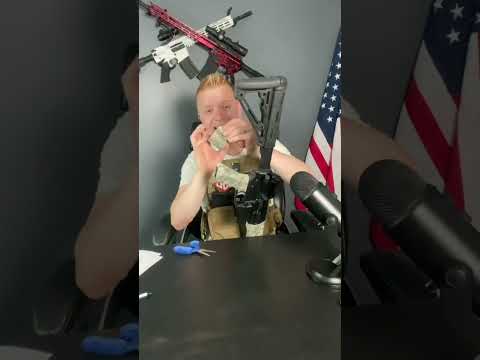
This guide details the process of installing grip tape on a handgun, specifically a Smith & Wesson M&P 2.0, to improve grip and ergonomics. It emphasizes careful application, the use of heat from a blow dryer to activate the adhesive, and firm pressure to ensure a secure and lasting bond. The instructor highlights common pitfalls like improper initial placement and insufficient heat activation, offering practical advice to achieve a professional-looking and functional grip enhancement.
This guide details a method for painting a rifle using rattle cans and camouflage netting, as demonstrated by Ivan from Kit Badger. The process involves careful masking, applying base and subsequent color layers with varied patterns, and a final dusting coat to achieve a durable camouflage finish. The instructor emphasizes the importance of environmental conditions for paint curing and offers practical reasons for painting firearms, including aesthetics and heat management.
This YouTube video focuses on customizing firearms without using paint, offering tactical tips. The title suggests a DIY approach to enhancing weapon aesthetics and functionality, likely targeting firearm enthusiasts interested in modifications and tactical applications. While specific firearm models are not mentioned, the content implies techniques applicable to various firearms.
This guide details a quick and inexpensive method for color-filling firearm engravings using readily available materials. The technique involves applying acrylic paint with a toothpick, carefully removing excess with a business card, and then cleaning with non-acetone nail polish remover. An optional acrylic sealer can be applied for a glossier finish and added protection. The presenter notes this method is reversible and ideal for personalizing firearms, especially for easier identification.
This tutorial demonstrates how to apply a woodland camouflage paint job to a Daniel Defense AR-15. It covers essential preparation steps like masking specific components, applying base and accent colors using spray paint, and utilizing stencils for detailed patterns. The process emphasizes proper spraying techniques for even coats and allows for the original firearm finish to show through strategically.
This guide details a DIY method for custom painting an AR-15 rifle, specifically a CMMG .22lr MK12 MOD0, inspired by Garand Thumb's techniques. It covers preparation, base coat application with two matte colors (khaki and dark earth), and pattern creation using a mesh laundry bag for a unique camouflage effect. The process emphasizes proper masking, drying times, and direct contact for pattern clarity, resulting in a personalized firearm finish.
This guide details how to apply a Multicam pattern to a firearm using rattle cans and specialized stencils. The process involves preparing the firearm, applying a two-tone gradient base coat, and then layering three distinct stencil patterns. The video emphasizes achieving a smooth color transition and utilizing stencils for detailed patterns, offering a practical approach for DIY firearm customization.
This guide details a DIY method for painting a rifle using readily available spray paint, offering a cost-effective alternative to professional finishes like Duracoat or Cerakote. The process emphasizes proper preparation, including masking critical components, and a multi-layer application technique using natural materials for organic camouflage patterns. The speaker highlights the advantage of spray paint's ease of touch-up and modification for seasonal environmental changes.
This video demonstrates a DIY method for applying a custom camouflage paint job to a rifle using spray paint. It outlines a five-step process involving cleaning, taping, base coating, stencil creation and application, accent colors, and final reveal. The technique aims to replicate a multi-cam pattern for aesthetic enhancement.
This guide compares DIY spray paint (rattle can) camouflage with professional Cerakote finishes for AR-15 rifles. It outlines the steps for applying each type of finish, highlighting the trade-offs in durability, cost, and aesthetics. The video also touches on the option of maintaining the rifle's classic black factory finish. The content is presented by Magic Prepper, an influencer with expertise in firearms and preparedness.
This guide details the most cost-effective method for spray painting a firearm, emphasizing speed and minimal preparation. It covers basic application techniques, using simple stencils like leaves for camouflage, and the importance of taping off critical markings. The instructor highlights that perfection isn't the goal, but rather achieving a desired look affordably and with easy touch-up capabilities.
This video from Brownells, hosted by Caleb, is the third part of a series demonstrating how to paint a firearm using Aluma-Hyde II. It focuses on the application process, covering essential techniques like proper spraying, handling difficult areas, adjusting spray nozzles, and essential gear like gloves. The video also details the curing process, including air and speed curing options, and provides post-spraying advice on clearing and storing spray cans. Important environmental factors like temperature and humidity, along with crucial safety reminders such as wearing a respirator and ensuring good ventilation, are emphasized. The series will continue with more advanced techniques and camo patterns.
Gun Laws by State
Read firearms regulations for all 50 states + D.C.
Find Gun Dealers
Search licensed FFL dealers near you.




![Lady Sharpshooter EP.61 | Paint your AR พ่นสีปืนตัวเองครั้งแรก [CMMG .22lr MK12 MOD0]](https://i.ytimg.com/vi/w3YNRXEYM5c/hqdefault.jpg)


