This video evaluates the viability of off-body concealed carry using bags, challenging the notion that it's inherently slower than appendix carry. The instructor emphasizes that bag quality and the deployment system are crucial for achieving acceptable draw times. Through live-fire testing with a shot timer, the video demonstrates that with the right bag and sufficient practice, proficiency comparable to appendix carry is achievable, negating the perceived disadvantages.
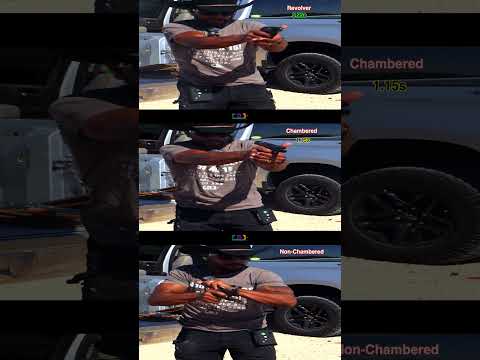
This video, presented by an expert instructor, demonstrates why carrying a firearm unchambered creates a significant tactical disadvantage due to the time penalty and the impact of adrenaline on fine motor skills. It emphasizes that modern firearms with passive safeties are designed for safe chambered carry and that proper training is crucial for effective self-defense. The instructor advocates for carrying chambered and mastering safe handling through consistent practice.
This video provides a detailed, frame-by-frame tactical breakdown of a self-defense incident involving a security guard. Instructor John Correia, with high authority, analyzes the guard's actions, emphasizing situational awareness, the use of a weapon-mounted light, and critiquing the slow draw time from an off-body carry method. The analysis also touches on shooting mechanics and the importance of avoiding 'stupid places, stupid times, and stupid people.'
This video from Active Self Protection, featuring John Correia, analyzes three robbery scenarios to teach crucial counter-ambush timing. It emphasizes understanding your personal draw time and identifying 'go signals' based on robber orientation to effectively respond. The analysis highlights the statistical advantage of armed resistance over compliance in robbery situations.
This guide details the actions of an armed clerk during a jewelry store robbery in Chicago, as analyzed by John Correia of Active Self Protection. It covers drawing a firearm, engaging a threat, and post-incident actions, emphasizing legal justification for self-defense against a forcible felony. The analysis highlights tactical considerations and critiques common carry methods.
This video compares budget-friendly mobile app shot timers against more expensive, dedicated devices, focusing on accuracy and features. It highlights that while mobile apps can provide basic timing for trends and improvement tracking, dedicated physical timers offer superior accuracy, louder volume, better microphone sensitivity, and advanced features like dry-fire compatibility and sensitivity adjustments for range environments. The choice depends on the user's needs, from casual improvement to precise performance measurement.
This video from Active Self Protection analyzes a Houston pizza shop robbery, focusing on the concealed carrier's potential to counter-ambush the perpetrator. Instructor John Korea emphasizes the importance of knowing one's draw-to-first-hit time (1.5 seconds, 1.0 second, or 2.0 seconds depending on the attacker's orientation) to effectively engage during a robbery. He also highlights pre-attack indicators like masks and hoods, and the legal justification for using deadly force against a forcible felony in Texas.
This analysis from Active Self Protection, hosted by John Correia, breaks down a food truck robbery involving a pistol-grip pump-action shotgun. It highlights the unique security challenges faced by food trucks and discusses critical self-defense considerations, including identifying 'go signals' and understanding personal draw-to-first-shot times. Correia, an expert in self-defense analysis, emphasizes that if your draw time exceeds 1.5 seconds, compliance might be the safer course of action.
This video from Active Self Protection, featuring John Correia, emphasizes the critical importance of draw times in self-defense scenarios. It analyzes real-world incidents, including a carjacking and a gun store robbery, to illustrate tactical concepts like 'go signals' and the dangers of transitional spaces. The content highlights the effectiveness of tools like POM Pepper Spray and stresses the need for rapid, proficient handgun deployment under duress.
This guide, informed by John Correia, an Evidence-Based Defensive Trainer, breaks down how to identify perpetrator 'tells' and leverage them for reaction time. It covers strategies like distraction tactics with a phone, the importance of draw times, the critical role of distance in disarming, and post-incident escape. The analysis emphasizes practical self-defense applications derived from real-world incidents.
John Correia, an evidence-based defensive trainer, analyzes two Houston robbery incidents to highlight critical self-defense skills. He emphasizes identifying 'counter-ambush' opportunities based on distance and attacker preoccupation, and stresses the importance of a fast draw-to-first-shot time (under 2 seconds) for armed citizens. The analysis also touches upon the legal considerations for intervention.
This video from Active Self Protection analyzes a convenience store robbery in Houston, Texas, featuring John Correia. It highlights potential counter-ambush opportunities for a trained, armed clerk and discusses the importance of draw times and recognizing visual cues. The analysis also touches on the concept of 'purposeful compliance' as a tactical choice.
Gun Laws by State
Read firearms regulations for all 50 states + D.C.
Find Gun Dealers
Search licensed FFL dealers near you.