This guide details the unique magazine loading and barrel disassembly process for the Little Tom pistol, the world's first DAO automatic. It highlights the bi-directional magazine insertion and the barrel's lug-and-slot locking mechanism, as demonstrated by Ian McCollum on Forgotten Weapons.
This video examines the Maxim Silverman Model 1896 Automatic Pistol, highlighting its ergonomic design and simple internal mechanics. The presenter notes that the pistol's primary limitation was its chambering in the powerful 7.63 Borchardt cartridge, which ideally requires a locked breech system. The discussion also touches on the pistol's single-action operation and the unique bolt cycling mechanism.
This video provides a comprehensive biographical overview of John Moses Browning, focusing on his early life, family background, and the genesis of his prolific firearms inventions. It details his upbringing in a gunsmithing family, his initial forays into firearm design and patenting, and his crucial early business dealings with Winchester Repeating Arms. The narrative highlights the development and sale of iconic firearms like the Winchester Model 1885, 1886, 1890, 1894, and 1895, as well as his early work on machine guns and automatic pistols, showcasing his innovative spirit and business acumen.
This video provides a detailed breakdown of the Colt 1900's internal mechanisms, highlighting its historical significance as the first pistol to feature a modern slide. It explains the recoil-operated system, the barrel locking mechanism via lugs and swinging links, and the unique trigger and disconnector interaction. The safety features, including the half-cock hammer and the combination rear sight/safety lever, are also elucidated.
This video examines a rare Elbert Searle Savage prototype pistol, highlighting its unique features that differ from later Savage automatics. Key distinctions include serrations extending fully around the top, a modified cocking piece retained by a spring-loaded guide, and a high-mounted magazine release on the front strap. These elements align with original Searle automatic patent drawings, offering insight into the development of early automatic pistol designs.
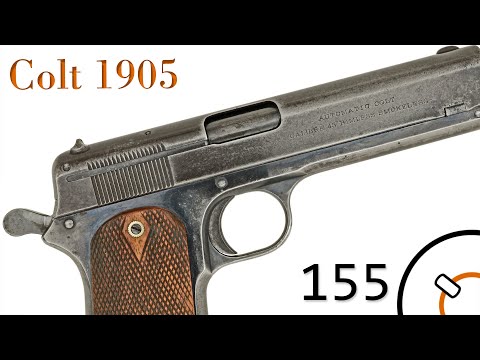
This video details the history and technical evolution of the Colt 1905 Automatic Pistol, a significant step towards the M1911. It covers the context of the Thompson-LaGarde tests, the development of the .45 ACP cartridge, John Browning's design modifications, and the pistol's features and performance. The presenter highlights its role as the first Colt .45 ACP semi-automatic and its eventual limitations compared to later designs.
This guide details the disassembly and key features of the Danish Schouboe pistols, including the Model 1903 (.32 ACP) and Model 1907/1910 (.45 caliber). It highlights unique design elements such as the forward-push magazine release, side-mounted ejection port, and the specialized .45 caliber ammunition. The information is presented with high authority by Ian McCollum, an expert in rare firearms history.
This presentation explores the evolution of semiautomatic pistols in the 1890s, driven by smokeless powder. It highlights early designs like the Salvator Dormus and Schoenberger-Laumann, the commercial success of the Borchardt M1893, and innovations from Bergmann, Mannlicher, and Mauser. The video concludes by discussing the challenges of early production and the path to iconic designs like the Luger.
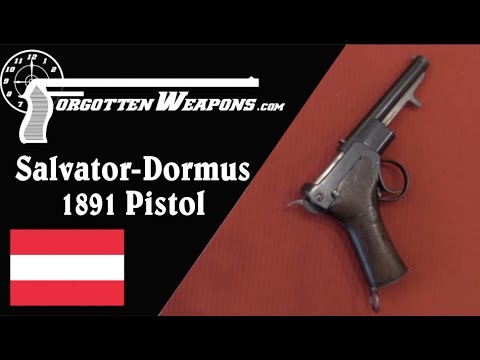
This entry details the Salvator-Dormus, recognized as the first functional semi-automatic pistol, patented in 1891. It highlights its innovative trigger-delayed blowback action, unique Mannlicher-style clip ejection, and historical context within Austrian military trials. The analysis draws from Ian McCollum's expert assessment on Forgotten Weapons, emphasizing the pistol's rarity and mechanical intricacies.
This guide details the basic disassembly steps for the Bergmann Mars 1903, focusing on accessing the internal mechanism via the side plate. It highlights the unique cam plunger system and emphasizes crucial safety checks. The information is presented with the high authority of Forgotten Weapons' Ian McCollum, known for his deep knowledge of historical firearms.
This video from Forgotten Weapons delves into the early history of Bergman pistols, one of the first companies to commercially produce self-loading firearms in the 1890s. It highlights Theodore Bergman's role as an industrialist, not a designer, and the initial collaboration with watchmaker Uto Brow Vetter. The evolution from simple blowback to more complex locked breech designs is discussed, setting the stage for future developments.
This video by Forgotten Weapons, featuring Ian McCollum, delves into the complex history of identifying the first automatic pistol. It highlights the C93 Borchardt as the first commercially successful model, while discussing the Salvator-Dormus and Laumann as earlier patented designs, emphasizing the importance of defining criteria like commercial viability versus initial invention. The content is rich with historical context and expert analysis from a recognized firearms authority.
Gun Laws by State
Read firearms regulations for all 50 states + D.C.
Find Gun Dealers
Search licensed FFL dealers near you.