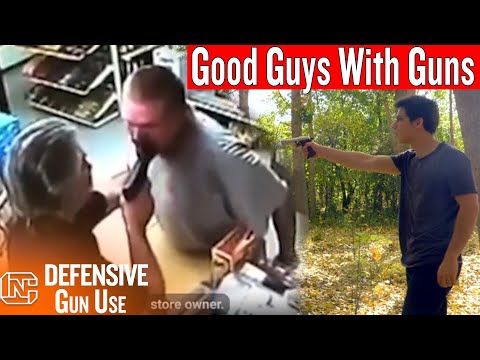
This video, featuring Colion Noir, critically examines how the FBI and media underreport defensive gun use (DGU) while amplifying tragedies. Noir, drawing on research from John Lott Jr. and John Stossel, highlights that most DGUs involve no shots fired and that criminals avoid armed citizens. The content also touches on Hollywood's portrayal of gun owners and promotes Noir's 'I am the Militia' apparel line.
This video analyzes a recent interview where Kamala Harris faced pointed questions on gun control from a journalist. Host Braden of Langley Outdoors Academy critiques Harris's responses, highlighting perceived contradictions and a deflection from handgun violence statistics towards an assault weapons ban. The discussion delves into the nuances of gun control legislation, background checks, and the common political narratives surrounding firearms in the United States.
This video critically examines the politicization of federal gun and crime statistics, highlighting discrepancies between official FBI data and victimization surveys. It discusses how changes in prosecution policies, such as downgrading felony assaults to misdemeanors, can skew reported crime rates. The discussion also covers the FBI's methodology in tracking active shooter incidents and the impact of concealed carry laws on crime, arguing that current data often misrepresents the effectiveness of armed citizens in self-defense and the deterrent effect of concealed carry.
This video analyzes FBI data on active shooter incidents in 2023, comparing Washington state's numbers to national trends. It questions the effectiveness of Washington's numerous gun control laws, suggesting they have not led to a decrease in such incidents. The speaker encourages voters to consider the impact of these laws on safety and their rights.
This video discusses the US Surgeon General's declaration of guns as a public health crisis and its implications for gun control. It critiques the data used to support this declaration, particularly citing the Gun Violence Archive as a biased source compared to FBI statistics. The video highlights proposed restrictions like bans, registration, and duty to retreat, and promotes legal defense services for gun owners.
This video from Washington Gun Law TV, hosted by William Kirk, analyzes the effectiveness of Washington State's gun control laws over the past decade. Citing a Simmeron Law Group report utilizing DOJ and FBI data, the presentation argues that despite legislative efforts like I-594 and I-1639, Washington has become the eighth most dangerous state, with significant increases in homicide, violent, and property crimes. The speaker concludes that these laws have failed to enhance public safety, while successfully disarming law-abiding citizens.
Colion Noir, an experienced firearms instructor, analyzes the apparent paradox of falling murder rates despite rising gun ownership in the US. He presents data from sources like NBC News and FBI reports to challenge the common perception that crime is increasing and argues against the effectiveness of gun bans as a solution to violence. Noir suggests that focusing on actual criminals and the reasons for gun ownership, such as self-defense, provides a more accurate understanding of the issue.
This podcast episode analyzes 2021 gun death statistics from the CDC and FBI, aiming to present data accurately. It highlights that suicides constitute the majority of firearm deaths, with homicides being a smaller percentage. The episode also breaks down homicides by assailant type and category, and analyzes gun types used in mass shootings, contrasting the data with common political narratives.
Colion Noir, demonstrating expert authority, dissects the media's portrayal of AR-15s and gun violence statistics. He critically examines definitions of mass shootings, the efficacy of the 1994 Assault Weapons Ban, and the constitutional protections afforded by the Second Amendment, emphasizing the need for data-driven discourse over emotional appeals.
This video critically examines the responses of AI chatbot Chat GPT regarding firearms and self-defense, highlighting its perceived anti-gun bias and factual inaccuracies. Criminal defense attorney Tom Grieve and the host discuss how AI can misrepresent data, ignore legal precedents like the Supreme Court's stance on police duty to protect, and fail to acknowledge the effectiveness of firearms in self-defense, citing studies like the CDC's findings on defensive gun uses.
This video analyzes the disconnect between escalating gun control rhetoric from political figures and declining national support for stricter gun laws. It highlights statistics from the FBI and Gallup polls to counter claims about the effectiveness of assault weapons bans, particularly in reducing overall homicides. The discussion also touches on recent bipartisan gun legislation and the political hurdles facing proposed bans.
This video critically examines FBI statistics on active shooter incidents, alleging a significant undercounting of armed citizen interventions. It highlights a report by the Crime Prevention Research Council which found a stark discrepancy between FBI-reported thwarted incidents and their own findings. The speaker suggests this undercounting may be intentional, driven by a desire to restrict gun ownership, and urges viewers to be prepared and carry firearms legally.
Gun Laws by State
Read firearms regulations for all 50 states + D.C.
Find Gun Dealers
Search licensed FFL dealers near you.