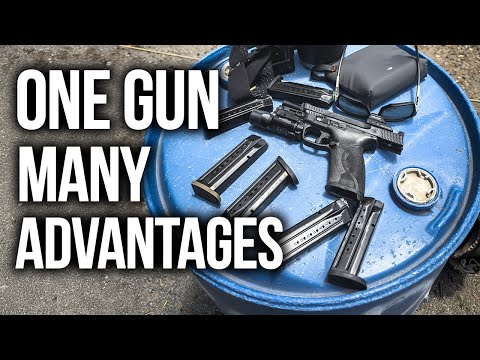
Joel Park, a firearms instructor, discusses the challenges and realities of switching between different firearm platforms. He emphasizes that making all guns feel the same is often a flawed goal due to inherent differences in grip angle, controls, and ergonomics. While some fundamental shooting skills transfer, mastering a new platform requires dedicated practice to learn its specific nuances, such as disengaging safeties or managing unique features like magwells. Park advises focusing training on a primary competition or duty firearm to build proficiency, rather than dividing time across multiple platforms, especially when preparing for specific events.
This video from Louisiana Firearms emphasizes that firearm training and proficiency are far more critical for self-defense than the physical size of the handgun. The speakers, identified as firearms enthusiasts or instructors, stress the importance of knowing your daily carry (EDC) firearm intimately, likening it to knowing 'the back of your hand.' This deep familiarity, built through consistent practice and muscle memory, is presented as the primary factor in effectively using a firearm when it matters most.
Joel Park, a professional firearms instructor and competitive shooter, advises that for 99% of individuals, mastering a single firearm platform is the most efficient path to proficiency. He explains that deep familiarity with one system builds superior muscle memory for critical tasks like drawing and recoil control. While multiple platforms can serve distinct needs (duty vs. competition), Park emphasizes the significant cost and time investment required to maintain proficiency across different firearms, recommending a primary and backup identical pistol for most users.
This guide, presented by Myles of Tactical Hyve, emphasizes that knowing firearm safety rules is insufficient; they must be applied subconsciously. The video highlights that frequent handling, including dry fire practice, is crucial for developing these ingrained habits, moving beyond academic knowledge to practical, automatic application, especially for average gun owners.
This video emphasizes the importance of understanding a firearm's recoil impulse and trigger mechanism, rather than relying on preconceived notions. The speaker, a self-proclaimed Glock enthusiast, advocates for dedicating time to learn platforms like the Beretta 92 series, suggesting that such effort would significantly improve shooting performance and potentially make these firearms the most frequently used.
This video showcases the Benelli M4 shotgun being used to shoot slugs at a gong. The presenter expresses enjoyment of the sound and the performance of the firearm, highlighting its status as a favorite. While not a formal training video, it demonstrates a practical application of a shotgun with slugs in a recreational shooting context.
This video from Modern Protector discusses the best firearm for home defense, evaluating the AR-15, concealed carry pistol, and shotgun. The instructor emphasizes that the "best" gun is subjective and depends heavily on individual proficiency and training. Key takeaways include the importance of familiarity with your chosen firearm, the trade-offs of each platform (e.g., rifle maneuverability vs. pistol concealability), and the critical need for accuracy due to potential backstops in a home environment.
This video demonstrates a handgun identification drill where participants attempt to identify firearms by touch alone. It highlights the importance of tactile familiarity with different firearm models, emphasizing that knowing your senses is crucial for quick and accurate identification, even under pressure or with visual impairment.
This video explains the significant advantages of owning multiple identical firearms, focusing on five key areas: familiar manual of arms, purpose-driven configurations, spare and interchangeable parts, backup readiness, and long-term cost savings. The speaker, an experienced firearm instructor, emphasizes how standardization builds neural efficiency and muscle memory, crucial under pressure. Owning multiple of the same model allows for specialized configurations without compromising handling mechanics, simplifies parts and maintenance logistics, and ensures readiness in case of equipment failure.
This video features a blindfolded challenge where the host attempts to identify various firearms solely by touch. The challenge highlights the importance of grip texture, slide serrations, and unique design features in firearm identification. While the host demonstrates a good level of familiarity with common firearm characteristics, some less common or modified firearms proved challenging, underscoring the depth of knowledge required for absolute identification.
This video from Joel Park, a seasoned shooter, addresses the complex decision of switching handgun platforms, particularly for competitive shooters like those in USPSA. He emphasizes that switching is a significant commitment requiring substantial investment in time, ammunition, and practice to regain proficiency. Park advises that the decision should be driven by a genuine need or capability enhancement, not just novelty, and that the transition period can range from two to six months for a shooter to reach their previous performance level.
This guide outlines a strategic approach for competition shooters transitioning between firearm platforms, such as moving from a Glock to a 2011. It emphasizes utilizing the off-season for dedicated practice with the new platform, maintaining an open mind about equipment adjustments, and committing to a significant round count (5,000+) for mastery. The advice comes from an experienced shooter with 16 years of Glock experience transitioning to a 2011.
Gun Laws by State
Read firearms regulations for all 50 states + D.C.
Find Gun Dealers
Search licensed FFL dealers near you.