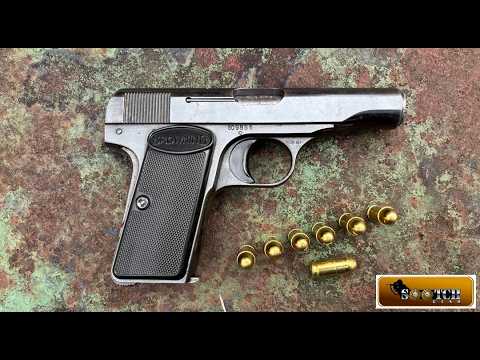
This guide details the field stripping and reassembly process for the Browning Model 1910 pistol. It covers the unique barrel bushing removal mechanism, recoil spring assembly, and the steps to separate and rejoin the slide, barrel, and frame. The process highlights the pistol's blowback design and John Browning's engineering.
This video explores 20 pocket pistols projected to increase in value by 2025, highlighting their historical significance, mechanical features, and collector appeal. The presenter emphasizes that condition, originality, and specific markings significantly drive market value, turning these once utilitarian firearms into potential investments. The selection ranges from iconic pre-war designs to more modern classics, appealing to both historical enthusiasts and those seeking unique CCW options.
This video showcases a collection of rescued firearms imported from Canada, featuring a variety of German and Belgian pistols. The instructor provides detailed examinations of each firearm, highlighting specific markings, production eras, and condition. Notable pieces include several Walther P38s and PP/PPKs, a WWI-era Luger, a Browning Hi-Power, and an engraved FN 1910, with discussions on their historical context and collector value.
This review of the Belgian FN 1910, presented with high authority by Mae, details its historical significance as the pistol that initiated WWI. Key takeaways include its compact size, weight (1.3 lbs), and dual caliber capability (.32 ACP and .380 ACP) with distinct magazine capacities. The review highlights its three safety features (grip, manual lever, and internal magazine safety), low bore axis contributing to manageable recoil, and integrated low-profile sights. It's assessed as a solid pocket pistol with versatile caliber options, though capacity is a trade-off for firepower.
The FN 1922 pistol, an evolution of the FN 1910, was a successful if unremarkable firearm adopted by numerous European nations and police forces. This review highlights its development from the 1910, its shared parts with other FN models, and its basic operational features. The video demonstrates a field strip, emphasizing modularity and a simple sear mechanism, while also noting ergonomic considerations like a long trigger reach and grip safety.
This video provides a comprehensive, rapid-fire overview of over 100 firearms used during World War I, showcasing a vast array of handguns, rifles, and machine guns from various nations. The presentation highlights iconic WWI weaponry, demonstrating their historical significance and variety. C&Rsenal's expertise is evident in the detailed presentation of these historical arms.
This video provides a live-fire demonstration of the Belgian FN 1910 pistol, showcasing its operation and accuracy. Expert instruction is provided on loading, firing, and observing the firearm's cycling in slow motion. The demonstration includes shot placement at 30 feet, offering insights into the pistol's performance.
This video provides an expert overview of the FN 1910 pistol, a John Browning design with a rich history. It covers the pistol's design evolution, service history with various European forces, and its significant role in historical events. The review includes practical insights into its ergonomics, safety features, and range performance, noting its strengths in natural pointing but acknowledging its limitations compared to later designs like the Walther PPK.
This video provides an in-depth look at the Astra Model 700 Special, a pistol manufactured in 1926-1927. Instructor Ian highlights its design as an attempt by Astra to compete with the popular FN Model 1910, noting its visual similarities but internal Ruby pistol mechanics. The video details the limited production run of 4,000 units and demonstrates the disassembly process, emphasizing its shared components with the Ruby pistol.
You've reached the end! 10 videos loaded.
Gun Laws by State
Read firearms regulations for all 50 states + D.C.
Find Gun Dealers
Search licensed FFL dealers near you.