This video offers an expert-level review of five revolvers often criticized in America: the Heritage Rough Rider, Nagant M1895, NAA Mini Revolver, Taurus Judge, and Chiappa Rhino. The instructor, demonstrating high authority and deep technical knowledge, argues that these firearms are often misunderstood and possess unique strengths for specific applications, such as training, deep concealment, or specialized defense roles. The analysis emphasizes practical use cases over popular opinion.
This guide details the unique gas-seal mechanism of the Nagant 1895 revolver, as explained by Othais from C&Rsenal. It covers the intricate interplay of the trigger, cylinder indexing, locking block, breech block, and the 'hand' component. The explanation emphasizes how these parts work together to create a gas seal, a critical feature for this historical firearm.
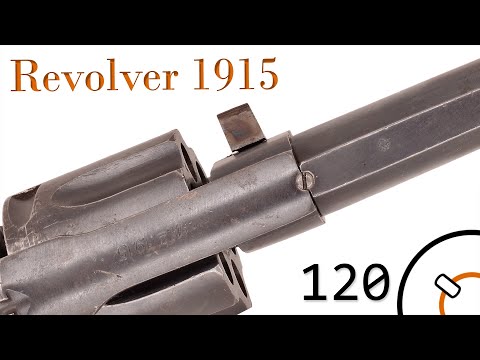
This video ranks revolvers used during World War I, evaluating them based on action type, ergonomics, reliability, and cartridge effectiveness. It highlights the decline of single-action revolvers and the rise of more modern designs like the Colt and Smith & Wesson 1917 models, which utilized .45 ACP with moon clips for rapid reloading. The presenters, experienced firearms enthusiasts, provide detailed critiques of each model, from the poorly made Romanian 1915 to the highly regarded top-tier revolvers.
This guide explains the unique gas-seal mechanism of the Russian Nagant M1895 revolver, a feature that sets it apart from other revolvers. The video demonstrates how the cylinder advances to create a seal, enhancing muzzle velocity and accuracy. It also covers the identification of the 7.62 Nagant cartridge and provides historical context for the firearm. Instruction is provided by an expert with high authority, demonstrating deep mechanical understanding.
This video provides an in-depth look at the M1895 Nagant revolver, highlighting its unique gas-seal mechanism designed by Leon Nagant. It details the revolver's adoption by Imperial Russia and its subsequent production in both Belgium and Russia, noting the evolution of its fit and finish over time. The discussion also touches upon its service history through both World Wars and the challenges of finding its specialized ammunition.
This video provides an expert demonstration of the Nagant M1895 revolver's operation, focusing on its unique gas-seal mechanism and handling procedures. Misha, with high authority and detailed knowledge, covers loading, firing in both single and double-action modes, and manual ejection. The guide is suitable for intermediate users seeking to understand the practical use of this historical firearm.
The Romanian Revolver 1915, often an Antonio Errasti Model 1915, is a Spanish-made firearm characterized by extremely poor construction, questionable metallurgy, and frequent damage to critical components like the forcing cone. While it superficially resembles earlier gas-seal designs, it lacks the gas seal and is prone to catastrophic failure. The video strongly advises against shooting these revolvers due to safety concerns, highlighting their unreliability and the high risk of breakage.
This guide provides an overview of the Steyr 1893 Gas-Seal Revolver's mechanical operation and disassembly, based on expert analysis from Forgotten Weapons. It details the unique gas-seal mechanism, internal components, and variations, highlighting the complexity that may have prevented its adoption. The information is presented with high authority by Ian McCollum, a recognized expert in historical firearms.
This video provides a detailed look at the Russian Model 1895 Nagant revolver, highlighting its unique gas seal mechanism, gate-loading system, and operational quirks. It discusses the revolver's history, production numbers, and its service life. The presenter, Mike from TFB TV, offers insights into its handling, trigger pull, accuracy, and ammunition compatibility, noting its surprisingly good inherent accuracy despite a heavy trigger and potential sighting issues. The video also touches on its suppressibility due to its subsonic velocity and gas seal.
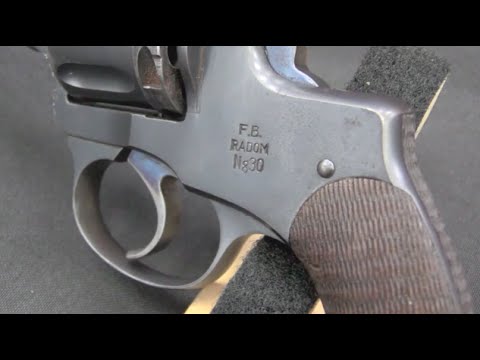
This entry details the Polish Ng30 Nagant revolver, a variant manufactured by FB Radom in Poland based on Russian 1895 Nagant designs. Expert Ian McCollum highlights its superior finishing compared to Russian counterparts, its adoption by Polish police forces, and its unique gas-seal mechanism. Approximately 21,000 units were produced between 1928 and 1939.
This guide details the complex disassembly and internal mechanism inspection of several historically significant firearms, including the Mauser G41(M), Nagant M1895, Boberg XR9-S, SIG 510, and Mauser C96. The video highlights unique engineering solutions and the challenges associated with their intricate designs, as explained by an expert with deep mechanical understanding.
This guide details the loading and firing procedure for the M1895 Nagant Gas Seal Revolver, as demonstrated by Iraqveteran8888. It covers the unique gas seal mechanism, the proper loading of the 7.62x38mmR cartridge, and the firing sequence in both single and double-action modes. The guide emphasizes safety and notes the limitations when using alternative calibers.
You've reached the end! 12 videos loaded.
Gun Laws by State
Read firearms regulations for all 50 states + D.C.
Find Gun Dealers
Search licensed FFL dealers near you.