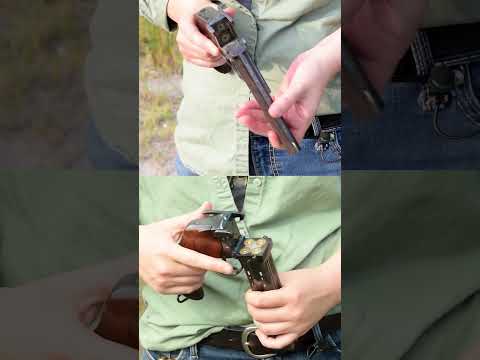
Nagant 1895 Gas Seal

Published on December 26, 2025
Duration: 2:10

This expert guide breaks down the unique gas seal mechanism of the Nagant 1895 revolver. Instruction from C&Rsenal's Othais details how the cylinder advances and seals against the barrel, supported by a pivoting breech block controlled by a locking block. The 'hand' component's role in indexing the cylinder is clarified, offering a deep dive into historical firearm engineering.

Quick Summary

The Nagant 1895's gas seal is achieved as the cylinder indexes forward to seal against the barrel. A pivoting breech block, controlled by a locking block, supports the cartridge case. The 'hand' component is key to the cylinder's forward movement for sealing.

Chapters

  1. 00:00Intro to Nagant 1895 Gas Seal
  2. 00:18Breech Block and Support System
  3. 00:45Role of the 'Hand' Component
  4. 01:21Internal Component Interaction Demo
  5. 01:53Historical Gas Seal Comparisons

Frequently Asked Questions

How does the Nagant 1895 achieve its gas seal?

The Nagant 1895 achieves its gas seal as the trigger is pulled, causing the cylinder to index forward and seal its mouth against the rear of the barrel. A breech block then pivots into place to support the cartridge case.

What is the function of the 'hand' component in the Nagant 1895?

The 'hand' component in the Nagant 1895 is responsible for driving the cylinder forward into its sealed position against the barrel. This action is crucial for the revolver's unique gas-sealing capability.

What supports the cartridge case during firing in the Nagant 1895?

During firing, a pivoting breech block moves into place at the back of the cylinder to support the cartridge case. This is controlled by a vertical locking block within the firearm's frame.

More Gunsmithing & DIY Videos You Might Like

More from C&Rsenal

View all →