This video covers Day 1 of the Czech Combat 2024 match, a military-style competition held in the Czech Republic. Instructor Ian McCollum navigates six challenging stages designed to replicate real-world scenarios, emphasizing tactical decision-making and physical exertion. The competition features a variety of firearms, including less-lethal options, and incorporates unique elements like simulated casualty evacuations and blind stages.
This video provides a rapid overview of iconic Russian light machine guns (LMGs) and general-purpose machine guns (GPMGs). It highlights the RPK, RPD, and PKM, detailing their distinct features, calibers, and operational differences. The instruction comes from an expert with high familiarity with specialized military firearms.
This entry details the Zastava M84, a Serbian-made GPMG based on the Soviet PKM, highlighting its reliability, durability, and modern adaptations. Expert insights from Zastava engineers and combat veterans underscore its effectiveness. The M84 is noted for its robust cold-forged, chrome-lined barrel, capable of withstanding extreme firing conditions, and its adaptability with features like Picatinny rails and folding stocks. Comparisons with the M60 emphasize its lighter weight and more manageable rate of fire.
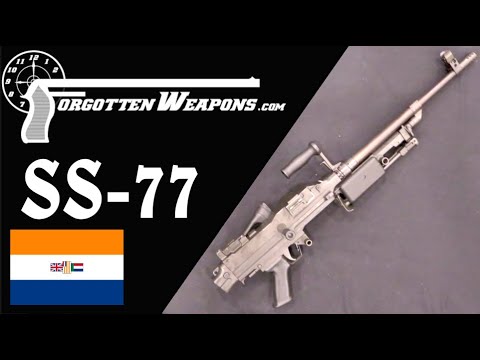
This guide details the field stripping and reassembly process for the Vektor SS77 General Purpose Machine Gun, as demonstrated by firearms expert Ian McCollum. It covers the removal of major components like the top cover, bolt carrier group, and trigger group, emphasizing a methodical approach for maintenance. The video highlights the design's influences and practical application, offering insights into its development and mechanical operation.
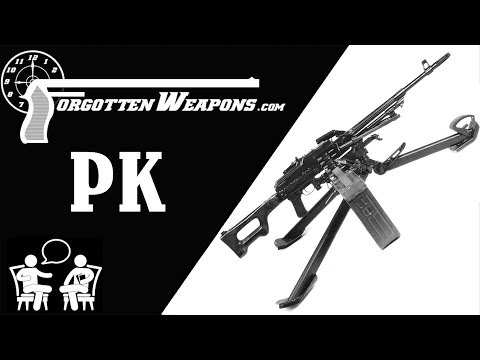
This guide details the quick-change barrel procedure for the PKM, a critical feature for sustained fire operations. The video highlights the PKM's lighter weight compared to the M240B and its open-bolt system, which aids cooling and prevents cook-offs. Instruction is provided by recognized subject matter experts, offering a high level of authority.
This YouTube video pits two iconic firearms against each other in a shooting match: the M240 General Purpose Machine Gun (GPMG) and the M16A2 Rifle. The description poses the question of which marksman would prevail in such a contest, suggesting a focus on the capabilities and performance of each weapon system. The title implies a comparative analysis, likely highlighting the strengths and weaknesses of a heavy machine gun versus a standard issue rifle.
This guide details the field stripping and basic operational overview of the Madsen Saetter GPMG, a Danish Cold War machine gun. Expert instructor Ian McCollum demonstrates the process, highlighting its design influences and internal mechanisms. The guide covers barrel removal, bolt carrier group separation, and trigger group access, emphasizing the flapper locking system. It's crucial to follow all safety protocols during disassembly and reassembly.
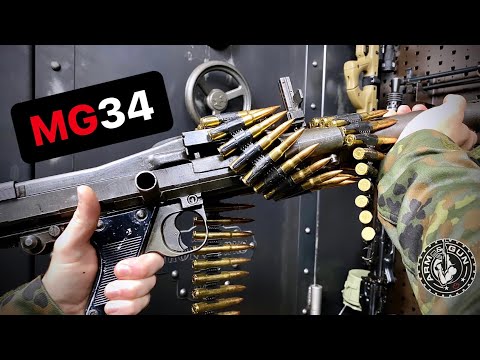
This guide details the quick-change barrel mechanism and buttstock detachment for the Mauser MG34, as demonstrated by an instructor with high authority. The video highlights the flexibility of the MG34, considered the first General Purpose Machine Gun (GPMG), and its historical context under the Treaty of Versailles.
This entry details the extremely rare Steyr-Solothurn S3-200, presented by firearms expert Jonathan Ferguson of the Royal Armouries. It covers its historical context as a German design circumventing the Treaty of Versailles, its technical specifications as a precursor to the General Purpose Machine Gun (GPMG), and its unique operational features like the rocking trigger and short recoil action. The S3-200 is highlighted for its rarity, with only two known examples.
This video provides an in-depth historical overview of the Soviet Union's development of General Purpose Machine Guns (GPMGs), focusing on the PK, PKM, and PKP Pecheneg. Expert Max Popenker details the design evolution, competition between prototypes, and the technical advancements that led to these iconic firearms, highlighting their reliability and lightweight design.
This guide details the modularity and caliber conversion process for H&K machine guns like the HK21E, as demonstrated by TFB TV. It covers swapping feed units and changing calibers by replacing the bolt group, barrel, and feed mechanism. The video highlights the effectiveness of H&K's roller-delayed blowback system and their naming conventions. Instruction is provided by subject matter experts with hands-on proficiency.
This video from Forgotten Weapons, hosted by Ian McCollum, provides a comprehensive breakdown of machine gun terminology, differentiating between LMG, MMG, HMG, SAW, LSW, and GPMG. It explores their historical evolution, technical characteristics, and intended roles in military contexts, offering insights into the design philosophies behind these iconic firearms.
Gun Laws by State
Read firearms regulations for all 50 states + D.C.
Find Gun Dealers
Search licensed FFL dealers near you.