This episode of 'Opening the Archives' by Palmetto State Armory delves into the history and inspiration behind iconic Star Wars prop firearms. CEO Jamon McCllum showcases the Han Solo blaster, a modified Mauser Broomhandle with an MG34 muzzle device and scope, and the Sterling SMG that inspired the Stormtrooper blasters. The discussion highlights how real firearms are repurposed and modified to create unique movie props, emphasizing the connection between historical firearms and pop culture.
Brandon Herrera provides an in-depth tour of his personal "gun wall," showcasing a diverse collection of firearms with sentimental and historical value. The breakdown includes everything from unique AK and AR variants like the Kalashnibren and Mk47 Mutant, to classic rifles such as the SCAR-16 and FN FAL, and iconic handguns like the Desert Eagle and Luger. The video also features historical pieces like the M3A1 Grease Gun, MG34, and even a demilled RPG-7, offering insights into their significance and Herrera's personal connection to each firearm.
This video features Brandon Herrera, a prominent firearms manufacturer, critically reviewing a collection of 'cursed' gun images. He highlights bizarre modifications, technical flaws, and historical oddities, offering expert commentary on poor engineering and design choices. The content serves as a cautionary guide to firearm customization, emphasizing the importance of proper build techniques and understanding firearm mechanics.
This YouTube video highlights 10 iconic firearms that have stood the test of time, impacting both gunsmithing and world history. The description emphasizes how these weapons, including infantry firearms like the M1 Garand, MG34, and Luger P-08, as well as the Tommy Gun, changed combat and became legendary through popular culture. The video suggests that while not always the most practical, these guns were revolutionary for their eras and highly sought after by soldiers.
This video delves into why Germany did not field a .50 caliber machine gun during WWII, contrasting it with the successful development and widespread adoption of the American M2 Browning. It explores the German preference for 20mm cannons in anti-aircraft roles, the logistical considerations of ammunition and weapon systems, and the differing doctrines between the US and Germany regarding vehicle-mounted armament. The discussion highlights the industrial might of the US in producing millions of M2s versus Germany's focus on larger caliber autocannons.
This video features a test firing of a WWII-era MG34 machine gun in 8mm caliber. The creator expresses excitement about acquiring another MG34 and suggests they possess nearly every WWII German machine gun. The video also mentions an upcoming museum re-opening in April and promotes merchandise sales through a website.
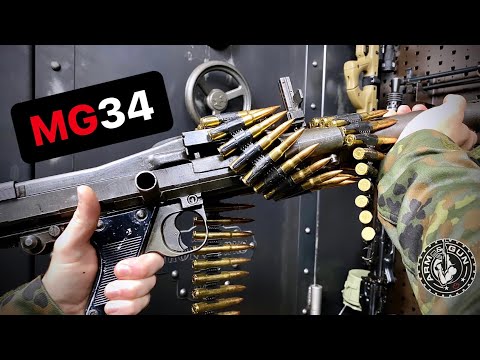
This YouTube video showcases a new MG34 German WWII machine gun during a museum tour with 66 attendees. The description highlights the MG34 as an 8mm belt-fed firearm and promises a future video featuring people shooting machine guns. The video also promotes merchandise available through a provided shop link.
This video offers a high-energy, rapid tour of an extensive 'Ultimate Gun Wall' collection, showcasing a vast array of modern tactical firearms, historical pieces, and heavy weaponry. The presenter, identified as a recognized firearms collector and content creator, demonstrates deep knowledge by instantly identifying numerous rare and experimental variants. The collection spans from handguns to anti-tank rifles, providing a comprehensive visual overview for enthusiasts.
This guide details the quick-change barrel mechanism and buttstock detachment for the Mauser MG34, as demonstrated by an instructor with high authority. The video highlights the flexibility of the MG34, considered the first General Purpose Machine Gun (GPMG), and its historical context under the Treaty of Versailles.
This Q&A episode from Forgotten Weapons covers various firearms topics, including the post-WWII use and conversion of the MG34 by Norway, the viability of the MG42/MG3 today, and the differences between prototype and troop trials. Ian McCollum also discusses the challenges of adopting new firearms during wartime and the practicalities of chambering modern handguns in 7.65mm French.
This YouTube video, titled "Gun Santa Episode 4!", showcases a variety of firearms that arrived recently. The collection includes several boxed Walther PPK's and PP's, a Walther PP Super, Manurhin models, a German MG34, and a rare FG42. The video also promotes the creator's Patreon page for early access to content and entry into monthly raffles.
This video provides an overview of the German MG34 general-purpose machine gun. It covers the firearm's history, features, specifications, and other essential facts. The content is presented in a "Gun101 Overview" and is the #55 "GunOfTheWeek". The creator also promotes their social media presence on Instagram, Patreon, Facebook, and Parler, along with affiliate links for Bolt Action Coffee and Olight.
Gun Laws by State
Read firearms regulations for all 50 states + D.C.
Find Gun Dealers
Search licensed FFL dealers near you.