This video from Active Self Protection, featuring John Correia and Stephannie Weidner, analyzes a real-life use-of-force incident. It emphasizes the legal threshold for employing deadly force, focusing on the 'great bodily harm' standard, and breaks down critical self-defense techniques including maintaining a vertical shield and firing across the body. The analysis highlights the importance of empty-handed skills and holster retention in close-quarters encounters.
This video, featuring retired law enforcement officer Kevin Michalowski and former prosecutor Tom Grieve, provides a critical look at the legal realities of drawing a concealed firearm. It emphasizes that drawing a weapon, even without firing, can lead to significant legal challenges due to subjective witness accounts and prosecutor discretion. The core message is to understand the high legal threshold for using deadly force and the potential consequences of drawing a firearm prematurely.
This video explains the legal framework for the justified use of lethal force, emphasizing the 'Ability, Opportunity, Jeopardy' model. It contrasts common media portrayals with legal realities, stressing that self-defense is based on a reasonable perception of imminent threat of death or great bodily harm, not just who struck first. The importance of perspective at the time of the event and the role of preclusion in some jurisdictions are also discussed.
This Q&A session from USCCA features Kevin Michalowski, Director of Content, addressing various self-defense and firearms-related questions. Key topics include the effectiveness of OC spray versus firearms for animal defense, the legal justification for using deadly force (imminent threat of death or great bodily harm), and the proper protocol after a self-defense shooting. The discussion also touches on the nuances of defending third parties, home invasion scenarios, ammunition choices, handgun calibers, and practical advice for carrying firearms in public restrooms.
This video emphasizes that the goal of using a firearm for self-defense is to stop the threat, not to kill. It highlights the legal and practical distinction between shooting to stop an assaultive behavior and intending to kill. Proper terminology is crucial to avoid legal complications when defending oneself.
Instructor Mike discusses non-firearm self-defense options, specifically highlighting pepper spray products from Sabre. He emphasizes that while a firearm can make all threats appear deadly, pepper spray offers a viable alternative for situations where the threat is not necessarily lethal but aims to cause significant bodily harm or disfigurement. He notes the availability of tactical series pepper spray, comparable to what law enforcement uses, and discreet options like lipstick-style dispensers.
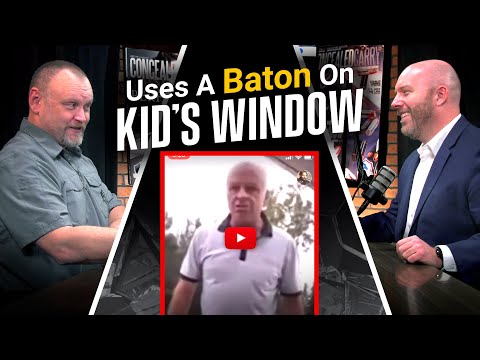
This video analyzes a self-defense scenario where an aggressor smashes a car window with a baton and makes threats. Criminal defense attorney Tom Grieve discusses the legal standards for using deadly force, emphasizing the reasonable fear of imminent death or great bodily harm. He highlights the importance of state laws like Castle Doctrine and Stand Your Ground, and contrasts the potential legal outcomes of escalating versus de-escalating the situation, advising that avoiding a confrontation, even if legally justified, often leads to better long-term outcomes.
This video, featuring Kevin Michalowski of the USCCA and attorney Tom Grieve, delves into the complex legalities of using deadly force in the United States for self-defense. It specifically addresses viewer questions about whether the threshold for using deadly force changes during civil unrest or natural disasters, particularly when protecting essential supplies like food and water. The experts clarify that the core legal standard – reasonably fearing imminent death or great bodily harm – remains constant, although circumstances can influence a jury's perception of a threat. They strongly advise against engaging in riots and emphasize the importance of safe escape if possible, reiterating that self-defense laws do not adapt to societal upheaval.
This video, featuring criminal defense attorney Tom Grieve, clarifies when deadly force is legally permissible in a self-defense scenario, particularly in Wisconsin. It emphasizes that a punch, while potentially assault, does not automatically justify deadly force unless it creates a reasonable fear of imminent death or great bodily harm. The discussion highlights the critical role of 'reasonableness' and the totality of circumstances, including disparity in size, strength, and training, in legal assessments.
This video features the U.S. Concealed Carry Association's Director of Content, Kevin Michalowski, and criminal defense attorney Tom Grieve analyzing a gas station security footage incident where an employee shoots at a fleeing shoplifter. They discuss the legal ramifications, ethical considerations, and potential dangers of using deadly force in such a situation. The analysis emphasizes that deadly force is only justified to prevent death or great bodily harm, and the employee's actions were not legally justifiable, potentially leading to severe legal consequences. The video advises gun owners to remain calm and use proper judgment, highlighting the lack of firearms training observed in the incident.
This video provides an attorney's analysis of the Kyle Rittenhouse trial, focusing on the legal definition of self-defense under Wisconsin law. It dissects the prosecution's arguments, particularly the provocation defense and attempts to frame Rittenhouse as an active shooter, contrasting them with the defense's strategy and Rittenhouse's testimony. The analysis also touches on prosecutorial misconduct and the judge's rulings.
This video, featuring criminal defense attorney Tom Grieve, explores the complex legalities of returning fire when attacked with realistic Airsoft guns. It emphasizes that the core question is whether the victim reasonably believed they were facing a deadly threat, even if the weapon was a facsimile. The discussion highlights how the perception of the threat, the attacker's actions, and state-specific definitions of deadly force (including great bodily harm) are critical in determining legal justification for self-defense.
Gun Laws by State
Read firearms regulations for all 50 states + D.C.
Find Gun Dealers
Search licensed FFL dealers near you.