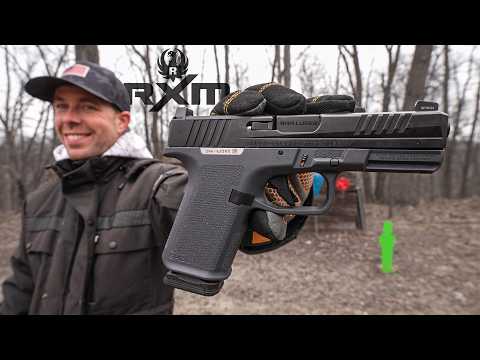
Joel Park, a firearms instructor, discusses the challenges and realities of switching between different firearm platforms. He emphasizes that making all guns feel the same is often a flawed goal due to inherent differences in grip angle, controls, and ergonomics. While some fundamental shooting skills transfer, mastering a new platform requires dedicated practice to learn its specific nuances, such as disengaging safeties or managing unique features like magwells. Park advises focusing training on a primary competition or duty firearm to build proficiency, rather than dividing time across multiple platforms, especially when preparing for specific events.
This video provides a comprehensive review and comparison of the Ruger RXM pistol against the Glock platform, focusing on practical shooting impressions and feature analysis. The presenter, an experienced shooter, highlights the RXM's improved ergonomics, trigger feel, and slide release compared to Glocks, while also testing its reliability with steel-cased ammunition and its accuracy at various distances. The review concludes that the Ruger RXM is a strong competitor to Glock, offering significant improvements at a lower price point, though Glock retains an edge in proven long-term reliability.
This video focuses on custom backstraps designed for Glock pistols, specifically mentioning their impact on the grip angle of a Glock 27 when chambered in .357 Sig. The Kiral backstraps are highlighted for their ability to alter how the pistol fits in the hand, potentially improving handling and shooting experience for users of this specific caliber and firearm model. The content appears to be geared towards Glock owners looking to personalize and optimize their firearm's ergonomics.
This guide synthesizes expert advice from Ben Stoeger and Nick Young on mastering the 2011 platform. It covers essential techniques like precise trigger control, managing grip angles for a consistent draw stroke, and understanding the unique shooting dynamics of 2011s compared to striker-fired pistols. The information is presented with a practical, analytical tone, drawing from the speakers' high-level competitive shooting experience.
The speaker identifies two key errors in their five-rifle arsenal build: lack of standardization in grips and failure to test accessories before purchase. They highlight the difference in grip texture and angle between Magpul grips and the MFT Engage grip, preferring the latter for its comfort and reduced blister risk. The video also demonstrates how certain accessory angles can cause slippage against barricades during shooting, emphasizing the importance of testing for practical application.
This podcast episode delves into the evolution of handguns, comparing Glock's reliability and simplicity against the perceived 'cheat code' advantages of 2011 platforms. Speakers discuss the nuances of trigger feel, grip angles, and the increasing popularity of 2011s for recreational shooting due to their fun factor and performance. The conversation also touches on advanced training drills like the Mancard Drill and the future of suppressor technology.
Joel Park advises against frequent switching between different firearm platforms if aiming for high-level shooting proficiency. He emphasizes that even subtle differences in grip angle, frame shape, texture, and recoil impulse require conscious effort to manage. For competitive shooters, sticking to one or two identical firearms is recommended. If switching is necessary, focus on consistent grip indexing, hand placement, and holster draw techniques.
This analysis of the Ruger RXM highlights several user-friendly features. The gun boasts a flared, integrated magazine well for faster reloads and geometric cuts on the grip that aid in recoil control without a steep grip angle. A stunted beaver tail prevents slide bite, and the dehorned magazine release is designed for easy operation while preventing accidental drops. The grip texture is moderately aggressive, balancing control with comfort for a multi-role handgun.
This 7,000-round review of the Beretta 92 GTS highlights its G-style frame-mounted decocker, noting its compatibility with standard 92FS parts and its unique half-cock decocking feature. The review details the pistol's reliability, ergonomics including grip angle and decocker lever comfort, and the quality of its components like the trigger and barrel. It also touches on aftermarket modifications and the overall value proposition compared to custom builds.
This video features the .357 Sig cartridge, specifically highlighting DoubleTap JHP ammunition. It also showcases a custom modification involving a grip angle-changing backstrap, attributed to Kiral. The content appears to be focused on the performance of the ammunition and the functionality of the firearm accessory.
This video reviews the Agency Arms NOC 2.0, highlighting its custom features and California compliance. The discussion emphasizes the modified grip angle, which is compared favorably to stock Glocks and Sig Sauer P320s, and the extensive custom work involved, including stippling and barrel porting. The video also touches on the use of specific frames for California compliance and the overall shooting experience of the customized firearm.
This video explores common upgrades considered necessary to make Glocks suitable as carry guns. The host and viewers discuss the merits of changing sights, triggers, and grip angles, with a consensus that sights are often the most critical upgrade. The discussion also touches on the inherent characteristics of striker-fired platforms and the cost-benefit analysis of modifying a Glock versus purchasing a different firearm.
Gun Laws by State
Read firearms regulations for all 50 states + D.C.
Find Gun Dealers
Search licensed FFL dealers near you.