This video analyzes five popular handguns that can be challenging for senior shooters due to factors like recoil, grip size, and trigger pull. It highlights how ultra-lightweight, compact, or powerful firearms, while appealing on paper, often demand more physical strength and practice than many older individuals can comfortably provide, leading to potential control issues and reduced effectiveness.
Chris Sajnog, an experienced firearms instructor, emphasizes that dry fire training extends beyond simple trigger pulls. It encompasses a holistic approach to improving shooting skills, including grip strength, eyesight, meditation, weapon manipulations, reloads, and malfunction clearing, all performed without live ammunition.
This video details a unique marksmanship training drill for blind shooters, led by expert instructor Harold Cabunoc. It focuses on developing 'Natural Point of Aim' (NPA) and instinctive shooting techniques, enabling a blind soldier, Major Jerome Jacuba, to achieve consistent hits on target using an airsoft Glock. The training emphasizes physiological factors like grip and breath control over visual cues.
This analysis focuses on how the frame geometry of firearms, specifically mentioning the Ruger RXM and comparing it to the Glock 19, can enhance shootability. The angled front strap and magazine well are highlighted for their role in leveraging hand pressure and friction. A single finger groove below the trigger guard is noted for its ability to help secure a high and tight grip with minimal effort.
This video demonstrates the Farmer's Carry exercise, a tactical strength and conditioning drill popularized by GBRS Group. Navy SEAL DJ Shipley and Exercise Scientist Dr. Mike Israetel showcase the technique, emphasizing strong posture, core engagement, and grip strength. The exercise involves carrying heavy weights for maximum distance, with a slower pace increasing difficulty.
This video from Tactical Hyve addresses shooters experiencing difficulty controlling their pistol due to perceived weak hands or lack of grip strength. Instructor Miles emphasizes that while grip strength is beneficial, it's not the sole determinant of control. He introduces the 'push-pull' technique as a method to create necessary friction and connection with the firearm by engaging larger muscle groups beyond just the hands and fingers. This approach aims to improve consistency, accuracy, and speed, especially for individuals with physical limitations like arthritis.
This video discusses the resurgence in popularity of revolvers, highlighting their simplicity, reliability, and ease of use, making them suitable for new gun owners and individuals with grip strength issues. The discussion touches on the increasing price and quality of modern revolvers, contrasting them with polymer-frame semi-automatics and noting their better resale value. The trend is observed across all age groups, with a particular mention of the Colt Snake Series and Smith & Wesson revolvers.
This video provides a comprehensive guide to improving pull-up performance, focusing on grip variations, proper muscle activation, and progressive training methods. It details techniques like pronating the wrist for increased power and emphasizes the importance of consistency and intentionality in training. The discussion also covers strategies for beginners, intermediate lifters aiming for higher reps, and advanced techniques like weighted pull-ups, all within the context of a structured fitness program.
This video discusses the importance of a comprehensive physical screen test for tactical professionals and civilians alike. It emphasizes training for well-roundedness, focusing on functional movements that translate to real-world performance. Key exercises highlighted include the bench press, trap bar deadlift, farmer's carry, dead hang, pull-ups, an agility test, and an 800-meter run, all designed to build a capable physical vessel.
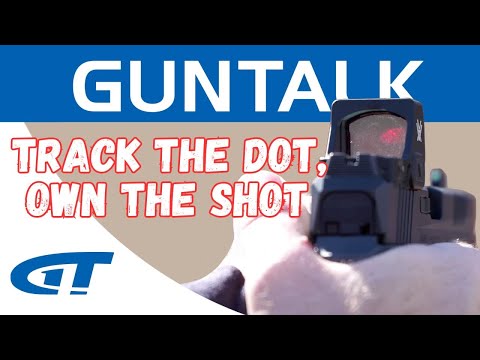
This video emphasizes the critical advantage of red dot sights: tracking the dot through recoil. It highlights that maintaining focus on the target, understanding your trigger intimately, and employing a solid grip are paramount. A strong grip is essential for recoil management, which directly impacts your ability to keep the dot visible and reacquire your target quickly, leading to faster and more accurate shooting.
This video explains how to effectively balance dry fire and live fire training for pistol proficiency. The instructor advises using limited live fire time at an indoor range for fundamental drills like rapid fire pairs to test grip and connection, while dedicating dry fire to more complex movements like target transitions. A key recommendation is to periodically validate dry fire practice with live fire (around 25% of range time) to identify discrepancies and ensure perceived performance matches actual results, especially concerning shot placement and sight tracking.
This video addresses the challenge of selecting a handgun for recoil-sensitive individuals, including those with arthritis, injuries, or grip strength issues. The primary recommendation is the Kahr Arms PM9 for its manageable recoil and ease of use. The presenter also discusses other options like the Taurus Judge and Beretta 92, emphasizing the importance of choosing a firearm that the user can comfortably and safely operate.
Gun Laws by State
Read firearms regulations for all 50 states + D.C.
Find Gun Dealers
Search licensed FFL dealers near you.