This video analyzes a self-defense incident where a clerk successfully defended himself against an armed robber. It highlights the importance of situational awareness, the risks of staged firearms, and the legal justification for using deadly force. The analysis emphasizes that while the clerk won the fight, luck played a significant role due to factors like the firearm's placement and the robber's actions.
This video demonstrates techniques for defending against an attacker who grabs your pistol. Key strategies include using your non-dominant arm for control, employing a push-and-pull motion with the weapon, and targeting vulnerable areas like the nose for incapacitation. For two-handed grabs, leverage is gained by using a foot strike before pulling the weapon free. The importance of a tap-rack drill after a potential malfunction is also highlighted.
This video outlines five common mistakes made by new concealed carriers and provides actionable advice to avoid them. Key takeaways include the critical importance of using a safe holster that covers the trigger guard, focusing on practical skills over firearm 'bells and whistles,' developing hand-to-hand combat abilities, and carrying supplementary tools like pepper spray and a trauma kit. The speaker emphasizes that consistent training is paramount for effective self-protection.
This video showcases military combatives training, emphasizing the importance of controlled aggression and violence in a safe environment. The speaker, identified as experienced, highlights the 'combatant's pit' as a superior method for physical conditioning and team-building, fostering self-discovery through intense, simulated combat scenarios.
This expert-level analysis, presented by John Correia of Active Self Protection, breaks down a real-world defensive encounter. It details a picture-perfect disarm of an armed robber, emphasizing tactical decision-making, weapon control, and the critical use of deadly force. The video highlights the importance of situational awareness, the limitations of open carry, and the effectiveness of concealed carry in such violent confrontations.
This video compilation, presented by U.S. Army Veteran Nikko Ortiz, offers an entertaining yet insightful look at military training mishaps and operational challenges. Ortiz, with his experienced authority, highlights common errors in tactical training, uniform adherence, vehicle operations, and leadership. The content serves as a cautionary and educational resource, drawing from real-world scenarios to underscore the importance of discipline, proper procedure, and situational awareness in military contexts.
This episode features Nick Brokhausen, a Vietnam veteran and MACV-SOG operative, discussing his experiences in Special Forces. He details the evolution of Special Operations, drawing parallels to the OSS, and critiques current organizational structures. Brokhausen also shares personal accounts of his early life, military career including his time in the Marines and Special Forces selection, and his combat missions in Vietnam with Recon Team Habu.
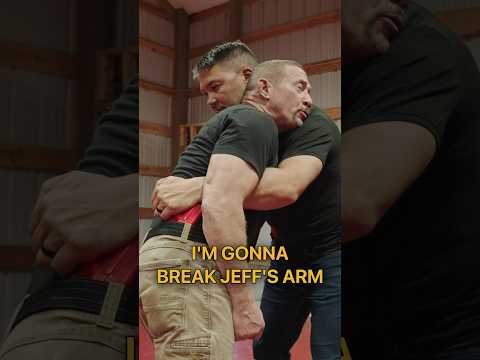
This instructional video demonstrates the 'elbow pin' technique for defending against a gun grab. The instructor emphasizes connecting the hand, gun, and hip to prevent weapon loss. The technique involves using body mechanics, including level changing and hip loading, to break the assailant's arm if necessary. The demonstration utilizes a Tenicor holster and a training pistol.
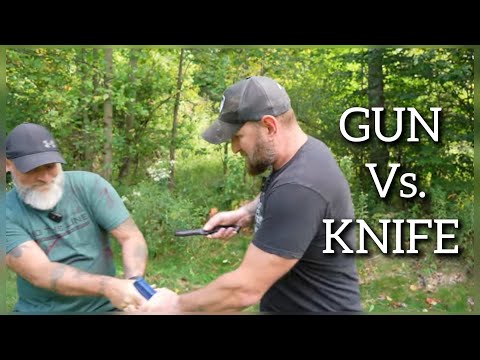
This video demonstrates a critical close-quarters combat technique: when an adversary attempts to gain control of your pistol during a draw or engagement, it is safer to deploy a knife rather than risk losing control of your firearm. The instructor emphasizes maintaining a strong grip on the knife and using it to create space for disengagement and subsequent re-engagement with a firearm.
This video demonstrates techniques for retaining a pistol when an attacker grabs it. It covers counter-grappling methods, including striking the attacker's hand, body, or head, and using a foot kick in conjunction with pulling the firearm. The importance of performing a tap-rack drill after a potential malfunction is also highlighted.
This video demonstrates the critical concept of the 'reactionary gap' and close-quarters defense. Lead Firearms Instructor Neil from Geauga Firearms Academy, with assistance from Daryl, illustrates why bringing a knife to a gunfight can be disadvantageous for the attacker in very close proximity. The demonstrations highlight the speed at which an attacker with a knife can close distance and inflict harm before a defender can effectively draw and deploy a firearm, emphasizing the importance of creating space and understanding reaction times in self-defense scenarios.
This video, analyzed by John Correia of Active Self Protection, breaks down a law enforcement encounter where a suspect resisted arrest. It highlights the importance of tactical positioning, recognizing hand movements as indicators of danger, and the application of proportional force, specifically a well-executed punch, to manage escalating resistance. The analysis emphasizes empty-hand training and understanding legal force standards.
Gun Laws by State
Read firearms regulations for all 50 states + D.C.
Find Gun Dealers
Search licensed FFL dealers near you.