This video documents a chaotic incident at a gas station involving a robbery attempt, a federal agent's intervention, and subsequent police involvement. It highlights the complexities of civilian and law enforcement response to armed confrontations, emphasizing threat assessment, de-escalation, and the legal parameters of using force. The narrative underscores the importance of situational awareness and proper procedure when encountering volatile situations, particularly those involving firearms.
This video from Active Self Protection analyzes a Phoenix PD officer-involved shooting during a domestic violence call. It highlights the critical importance of considering the backstop and the direction of least consequence when engaging a threat. The analysis emphasizes officer calmness under pressure, the concept of 'least consequence' over 'safe direction,' and the complexities of human performance in high-stress situations, particularly regarding trigger control and target acquisition.
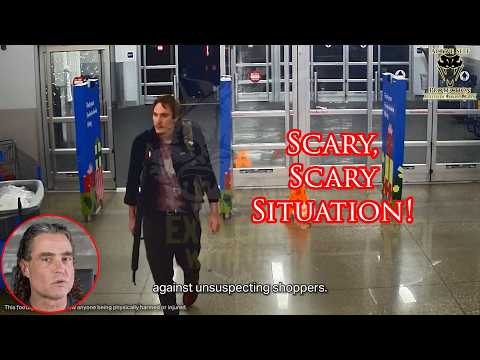
This video analyzes an active shooter incident at a Walmart in Beaver Creek, Ohio, focusing on law enforcement response and tactical considerations. It highlights the importance of situational awareness, rapid threat assessment, and effective room clearing techniques. The discussion also covers gear-related issues like optic settings and sling systems, emphasizing the need for reliable equipment and proper training in high-stress scenarios.
This video from Active Self Protection, featuring hosts John Correia and Mike Willever, analyzes a critical incident where a Pinal County Sheriff's Deputy confronted a man armed with a machete. The expert analysis highlights the deputy's effective threat assessment, use of a weapon-mounted light, and decisive action in neutralizing the imminent threat. It underscores the volatility of domestic calls and the importance of rapid threat recognition in rural policing environments.
This entry details a law enforcement officer's account of responding to a subject armed with a knife and a blow dart gun. It covers de-escalation attempts during a 45-minute standoff, the strategic use of cover, and the eventual deployment of a Taser for subject incapacitation. The narrative highlights the importance of backup, situational awareness, and understanding subject behavior in high-stress encounters, drawing on the experienced perspective of the speaker.
This video analyzes a Yuma Police Department response to a volatile individual threatening neighbors with knives. Officers demonstrated excellent de-escalation techniques, maintaining distance, and attempting verbal communication. The analysis highlights the importance of discretionary time, tactical positioning, and the appropriate use of non-lethal force options like tasers, while also discussing the justification for lethal force when a deadly threat is imminent. The officers' professionalism and adherence to training in a high-stress situation are commended.
This video analyzes a critical incident where an Albuquerque officer was shot by a suspect concealing a firearm. The analysis emphasizes the importance of situational awareness, the 'hidden hand' threat, and the life-saving role of protective gear like ballistic vests and radios. It also details appropriate officer responses during and after a shooting, prioritizing officer safety and effective threat neutralization.
This video analyzes a tragic incident where a Canadian Constable was killed. It emphasizes the critical importance of recognizing pre-attack indicators, even in seemingly routine calls like a car in a ditch. The discussion highlights how complacency and normalcy bias can hinder an officer's ability to perceive threats, stressing the need for constant vigilance and preparedness for the worst-case scenario. The importance of spiritual and emotional fitness is also underscored as a means to endure and potentially fight back in extreme situations.
This video details a high-stakes police pursuit culminating in a successful PIT maneuver executed by Tampa PD. The analysis, provided by Active Self Protection's John Correia and Mike Willever, emphasizes the critical importance of officer calmness, precise timing, and extensive training for such dangerous techniques. It highlights the justification for the pursuit due to the suspect's violent actions and the tactical execution of the PIT maneuver, followed by officer-involved shooting protocols.
This guide, presented by Instructor Mike, emphasizes the critical importance of accessible handcuff placement on a duty belt for immediate deployment. It highlights that performance degrades under stress, making consistent practice essential. Proper setup ensures one side of the cuff is ready to receive the wrist, minimizing wasted effort during critical incidents. The instruction stresses that familiarity with specific handcuff models and regular practice of duty belt configuration are key to effective use when needed.
Instructor Mike details his former police duty belt setup, emphasizing strategic placement of essential gear for efficient and safe deployment. He highlights the importance of holster retention, natural magazine indexing, inward-facing handcuffs for rapid application, and support-side taser and baton carry to maintain firearm access. The guide stresses avoiding the small of the back for equipment and using belt keepers for gear security.
The video strongly advises against small back carry for concealed carry (CCW) and backup firearms. It highlights that this practice is a primary reason for law enforcement officers going on disability due to injuries sustained from falls or tackles impacting the firearm against the spine. The speaker emphasizes the significant risk of paralysis and permanent injury.
Gun Laws by State
Read firearms regulations for all 50 states + D.C.
Find Gun Dealers
Search licensed FFL dealers near you.