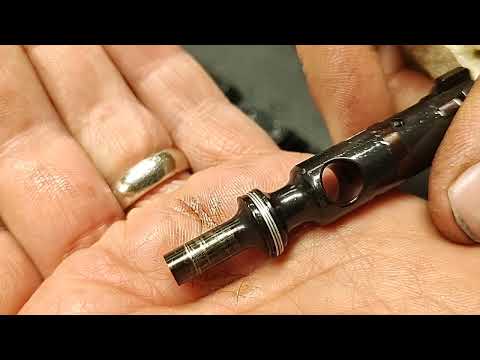
This guide provides 17 essential habits for maintaining military surplus rifles to ensure longevity and reliability, even beyond 10,000 rounds. It covers proper cosmoline removal, immediate cleaning after corrosive ammo, judicious lubrication, environmental storage controls (humidity and temperature), wood stock conditioning, and proactive part replacement. Following these disciplined maintenance practices, similar to those used by military armorers, is crucial for preserving these historic firearms.
This video provides a detailed, step-by-step guide to building a lightweight precision bolt-action rifle, focusing on the Aero Precision Solus LT action and MDT Hunt 26 chassis. It covers critical assembly procedures such as barrel installation, trigger mounting, headspace checks, scope mounting, and chassis bedding, emphasizing proper torque values and techniques for optimal performance and safety. The build highlights the use of high-quality components for a custom, lightweight precision rifle.
This guide, drawing on an authoritative instructor's expertise, details essential maintenance for firearms like the AR-15 and Glock 19. It covers cleaning for carbon/copper buildup, proper torque application for mounts, headspace checks, component lifespan (springs, barrels), magazine care, lubrication, muzzle integrity, storage, and the importance of quality ammunition. Regular inspection and round count logging are key to maintaining peak performance.
This guide details essential pre-purchase and pre-firing checks for AR-15 platforms, focusing on assembly quality rather than material cost. It covers critical areas like barrel extension alignment, headspace, gas block installation, BCG integrity, and lower receiver fit. Performing these checks can prevent malfunctions, ensure reliability, and save money on potential repairs, especially with more affordable AR-15 models.
This video provides a detailed, step-by-step guide to building a precision bolt-action rifle, specifically a Zermatt Origin build chambered in 6.5 Creedmoor. Lead Firearms Instructor Caleb and guest Alex walk through the entire process, from installing the TriggerTech Diamond trigger and Proof Research barrel to mounting the Vortex Razor optic and KRG chassis. Key procedures like checking headspace with go/no-go gauges and installing an Arca rail are demonstrated with expert guidance.
This video provides an in-depth, expert-level inspection of Ruger AR556 bolt carrier groups. It details checks for carrier key screw staking, gas ring seal, internal surface finish of the carrier and bolt tail, firing pin protrusion and binding, cam pin fit, extractor spring security, and bolt face dimensions. The analysis also covers carrier key alignment, bolt magnetism, and critical headspace checks using both 223 Wylde and 5.56 NATO GO gauges, highlighting numerous potential issues found in the tested components.
This guide details the inspection process for a Zastava M70 AB2 surplus rifle, focusing on external wear, internal components, and critical safety checks like headspace gauging. It highlights potential modifications from blank firing use and emphasizes consulting experts like Jim Fuller for safety assessments. The process involves visual inspection, manual round seating for stability assessment, and precise headspace checks using Go/No-Go gauges, crucial for ensuring safe live-fire operation.
This in-depth review of the Riley Defense American-made 7.62x39 Krinkov-style rifle covers 1050 rounds of testing. The reviewer details aftermarket modifications including an ALG trigger, US Palm grip, and JMAC muzzle brake with suppressor capabilities. Despite initial concerns about bolt wear, headspace checks confirmed the rifle remains safe to shoot, demonstrating reliability and fun factor throughout the extensive testing period.
This video provides a detailed, expert-level inspection of a Sons of Liberty Gunworks Bolt Carrier Group (BCG). The instructor, a certified Sons of Liberty armoror, walks through numerous tests including gas ring functionality, bolt component integrity, dimensional checks with gauges, magnetic particle inspection, and a critical magazine binding test. The analysis emphasizes the importance of these checks for reliability and longevity, highlighting specific features like the five-coil extractor spring and chrome silicone ejector spring.
This guide details the process of checking headspace on an M1 Garand after replacing the bolt. It emphasizes the importance of using go and no-go gauges to ensure the chamber dimensions are within safe operating tolerances. The video demonstrates the correct procedure, highlighting that a properly functioning Garand bolt should close on a go gauge but not on a no-go gauge, preventing potential safety issues.
This video provides an in-depth inspection of a 60-year-old Colt 601 AR-15 parts kit, utilizing a comprehensive array of USGI and modern gauges. The instructor, identified as a technical expert, meticulously checks various components including the barrel, bolt carrier group, and lower receiver for wear, corrosion, and proper function. The process highlights the importance of specific tools and techniques for assessing the condition of vintage firearms.
Gun Laws by State
Read firearms regulations for all 50 states + D.C.
Find Gun Dealers
Search licensed FFL dealers near you.