This video provides a first look at the Vortex Veil 400 thermal imager, highlighting its user-friendly design, familiar interface modeled after Vortex rangefinders, and suitability for hunters. The reviewer emphasizes its ease of use, photo/video capture capabilities, and internal storage, while also noting limitations in extreme detail compared to high-end models. The device is presented as a solid, mid-range option for those seeking to quickly scan and identify heat sources in the field.
This video demonstrates the capabilities of the Nox Pix Vista thermal monocular, showcasing its effectiveness in detecting heat signatures at various distances, including up to 200 yards. The presenter highlights the device's ability to see in both dark and daylight conditions due to its thermal spectrum operation and notes its impressive zoom functionality. The discussion suggests these devices can potentially reach ranges of up to 2000 yards.
This video demonstrates the observational capabilities of a thermal monocular, specifically the NoPix Vista model. It highlights that thermal imagers function equally well in darkness as in daylight by detecting heat signatures. The demonstration shows clear target acquisition at distances up to 200 yards, with potential capabilities extending to 2,000 yards, emphasizing the effectiveness of its zoom and focus adjustments for long-range observation.
This video provides an expert-level review of the FalconClaw COTI, a clip-on thermal imager designed for night vision devices. The presenter, an expert practitioner, details its capabilities in tracking heat signatures in snowy environments while also highlighting its limitations compared to dedicated thermal units, particularly regarding fine-tuned contrast and brightness adjustments for isolating specific thermal signatures. The analysis is based on extensive field testing in extreme conditions.
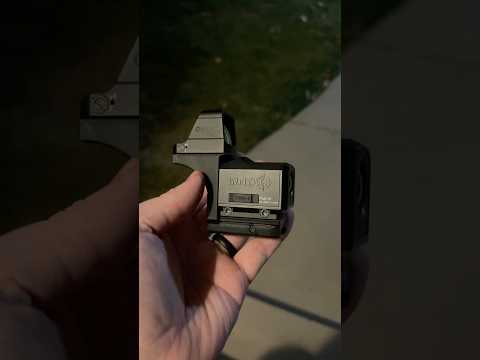
This guide details the installation and initial use of the INFITAC FML19 micro thermal sight, focusing on a custom piggyback mount setup for bullpup rifles. It highlights the sight's RMR footprint compatibility and touchscreen interface for adjusting imaging modes. The demonstration emphasizes practical identification ranges versus theoretical detection ranges for thermal optics.
This video introduces the Holosun DMS-TH Pro, a new thermal optic featuring advanced technology for detecting thermal signatures and heat outlines. It offers an augmented reality overlay when the lens is open, projecting thermal information onto the real-world view. The HALO technology is slated for release early next year.
The RIX Storm S6R is a compact, rugged, and intuitive thermal scope offering advanced features for various applications including hunting, surveillance, and property defense. It boasts a laser rangefinder with a 1300-yard capability, a detection range of 1969 yards, and a 1024x768 resolution display. The scope supports Wi-Fi connectivity for app-based control and live streaming, multiple color palettes, 32 reticle options, and picture-in-picture magnification.
This video details the Falcon Claw thermal overlay, an accessory designed to enhance night vision devices by projecting thermal signatures. It explains how the overlay works, its benefits in various scenarios (urban, indoor, outdoor), and its limitations compared to dedicated thermal imagers. The guide covers installation, operation, and advanced features, emphasizing its role in improving situational awareness and passive detection capabilities.
This video reviews the PARD USA Sphinx 640 thermal imaging unit, highlighting its large screen, fast refresh rate, and versatility for hunting and property surveillance. While acknowledging its potential for fun and identification, the reviewer cautions against its use for home defense due to screen glare and size. Key features like the built-in rangefinder, multiple color palettes, and durable construction are detailed, offering insights for potential buyers.
This video demonstrates a realistic scenario comparing Night Vision Goggles (NVG) and thermal imaging for tactical observation in low-light conditions. The presenter highlights the limitations of NVG in deep woods and the effectiveness of thermal imaging in detecting heat signatures, particularly movement. The scenario emphasizes how thermal can reveal threats that remain invisible to NVG, leading to a potential tactical disadvantage.
This video demonstrates the tactical advantages of combining thermal and night vision devices for low-light operations. It highlights how the synergy between these technologies enhances detection, navigation, and engagement capabilities in various realistic scenarios. The expert analysis emphasizes that thermal imaging is crucial for identifying heat signatures that night vision might miss, providing a significant edge in defensive and offensive situations.
This video from Regular Guy Training LLC highlights a key advantage of white phosphor night vision (WP NVG) over thermal imagers in specific scenarios. WP NVG can amplify existing light sources, making it effective for detecting illuminated objects or even faint outlines through barriers, which thermals might miss due to lack of heat differential. This makes WP NVG particularly useful for spotting light-emitting sources like cigarettes or cell phones, and for observing individuals who are being undisciplined with light discipline.
Gun Laws by State
Read firearms regulations for all 50 states + D.C.
Find Gun Dealers
Search licensed FFL dealers near you.