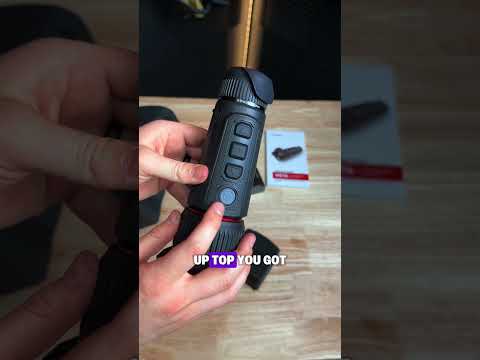
This video introduces the Vortex Thermal, a new thermal imaging device from Vortex Optics. The presenter highlights its familiar design, modeled after Vortex rangefinders, making it intuitive for hunters. Key features include photo and video capture with internal storage, and a design intended to complement Vortex's LPVOs like the AMG. The presenter expresses excitement about Vortex's expansion into thermal technology.
This video provides a first look at the Vortex Veil 400 thermal imager, highlighting its user-friendly design, familiar interface modeled after Vortex rangefinders, and suitability for hunters. The reviewer emphasizes its ease of use, photo/video capture capabilities, and internal storage, while also noting limitations in extreme detail compared to high-end models. The device is presented as a solid, mid-range option for those seeking to quickly scan and identify heat sources in the field.
This video explores the future of digital night vision, detailing the technical evolution from analog systems to advanced digital concepts. It highlights key challenges like sensitivity, latency, and dynamic range, proposing solutions such as multi-sensor arrays, high-refresh-rate displays, and IMU-based latency mitigation. The discussion extends to potential AI integration and the benefits of analog computing for future night vision devices, presented by an instructor with deep technical knowledge.
This video details a rigorous abuse test of the 3EIR Sentinel laser aiming module, including four shoulder-height drops onto hard ground and a water immersion test. The presenter, Kyle from 4 More Ranch, aims to provide peace of mind regarding the module's durability for potential buyers. The results indicate the 3EIR Sentinel maintains functionality and minimal zero shift after significant abuse, suggesting robust construction.
This video demonstrates the capabilities of the Nox Pix Vista thermal monocular, showcasing its effectiveness in detecting heat signatures at various distances, including up to 200 yards. The presenter highlights the device's ability to see in both dark and daylight conditions due to its thermal spectrum operation and notes its impressive zoom functionality. The discussion suggests these devices can potentially reach ranges of up to 2000 yards.
This video demonstrates the observational capabilities of a thermal monocular, specifically the NoPix Vista model. It highlights that thermal imagers function equally well in darkness as in daylight by detecting heat signatures. The demonstration shows clear target acquisition at distances up to 200 yards, with potential capabilities extending to 2,000 yards, emphasizing the effectiveness of its zoom and focus adjustments for long-range observation.
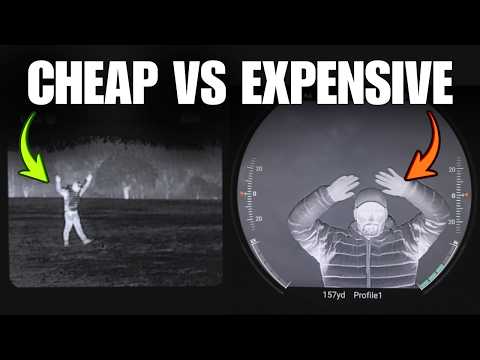
This video provides a comprehensive comparison of thermal optics ranging from $800 to $8,000, conducted by Juicey Media with expert Kyle from 4MR Range. The comparison focuses on visual imagery, detection, and identification capabilities at various distances (25, 50, 100, and 200 yards). Key insights reveal that while higher prices generally correlate with better performance, there's a significant value sweet spot in the $2000-$4000 range, with some units like the ATN Noctis 640 Core offering performance beyond their price point. The video emphasizes that the jump in performance from $4000 to $8000 is not always proportional and can sometimes be less impressive.
This video showcases the Nocpix Thermal Monocular, highlighting its versatility in various conditions. It demonstrates the effectiveness of different color palettes (Violet, White Hot, Black Hot, Red Hot, Color) and magnification levels (2x, 6x) for detecting targets like deer, vehicles, people, and dogs. The Nocpix monocular proves to be a valuable tool for observation and detection in low-light or obscured environments.
This video from 4MR Ranch compares a wide range of thermal optics, from budget-friendly options around $800 to high-end units exceeding $8,000. Expert Kyle from 4MR Ranch guides the comparison, evaluating visual imagery and recording capabilities at various distances (25, 50, 100, and 200 yards). The analysis focuses on the practical identification capabilities of each unit, highlighting that while price generally correlates with performance, some mid-range options offer exceptional value, and higher-priced units don't always provide a proportional increase in performance.
This video demonstrates the practical application of the Nocpix Thermal Monocular for detecting animals, specifically a cat, in a backyard environment. The instructor, exhibiting experienced authority, showcases the device's zoom capabilities from 2x up to 32x digital zoom, highlighting its effectiveness in identifying heat signatures even in low-light conditions. The demonstration suggests that thermal monoculars are highly effective for locating animals.
This video demonstrates the practical applications of a Nocpix Thermal Monocular, highlighting its use for identifying heat signatures in various conditions. The instructor, exhibiting experienced authority, explains the device's variable magnification from 2x to 32x and its utility for hunters seeking to detect animals through brush or in darkness. The comparison between thermal and naked-eye views underscores the device's effectiveness.
This video provides an unboxing and initial overview of the Nocpix Vista Series Monocular thermal imager. The speaker, demonstrating an experienced authority level, highlights the product's features, accessories, and potential use cases, including wildlife observation and potentially 'hunting' a pet indoors. The content is promotional, offering a first look at the device and its components.
Gun Laws by State
Read firearms regulations for all 50 states + D.C.
Find Gun Dealers
Search licensed FFL dealers near you.