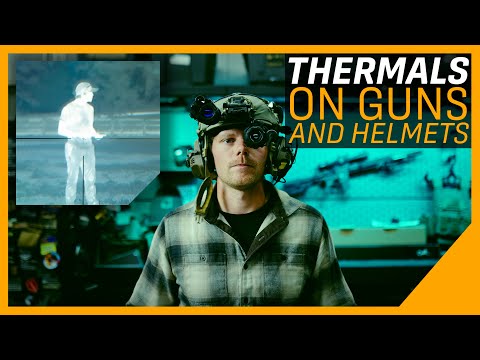
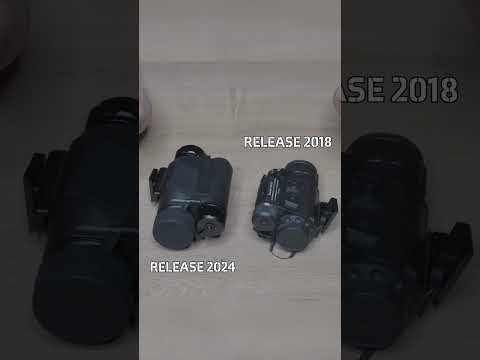
This video provides a practical overview of four thermal optic models: NOX18, RH25 v2, SkeetIRx, and REAP-IR, from the perspective of a firearms instructor with military experience. It focuses on optimal use cases for each unit, emphasizing the trade-offs between scanning (handheld, helmet-mounted) and weapon-mounted applications (dedicated optic, clip-on). The instructor highlights that while some units are hybrid, no single device excels at all functions, guiding viewers on how to prioritize based on their needs and budget.
This video compares the FLIR Breach and the Jerry YM thermal imagers, highlighting their differences in resolution, image quality, and price point. The Jerry YM offers nearly double the resolution of the FLIR Breach, resulting in a crisper image with more detail, despite both devices being similarly sized and weighted. The FLIR Breach is noted as being made in the USA, while the Jerry YM is manufactured in China.
This review covers the Armasight Sidekick 320 helmet-mounted thermal monocular, highlighting its effectiveness for navigation and its potential for integration with night vision devices. The speaker emphasizes Armasight's reputation for quality thermal optics and details the Sidekick 320's user-friendly interface, fast refresh rate, and image quality. While suitable for pistol shooting with collimated vision, its utility with rifles is limited without IR lasers.
This video explains the critical advantages of using handheld thermal monoculars for nighttime operations, particularly in wilderness and hunting scenarios. The instructor emphasizes that thermals detect heat signatures, overcoming camouflage limitations that hinder analog night vision. Key considerations for purchasing include low base magnification for scanning, and the highest resolution core (ideally 640x480) affordable for better target identification. The video also touches on the utility of helmet-mounting thermals for enhanced situational awareness.
This video details a specific night vision and thermal helmet setup, combining a PVS-14 with an iRay MH25 thermal monocular using a Pano Bridge. The presenter, from KeystoneCarry, explains the rationale behind this hybrid approach for enhanced situational awareness and target identification in low-light conditions. The setup prioritizes the ability to use night vision for navigation and laser engagement while leveraging thermal for immediate heat signature detection, offering a comprehensive solution for tactical applications.
This video compares two Infiray thermal monocular options: the Jerry CE5 COTI clip-on device and the ML19 helmet-mounted unit. The COTI, designed to enhance existing night vision, offers a 'calmer' visual experience for extended use but is bulky and requires a separate night vision device. The ML19 provides a standalone thermal solution with a digital display, various palettes, electronic magnification, and a compass, but is less recoil-compatible and has a shorter battery life without extenders. The comparison focuses on usability, field of view, and situational awareness for tactical applications.
You've reached the end! 6 videos loaded.
Gun Laws by State
Read firearms regulations for all 50 states + D.C.
Find Gun Dealers
Search licensed FFL dealers near you.