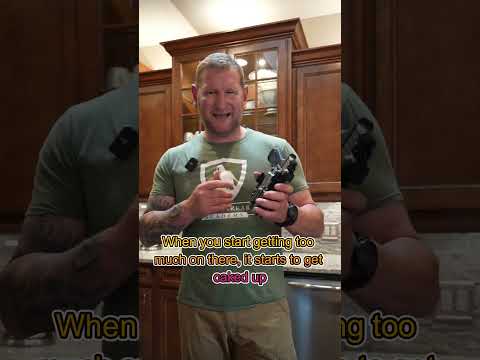
This video details the process of adjusting firearm gear, particularly for a new Nighthawk 1911. The instructor emphasizes iterative dry-fire practice to fine-tune holster and magazine pouch placement, focusing on ergonomics and natural movement. The approach balances the need for consistent gear ('set it and forget it') with the necessity of making adjustments when gear is new or preferences are still forming, especially for single-action firearms with lighter triggers.
This video demonstrates how to modify a leather holster to better fit a shorter barrel revolver, specifically a 2.5-inch Colt Python, by shortening the holster's length. The process involves careful cutting, sanding, and burnishing of the leather edges to achieve a custom fit and a clean, finished appearance. The presenter emphasizes the importance of a proper fit for both aesthetics and functionality in concealed carry.
This video explains how to adjust the clip height on Inside-the-Waistband (IWB) holsters to optimize firearm access and concealment. Lowering the clips raises the firearm for easier drawing, while raising the clips lowers it for better concealment. The presenter advises experimenting to find the best balance for individual comfort and carry needs.
This guide details the setup of a CZ Shadow 2 Compact within a Tier One Axis Elite holster and its associated magazine carrier. It covers proper firearm and magazine insertion, retention adjustment using shock cords, and features designed to reduce printing for concealed carry. The setup emphasizes a slim profile and comfortable carry for everyday use.
This guide details how to adjust and customize a We The People Holster for optimal performance and comfort. It covers adjusting retention, cant, and clip position, emphasizing the use of .08-inch Kydex and a lifetime guarantee. The instruction is presented with high authority, detailing material specifications and mechanical adjustments.
This guide, based on insights from Hegshot87, a highly experienced concealed carrier, details the proper installation and adjustment of Tulster holsters. It covers achieving optimal retention, cant adjustment, and compatibility with various firearms and carry styles, emphasizing the importance of a precise fit for daily concealed carry.
This video explains how adjusting holster cant can significantly improve draw efficiency and reduce tension. By aligning the butt of the pistol with the belt line, shooters can achieve a more natural grip and a smoother draw stroke, minimizing shoulder movement and upper body tension. This technique is particularly beneficial for those experiencing draw-related tension.
This video discusses a SIG P320 accidental discharge incident captured on security footage. The speaker analyzes the footage, noting the firearm discharged while the officer was adjusting his holster. The discussion highlights concerns about the SIG P320's safety record and the potential for unintended firings, especially in the context of appendix carry.
This guide from Tenicor demonstrates the assembly and adjustment process for their Velo Lux holster. It covers initial fitting by wearing the holster without attachments to find the optimal carry position, marking the waistband, and then installing camming bars and clips. The instructions differentiate between compact and full-size light holster setups and emphasize testing for proper retention, ride height, and concealment.
This guide explains the critical step of applying Loctite to holster adjustment screws to prevent them from loosening over time. It emphasizes using removable blue Loctite and applying it sparingly to just a few threads. Proper Loctite application ensures consistent retention and prevents parts from falling off, maintaining the reliability of your concealed carry setup.
This guide details how to properly adjust the passive retention on an inside-the-waistband concealed carry holster. The key takeaway is to always test and adjust retention with the holster on your belt and firearm inserted, as the pressure from the belt significantly impacts how tight the holster feels. This prevents over-tightening and ensures a safe, efficient draw.
This video reviews the 945 Industries EDC Concealment Bag as an alternative to appendix carry, particularly for individuals who find appendix carry uncomfortable or impractical with certain clothing. The instructor demonstrates the bag's features, including its durable construction, modular holster system, and ambidextrous quick-access pullers. Practical testing highlights the importance of adjusting the holster for a smooth draw and compares draw times against traditional appendix carry, concluding that while appendix carry may be slightly faster for experienced users, the bag offers superior comfort and a viable secondary carry option.
Gun Laws by State
Read firearms regulations for all 50 states + D.C.
Find Gun Dealers
Search licensed FFL dealers near you.