This video details the process of adjusting firearm gear, particularly for a new Nighthawk 1911. The instructor emphasizes iterative dry-fire practice to fine-tune holster and magazine pouch placement, focusing on ergonomics and natural movement. The approach balances the need for consistent gear ('set it and forget it') with the necessity of making adjustments when gear is new or preferences are still forming, especially for single-action firearms with lighter triggers.
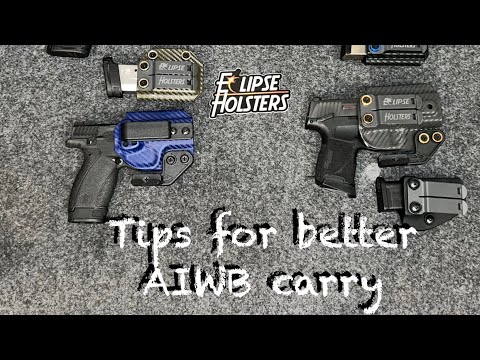
This guide provides expert techniques for comfortable and effective Appendix Inside-the-Waistband (AIWB) concealed carry, drawing on over 10 years of experience. Key strategies include using an undershirt for comfort, a rigid ratcheting belt for support, and strategically positioning the belt buckle. It also covers critical holster adjustments like ride height, the use of grip-tucking claws, and selecting appropriate holsters for various firearms like the Sig Sauer P365 and Ruger Max-9.
This guide, drawing from expert insights from Tenicor, emphasizes that a poorly configured rifle setup can significantly impede a shooter's performance. It highlights that many individuals struggle because they are 'fighting' their weapon, often without realizing their gear is the limiting factor. The advice focuses on identifying and rectifying these issues to achieve peak shooting efficiency.
This video from Dirty Civilian provides an expert analysis of optimal fighting loadout weights, drawing on historical data and practical application. The speaker, demonstrating deep knowledge of tactical equipment and its impact on performance, emphasizes that exceeding 45-50 lbs for a fighting load significantly degrades effectiveness and increases injury risk. Key takeaways include prioritizing multi-use gear, understanding weight distribution (leverage), and the critical importance of personal fitness and knowledge, which weigh nothing but are essential for capability.
Joe Farwell of Tactical Hive explains how to optimize holster cant for a faster, more consistent draw. He demonstrates how aggressive forward cant on stock holsters can lead to awkward body mechanics, including shoulder roll and wrist strain. By adjusting the holster to a more vertical or slightly backward cant, shooters can achieve a more biomechanically efficient draw stroke, allowing the elbow to act as a piston and the wrist to maintain a natural angle for consistent red dot acquisition.
This video features DJ discussing and optimizing his helmet setup. While the specifics of the helmet's application or context (e.g., for shooting, motorcycling, etc.) are not detailed in the provided data, the focus is on gear configuration. The video likely explores the various components and adjustments DJ makes to personalize his helmet for its intended use.
This guide, drawing from the expertise of the American Outlaw host, details optimal magazine loadout strategies for tactical scenarios. It moves beyond the common 3-magazine practice to recommend a minimum of 7 and an ideal of 9-11 magazines, emphasizing double-stacked configurations and Rhodesian-style rigs for increased capacity. The advice acknowledges the trade-off between capacity and weight, suggesting backpack storage for surplus ammunition.
This video details the author's first experience in an NRL Hunter match, highlighting the challenges of blind stages, target acquisition, and the importance of preparation. It emphasizes the need to reconcile expectations with the competition's reality, the value of specific gear like rangefinding binoculars and armboards, and the skill required for low-probability shots under environmental stress. The author shares lessons learned about ego, humility, and the practical application of hunting skills in a competitive format.
This video from Marine X outlines five common habits that lead to wasted money and time in Everyday Carry (EDC). The presenter emphasizes avoiding over-carrying by utilizing primary, secondary, and tertiary carry systems. He also stresses the importance of learning and training with your gear to maximize its potential and avoid unnecessary purchases. Considering your daily routine and focusing on quality over brand names are highlighted as key strategies for efficient and cost-effective EDC.
This video critiques the culture of excessive EDC (Everyday Carry) gear consumption driven by YouTube content. The speaker advocates for mindful purchasing, urging viewers to differentiate between informative reviews that aid decision-making and content that encourages unnecessary upgrades. The core message emphasizes financial and mental well-being over constant gear acquisition.
This video provides an after-action review of the Competition Dynamics Team Safari match, highlighting key gear and technique adjustments for field precision rifle shooting. The speaker emphasizes the need to transition from PRS-style gear, like heavy barricade bags and chassis systems, to lighter, more adaptable equipment suitable for natural terrain and hiking. Key takeaways include optimizing rifle weight, selecting versatile bipods and tripods, and streamlining loadouts to reduce carrying burden, while also discussing the reduced utility of environmental data tools in fast-paced competitions.
This episode of Brownells' Smith Busters debunks the myth that superior gear can replace essential firearms training. Hosts Stephen Caleb emphasize that while good equipment is important, it's the user's proficiency and practice that truly matter. They illustrate that even the most expensive gear is ineffective without proper training, and that consistent practice with any level of gear will ultimately outperform expensive, unused equipment.
Gun Laws by State
Read firearms regulations for all 50 states + D.C.
Find Gun Dealers
Search licensed FFL dealers near you.