This video from Demolition Ranch, featuring Matt Carriker, tests the effectiveness of four different homemade body armor plates against an AR-15 style rifle chambered in 5.56mm. The results indicate that none of the viewer-submitted armor plates provided adequate protection, as all were penetrated by the rifle rounds. The demonstration highlights the critical importance of using certified and reliable body armor for personal safety.
This video provides an in-depth look at the manufacturing of the Watchtower Firearms Demolitia 1911, showcasing precision CNC machining and meticulous hand-fitting. It also features a compelling homemade body armor challenge, culminating in rigorous ballistic testing against various threats, demonstrating practical applications of firearm knowledge and material science.
This video details an experiment where the creators built their own body armor using layered hex tiles and Flex Seal. They then proceeded to test its effectiveness against various firearms, including .308, 5.56, .45 ACP, 9mm, .380 ACP, .22 Short, and shotgun slugs. The results consistently showed that the homemade armor failed to stop any of the tested projectiles, with most rounds penetrating all layers.
This YouTube Shorts video demonstrates the creation of DIY welder's blanket body armor using materials from a local hardware store. The description indicates a full video is available, which will detail the construction process and subsequent testing against NIJ Standards. The testing includes a ballistic clay box to assess both pass-throughs and back-face deformation. The video also promotes the creator's website for non-homemade armor solutions.
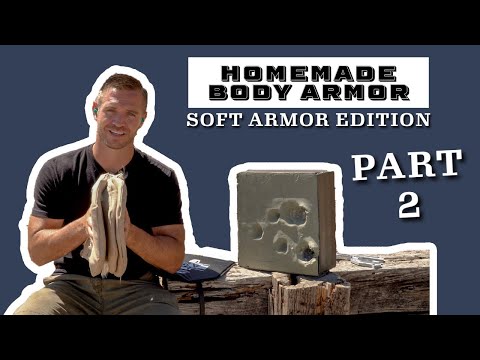
This is Part 2 of a video series exploring homemade soft body armor. The creators previously tested fiberglass welding blankets, which didn't meet NIJ Level IIIA standards. In this installment, they investigate how many layers are required to stop 9mm and .44 Magnum rounds. While the DIY armor successfully stopped both calibers, the conclusion highlights its impracticality compared to professional-grade options.
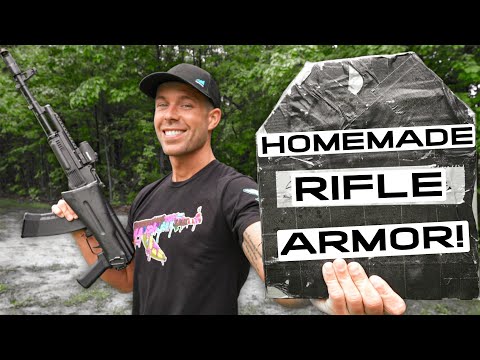
This video demonstrates the failure of homemade rifle-rated body armor created by a viewer. The armor, constructed with materials like tinfoil, construction paper, pennies, and possibly ceramic, was tested against various handgun and rifle calibers. While it successfully stopped 9mm, 10mm, and 5.7x28mm rounds, it failed against common rifle rounds like .223 Remington, 7.62x39mm, .45-70 Government, and .30-30 Winchester, only stopping a .22 Long Rifle.
This video details the construction and testing of two homemade body armor plates, demonstrating their performance against various calibers. The host, with high authority in gear testing, showcases the materials used, including steel, porcelain tiles, wood, and Kevlar, and their effectiveness against threats like .223 and 7.62x39mm rounds, while also highlighting failures against steel core and .308 ammunition. The thin profile and DIY nature of the armor are emphasized.
This video tests the ballistic resistance of homemade body armor constructed for under $10 by a viewer named NC Mountain Adventures. The armor, made from common household materials like duct tape, tin foil, construction paper, and pennies, was subjected to various handgun calibers. While it successfully stopped rounds up to a .44 Magnum, it failed against the .500 S&W Magnum.
This video from Civilian Tactical tests the lethality of homemade ice slugs fired from a 12-gauge pump-action shotgun. The host, identified as a firearms enthusiast and tactical content creator, uses a structured testing methodology involving various targets, including homemade body armor. The results indicate that ice slugs are not effective for penetration or significant damage, denting but not piercing a water bucket and failing to penetrate the body armor target.
This video demonstrates an experimental test of custom-loaded 12 Gauge shotgun shells filled with steel washers. The Civilian Tactical host, an experienced firearms content creator, outlines a clear test methodology involving targets for energy transfer, accuracy, and lethality against homemade body armor. The results show the washers penetrate soft targets but are stopped by layered armor, offering insights into their effectiveness compared to standard ammunition.
This video details a comprehensive test of homemade body armor constructed from mild steel and a rubber horse stall mat, demonstrating its effectiveness against various handgun rounds up to .45 ACP and 12 Gauge slugs, while highlighting its limitations against rifle calibers like 7.62x39mm. The expert-level demonstration, led by Matt Carriker, showcases safe firearm handling and a practical understanding of ballistic resistance.
This video demonstrates a $5 DIY pistol-rated body armor project using ceramic tiles, books, and duct tape. The homemade armor successfully stops various handgun calibers including .22 LR, 9mm, .45 ACP, .40 S&W, and .357 Magnum in initial tests. However, repeated high-energy impacts eventually lead to penetration, highlighting its limitations and experimental nature.
You've reached the end! 12 videos loaded.
Gun Laws by State
Read firearms regulations for all 50 states + D.C.
Find Gun Dealers
Search licensed FFL dealers near you.