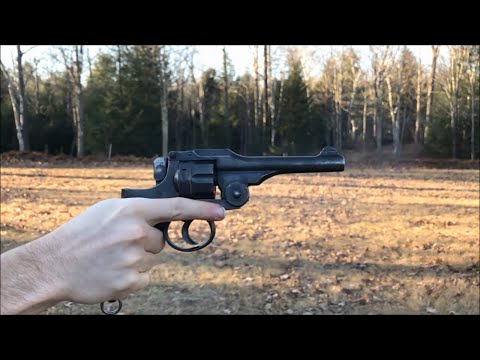
This expert guide provides a comprehensive overview of the Japanese Miroku Liberty Chief revolver, drawing on historical context and detailed firearm knowledge. The video, presented by an experienced instructor, highlights the revolver's design similarities to Colt and Smith & Wesson models, its .38 Special caliber, and its 6-round capacity. It delves into Miroku's manufacturing history, the potential reasons for the Liberty Chief's development, and its eventual export to the American market in the 1960s.
This video title teases viewers with the idea of "magical Japanese gun videos" commonly found on YouTube. While the description is absent, the title itself suggests a focus on unique or interesting firearms content, potentially with a Japanese cultural angle or origin. Viewers can expect to see discussions or demonstrations of firearms that are either rare, custom, or presented in an unconventional manner, often associated with the creativity seen in Japanese gun culture videos.
This video critically reviews five of the worst firearms ever put into production, including the Type 94 Nambu Pistol, Glisenti Model 1910, Chauchat CSRG, Breda Modello 30, and Gyrojet. The expert analysis highlights significant design flaws, reliability issues, and historical context, demonstrating a high level of authority in firearms history and mechanics.
This video features a shooting demonstration of a Japanese Type 26 Revolver. The content focuses on the firearm itself, likely showcasing its operation and handling. The provided hashtags indicate a focus on collectible firearms and revolvers from around the world.
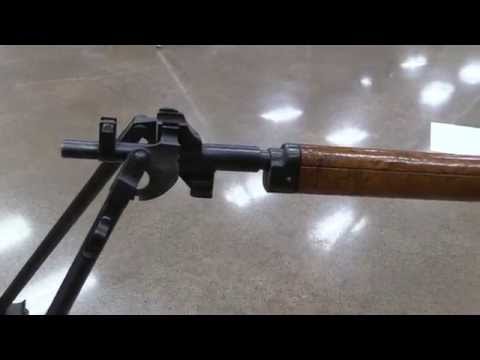
This expert review of the Japanese Type 99 Light Machine Gun by TFB TV, featuring Scott Howard of Machine Gun Dad, delves into its historical context, technical specifications, and practical design elements. The video highlights its rarity as an NFA item in the US, its adoption of the 7.7mm caliber, and comparisons to other LMGs like the Bren and ZB-30. Critical assessments are made regarding its ergonomics, bipod, and optic fragility, while acknowledging its unique safety mechanism and improved barrel change over predecessors.
This guide details the field stripping process for the Nambu Type A Modified pistol, often called the 'Papa Nambu.' It highlights the unique and somewhat complex procedure involving the trigger guard assembly and magazine release, as demonstrated by the C&Rsenal channel. The process requires careful manipulation due to its design.
This guide details the unique disassembly process for the rare Inagaki Shiki pistol, as demonstrated by Ian McCollum on Forgotten Weapons. The Inagaki Shiki, a proprietary design with very few manufactured, utilizes its trigger guard as a crucial locking mechanism for field stripping. Proper safety protocols are paramount when handling such historical and rare firearms.
This guide details the process of adapting a Nambu LMG bipod to a Type 99 Arisaka rifle, a complex modification requiring significant gunsmithing. The steps involve removing the original monopod, modifying the stock and barrel, and mounting the Nambu bipod. Expert Ian McCollum highlights the unique nature of this conversion, noting the historical context and the creator's intent to simulate a Japanese experimental firearm.
This video features an interview with Teri, the proprietor of NambuWorld.com, conducted at the SAR West show. Teri is a Canadian collector with a deep interest in Japan, and she has amassed a significant collection of Japanese firearms and militaria. Her website is highlighted as a valuable resource, particularly for information on Japanese pistols.
This video provides an expert-level overview of a rare Japanese 'Papa' Nambu pistol with a matching shoulder stock, presented by firearms historian Ian and collector Jim Langley. The discussion highlights the pistol's unique production by Tokyo Gas and Electric, its historical significance as a diplomatic gift to Mexican officials, and its evolution from earlier Nambu designs. The detailed examination covers its craftsmanship, accessories, and nomenclature, offering valuable insights for firearms enthusiasts and collectors.
This guide details the unique operation and disassembly of the 1908 Hino-Komura Pistol, a rare Japanese design. It covers the blow-forward action, loading procedure, and the simple construction featuring a fixed firing pin. The video highlights the inventor's youth and the pistol's impracticality, offering insights from a recognized expert in historical firearms.
You've reached the end! 11 videos loaded.
Gun Laws by State
Read firearms regulations for all 50 states + D.C.
Find Gun Dealers
Search licensed FFL dealers near you.