This video poses a hypothetical self-defense scenario and discusses the potential legal ramifications of using a firearm for protection. It promotes the USCCA (U.S. Concealed Carry Association) as a resource for legal defense and firearm training, highlighting the need for legal representation and skill development in the face of an 'anti-gun judge' and an 'unjust legal system'. A link is provided for viewers to join the USCCA and receive bonuses.
This entry details the defeat of California's Assembly Bill 1333, which aimed to establish a duty to retreat and weaken the Castle Doctrine. Expert analysis from CRPA Legislative Director Rick Travis highlights the legislative process, coalition building, and future outlook for self-defense legislation in California. The defeat is presented as a significant win for gun rights advocates.
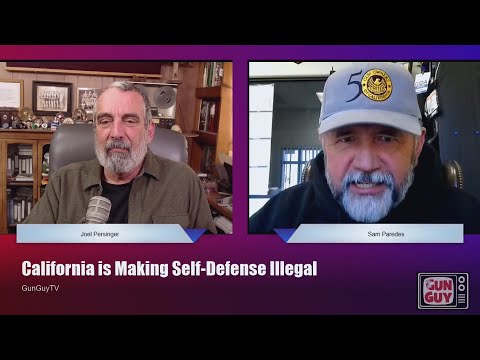
This video discusses California Assembly Bill 1333, which proposes significant changes to self-defense laws. The speakers, including a firearms instructor and a guest knowledgeable about California legislation, analyze how the bill could eliminate justifiable homicide in certain circumstances, particularly by introducing a mandatory duty to retreat outside the home and potentially complicating defense within the home. They express strong concerns that the bill, if passed, would make it harder for law-abiding citizens to defend themselves and could lead to unjust prosecutions.
This video discusses California Assembly Bill 1333, which aims to significantly alter self-defense laws by potentially eliminating justifiable homicide in defense of habitation or property and introducing a duty to retreat. Rick Travis of CRPA explains how this bill could negatively impact CCW holders and ordinary citizens, making self-defense more legally precarious. The discussion highlights concerns about the bill's subjective nature regarding force necessary for defense and its potential to criminalize actions taken under duress.
This video analyzes California Assembly Bill 1333, which proposes significant changes to the legal definition of homicide and self-defense. The bill introduces a duty to retreat outside the home and requires the use of equal or lesser force, potentially outlawing most forms of self-defense. Critics argue the bill is ambiguous and could leave citizens vulnerable, while proponents claim it aims to prevent vigilantism.
This video details a self-defense incident in Dallas where the victim, Ryan, was carjacked and threatened with a firearm. Ryan successfully defended himself by drawing his concealed weapon and firing. The case highlights the importance of dash cams, legal representation like Attorneys on Retainer, and the potential for charges to be dropped when evidence clearly supports self-defense, especially when the assailant has a violent criminal history.
This video's title suggests a discussion surrounding self-defense scenarios and the legal ramifications of using a firearm. It implies a situation where an individual was legally justified in using their firearm and is now free. The title also touches on the societal impact of crime, linking it to perceived inaction or complexity in the justice system. The use of emojis indicates a tone that might be provocative or attention-grabbing, likely aiming to spark conversation among viewers interested in firearm rights, self-defense, and current events related to crime and the legal system. The message "be safe" encourages personal preparedness.
Massad Ayoob, an expert witness and firearms trainer with over 40 years of experience, explains the critical importance of making a brief, strategic statement to law enforcement immediately following a self-defense shooting. He outlines a 5-point checklist for this statement and contrasts the advice of general criminal defense lawyers with that of specialists in justifiable homicide, advocating for the latter's approach to potentially avoid unnecessary arrest.
Massad Ayoob, a renowned firearms instructor and expert witness, critically analyzes the commonly cited figure of 38,000-40,000 annual gun deaths. He argues this number is misleading as it includes suicides and justifiable homicides (criminals killed by police or victims), which he contends should be separated from violent crime statistics. Ayoob suggests that including these figures inappropriately pads arguments in the gun control debate, thereby diminishing the credibility of those who misuse the data.
Massad Ayoob, an expert instructor and author, explains the critical legal concept of 'disparity of force' in self-defense. He details how an attacker's superior physical abilities, multiple assailants, or known combat skills can justify the use of deadly force, even against an ostensibly unarmed individual. Ayoob emphasizes the importance of understanding and articulating these legal principles in court and public discourse, citing a Texas case where a motorist's use of a .40 caliber Beretta was ruled justifiable homicide due to being in a position of disadvantage.
This video delves into the legal boundaries of using deadly force, exploring the crucial question of 'how much is too much' before an action becomes unlawful. While the title and description don't explicitly mention specific firearms, calibers, manufacturers, or gear, the subject matter strongly implies a discussion relevant to firearm ownership and self-defense scenarios. The content likely focuses on legal interpretations and personal safety considerations for individuals who may possess firearms for protection.
Massad Ayoob, an expert witness and trainer, provides a detailed analysis of the Castle Doctrine and its implications for self-defense. He uses high-profile cases like the McCloskeys and Rodney Peairs to illustrate legal principles, emphasizing the risks of leaving one's home to confront threats. The expert advises remaining inside and contacting law enforcement unless the home's perimeter is breached.
Gun Laws by State
Read firearms regulations for all 50 states + D.C.
Find Gun Dealers
Search licensed FFL dealers near you.