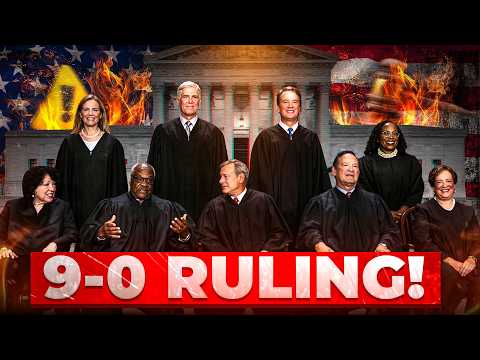
This video details the Supreme Court's unanimous 9-0 decision in favor of the Martin family, who were victims of an FBI wrong-house raid. The ruling clarified that law enforcement does not automatically gain immunity simply by exercising judgment; decisions must be grounded in actual policy considerations, not mere mistakes. The case has returned to the 11th Circuit, where judges are scrutinizing the line between policy discretion and operational failures, particularly regarding the fundamental duty to execute warrants at the correct address. The lack of a request for further briefing suggests the 11th Circuit is moving towards a decision, likely allowing the Martins' case to proceed and potentially drawing a clearer distinction between protected policy decisions and basic operational negligence.
This video analyzes a 9-0 Supreme Court decision impacting government immunity in cases of law enforcement error, specifically a wrong-house FBI raid. The Supreme Court ruled that law enforcement does not automatically gain immunity simply by exercising judgment, requiring them to demonstrate policy considerations rather than mere mistakes. The case has returned to the 11th Circuit, where judges are scrutinizing the line between policy discretion and operational failures, questioning how executing a warrant at the wrong address could be a protected policy decision. The outcome could significantly affect the ability to sue the government for operational errors.
This video discusses the Supreme Court's 9-0 unanimous decision in a case involving an FBI wrong-house raid and its implications for government immunity. The case, which returned to the 11th Circuit, centers on the discretionary function exception to the Federal Tort Claims Act. The speaker highlights the 11th Circuit's oral arguments, focusing on the distinction between policy discretion and operational failures, and anticipates a forthcoming decision on whether additional briefing is required.
The Yankee Marshal, an experienced voice in firearms and liberty discussions, critiques law enforcement practices and emphasizes the critical importance of individual rights and self-defense. He advises listeners on navigating police encounters, stressing the need to know and assert constitutional rights, avoid unwarranted consent to searches, and the benefit of recording interactions. The podcast highlights the necessity of personal preparedness and gun ownership as a bulwark against potential government overreach and a fundamental aspect of self-reliance.
This analysis from Langley Outdoors Academy highlights a significant political shift regarding ICE body cameras. Initially advocated for transparency, Democrats now express concerns about potential mass surveillance and tracking of protesters, drawing parallels to existing gun owner databases. The discussion emphasizes the need for clear policies on body camera usage and data management.
This video provides a detailed legal analysis of a unanimous 9-0 Supreme Court decision concerning the Federal Tort Claims Act (FTCA) and law enforcement accountability. The speaker, an expert in Second Amendment law, breaks down the implications of the ruling on FBI raids and government immunity, particularly in cases of operational errors like raiding the wrong address. The analysis highlights the ongoing legal battles and potential nationwide impacts on civil rights and accountability for federal agencies.
This video critically examines several high-profile incidents where individuals were killed by law enforcement, often with the presence or perceived presence of a firearm being used as justification. It highlights concerns about qualified immunity, inconsistent application of force, and the potential erosion of Second Amendment rights when legally armed citizens face lethal force without clear provocation. The discussion emphasizes the need for greater transparency and accountability in law enforcement actions.
This video critiques the Trump administration's alleged labeling of gun owners as domestic terrorists, particularly in the context of a protest incident. The speaker argues that carrying a firearm does not inherently make someone a criminal or terrorist, and criticizes those who defend such classifications. The content emphasizes the importance of defending constitutional rights against what is perceived as government overreach and a shift in public discourse that demonizes gun ownership.
This video revisits a shooting incident involving ICE agents and Alex Pratty, correcting previous assumptions. The speaker asserts that Pratty was legally armed, disarmed by an ICE agent, and subsequently shot in the back while unarmed and in custody. The video emphasizes the importance of reviewing evidence and seeking justice through legal channels, while cautioning against escalating rhetoric.
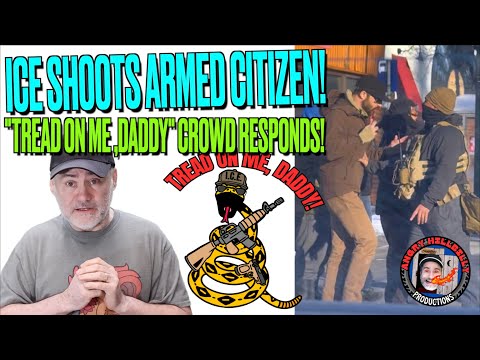
This video critiques the actions of ICE agents in a shooting incident involving an armed US citizen. The speaker argues that ICE officers initiated the confrontation and escalated the situation unnecessarily, leading to the citizen's death. The video also addresses a segment of the gun community that defends ICE's actions, attributing justification to the citizen possessing a firearm, which the speaker vehemently refutes as a dangerous and flawed argument.
This video provides an expert legal analysis of the Supreme Court's unanimous 9-0 decision in Martin v. United States. The ruling addresses government liability in botched raids, specifically concerning the Federal Tort Claims Act and the discretionary-function exception. The speaker, an expert in legal commentary on Second Amendment and civil rights litigation, breaks down the case's background, the FBI's mistaken raid in Atlanta, and the implications for law enforcement accountability.
This video provides an in-depth legal analysis of the Supreme Court's unanimous 9-0 decision in Martin v. United States. The speaker, demonstrating high authority in constitutional law, breaks down how the ruling impacts the Federal Tort Claims Act (FTCA) and its discretionary function exception. The decision is crucial for gun owners, as it clarifies accountability for law enforcement agencies during mistaken raids, potentially reducing dangerous confrontations.
Gun Laws by State
Read firearms regulations for all 50 states + D.C.
Find Gun Dealers
Search licensed FFL dealers near you.