TheYankeeMarshal, an experienced voice on firearms and constitutional rights, argues that an accusation alone should not be sufficient to revoke an individual's rights. He posits that rights should only be removed upon conviction, or temporarily during arrest if the individual poses a severe threat. The state assumes liability for wrongful detainment if the accused is later found innocent, a risk the legal system must accept.
This video from Paramount Tactical, featuring Gary Milton, analyzes the legal ramifications of statements made under the guise of 'just asking questions.' It highlights the concept of inferential defamation, where implied meanings can lead to legal liability even without explicit accusations. The discussion references the Depp v. Heard case as a key example of how context can establish defamation.
This video details a new legal strategy targeting firearms manufacturers, exemplified by Everytown for Gun Safety's pressure on Ruger regarding the RXM pistol. The strategy leverages state liability laws and focuses on modular designs and aftermarket compatibility, particularly with Glock parts, to argue that certain firearms are inherently risky due to their potential for easy conversion into machine guns using illegal devices. The outcome for Ruger could set a precedent for how manufacturers approach product design and face legal challenges.
This video analyzes the legal implications of the Antonio Brown incident, focusing on self-defense laws in Florida and Texas. Colion Noir, an expert in firearms law, breaks down the difference between justifiable use of force and illegal retaliation, emphasizing the severe consequences of escalating a situation with a firearm. The analysis highlights the critical need for legal understanding and preparedness for gun owners.
This video discusses the reported discontinuation of certain Glock models and their replacement with a new 'V' model. The primary change is the modification of the trigger bar and slide geometry to prevent easy accommodation of drop-in auto sears. This move is interpreted as Glock caving to political pressure and attempting to mitigate future legal liabilities related to full-auto conversions, though the effectiveness of this change in preventing all conversions is debated.
This video discusses unconfirmed rumors about Glock discontinuing its Gen 3, Gen 4, and Gen 5 pistol lines. The speaker speculates that a new 'Glock Model V' might replace them, potentially to prevent the installation of illegal 'Glock switches' that convert firearms to full-auto. The information is presented as rumor from allegedly reliable sources, with the speaker acting as a content creator.
A federal judge has ordered the Chicago Police Department to stop allowing officers to carry the Sig Sauer P320 as their duty weapon. This decision stems from safety concerns and a lawsuit filed by the Fraternal Order of Police Lodge 7, citing the risk of unintentional discharges and potential litigation for the city. The ruling mandates that officers with alternative service weapons must switch immediately.
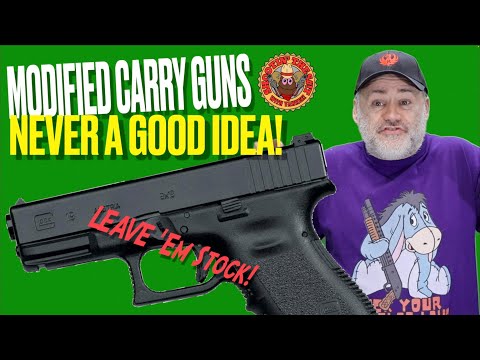
This video from Classic Firearms, featuring instructors Kyle and Jason, outlines five common mistakes made with duty and full-size pistols. They emphasize avoiding over-modification, excessively light triggers, the absence of night sights, magazine disconnect safeties, and the potential pitfalls of external safeties. The advice is geared towards maintaining reliability, safety, and legal defensibility for firearms used in professional or self-defense contexts.
This video emphasizes the critical importance of carrying a spare magazine for concealed carriers, drawing parallels to police self-defense encounters where multiple shots and reloads are common. It explains that physiological stress significantly impacts shooting accuracy, with only 20-30% of shots landing on target in high-stress situations. The speaker advocates for carrying a spare magazine to account for potential malfunctions, multiple attackers, and the extended time an attacker may remain a threat even after being shot.
The speaker, a former decade-long USCCA member and promoter, explains his decision to leave the organization due to concerns about their insurance policy's exclusions and perceived lack of clarity. He contrasts this with 'Attorneys on Retainer,' highlighting their simpler criteria, broader coverage across all 50 states, and the inclusion of attorney-client privilege and psychological counseling.
This video discusses the controversy surrounding Glock's letter to Oklahoma expressing support for certain gun control measures. The speaker analyzes public reactions, distinguishing between pragmatic and ideological viewpoints. He uses examples like firearms owner ID cards and international travel with firearms to illustrate the complexities of gun ownership regulations. The core of the discussion revolves around Glock's legal strategy to avoid liability for illegal modifications, particularly the use of auto switches, and the broader implications for gun rights.
This video discusses the pros and cons of modifying a concealed carry firearm. The instructor emphasizes that modifications are acceptable as long as they do not compromise safe operation and do not introduce unnecessary legal liability. Specific attention is given to trigger modifications and safety features, with the consensus being that while personal preference dictates modification, the potential legal ramifications in a self-defense scenario are paramount.
Gun Laws by State
Read firearms regulations for all 50 states + D.C.
Find Gun Dealers
Search licensed FFL dealers near you.