Videos tagged with National Defense
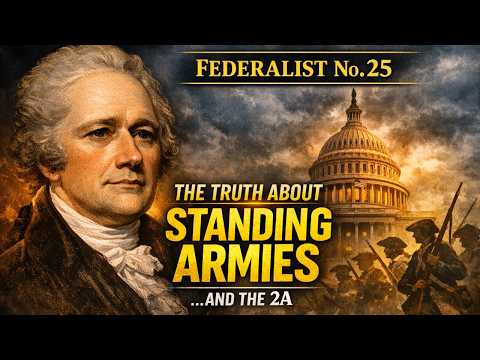
This video, featuring an experienced speaker, delves into Federalist No. 25, analyzing Alexander Hamilton's arguments on national defense and the dangers of overly restrictive limitations on military size. It connects historical debates to modern interpretations of the Second Amendment, emphasizing that true security relies on structural checks and balances, not just paper restrictions. The speaker highlights the importance of the people's capacity to resist force and the legislative control over military funding as crucial safeguards against government overreach.

This video, presented by Guns & Gadgets, offers an expert-level analysis of Federalist No. 3, written by John Jay. It details how the essay argues for a strong national government to prevent foreign conflicts and enhance national defense. The analysis connects these historical arguments to the modern understanding of the Second Amendment, positing that an armed citizenry is fundamental to the security of a free republic, making the United States a less vulnerable target for foreign adversaries.