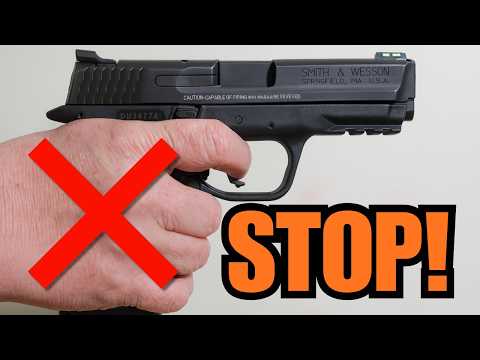
This video argues that revolvers are superior to semi-automatic pistols for new shooters due to their simplicity and inherent safety features. The instructor highlights that revolvers are easier to operate, less prone to accidental discharge, and function reliably even when pressed against a target in close quarters. The discussion also touches on the perceived need for high ammunition capacity in semi-automatics, suggesting it may stem from a lack of shooting confidence.
This guide details the critical steps for safely reholstering a handgun, emphasizing discipline and deliberate action over speed. It highlights common mistakes like rushing the process, which can lead to accidental discharges due to clothing or other obstructions entering the trigger guard. The technique focuses on clearing the garment, visually confirming the holster opening, and slowly guiding the firearm back into place.
This video emphasizes critical mistakes to avoid when carrying a handgun, focusing on safe practices during drawing and reholstering. It highlights that negligent discharges often occur during routine handling, not just in high-stress encounters. Key takeaways include maintaining proper trigger finger discipline during the draw, reholstering slowly and deliberately while visually confirming the holster is clear, using a rigid holster, ensuring proper retention to prevent printing, carrying with a chambered round for immediate readiness, function testing ammunition, and understanding legal no-carry zones and use-of-force laws.
This video, presented by Lucin of Line45, details 10 common and dangerous firearm mistakes that can lead to accidents, equipment damage, or poor performance. It emphasizes the critical importance of treating every firearm as loaded, maintaining strict trigger discipline, and proper grip/stance. The instructor also covers essential practices like regular cleaning, safe dry firing, zeroing optics, purposeful training, understanding parts compatibility, and preparing for high-stress situations. Adhering to these principles is crucial for safe, effective, and competent firearm handling.
This guide synthesizes expert advice on firearm safety and maintenance, emphasizing critical rules like treating every gun as loaded and maintaining proper trigger discipline. It covers essential techniques for grip, stance, and safe dry firing, alongside the importance of regular cleaning and avoiding common mistakes like using low-quality ammunition or improperly mixing aftermarket parts. The instruction, delivered with high authority, stresses the need for stress inoculation training to ensure proficiency under pressure.
This guide details a preferred weapon light activation technique for high-stress scenarios, as explained by the American Outlaw host. It emphasizes direct thumb activation on the light's tailcap over pressure switches to avoid potential failures due to heat damage from suppressed barrels during contact drills. This method also simplifies operation and reduces the risk of negligent discharges.
This video provides essential firearm safety and shooting techniques from Line45. It covers 10 common mistakes that can lead to accidents, poor performance, or damage to firearms. Key takeaways include the importance of treating every gun as loaded, maintaining strict trigger discipline, proper grip and stance, regular maintenance, and purposeful training.
This guide addresses the risks of negligent discharges among experienced firearm owners, highlighting complacency as a primary factor. It emphasizes establishing robust safety systems, distinguishing between defense and recreational firearms, and maintaining rigorous safety checks. The advice includes a personal rule against dry firing at home to build a mental separation from range practices, reinforcing the four rules of gun safety to mitigate potential mistakes.
This video from Modern Protector addresses the critical safety concerns of appendix carry, emphasizing that while it's an excellent concealment method, improper technique can be fatal. The instructor highlights the dangers of inadequate holsters and lazy reholstering habits, advocating for disciplined, intentional training and smart gear choices to mitigate risks. The core message is that appendix carry demands vigilance, especially during the reholstering process.
This video provides a detailed explanation of the four fundamental gun safety rules, emphasizing practical application and common misinterpretations. It highlights that while rules like 'always treat every gun as loaded' and 'know your target and what's behind it' are crucial, they have nuances in real-world scenarios, particularly in self-defense situations where immediate threats may override complete background knowledge. The instructor stresses the importance of threat assessment and prioritizing immediate dangers.
This guide, presented by the host of 1st Shot Tactical, details the correct and safe method for manually lowering the hammer on a Remington 1911 pistol. It emphasizes avoiding the dangerous practice of "riding the hammer" down by pulling the trigger, which can lead to accidental discharge if the thumb slips. The instructor, demonstrating high authority and expertise, stresses the critical importance of firearm safety protocols.
This video emphasizes the critical importance of using a proper pocket holster when carrying a loaded firearm in a pocket to prevent negligent discharges. It demonstrates how a pocket holster covers the trigger guard, ensuring the firearm cannot accidentally fire when the hand is inserted or removed. The instructor stresses that while pocket carrying is acceptable, neglecting the proper holster is a dangerous mistake.
Gun Laws by State
Read firearms regulations for all 50 states + D.C.
Find Gun Dealers
Search licensed FFL dealers near you.