This video debunks the common claim of 'parallax-free' optics. It explains that any lens system involving light refraction will inherently have some parallax. The degree of parallax increases with higher magnification. While manufacturers can reduce parallax, it cannot be entirely eliminated. Parallax is defined as the apparent shift of a target relative to the reticle when the observer's eye position changes.
This review compares the Zentel Vigil holographic sight to the EOTech EXPS series, highlighting the Vigil's significant improvements in battery life (10,000 hours vs. EOTech's ~1 week) and a lighter, more compact form factor. While the Vigil offers competitive night vision performance and durability, it falls short of the EOTech's near-zero parallax and slightly superior magnifier performance. The review notes the Vigil's auto on/off feature malfunctioned on the tested unit, but its overall battery life still vastly outperforms EOTech. The Zentel Vigil is presented as a compelling, more affordable alternative to EOTech, though its manufacturing origin (China) may be a consideration for some buyers.
This guide, presented by an instructor from Geauga Firearms Academy, breaks down the differences between single-dot and multi-reticle red dot sights. It covers the advantages of each, including reduced visual clutter and parallax-free aiming for dot-only sights, and aids in dot acquisition and mechanical offset for multi-reticle systems. The instructor personally recommends multi-reticle sights for defensive scenarios due to their speed and re-acquisition benefits.
This video highlights the Skoptix C1X enclosed pistol optic, emphasizing its features such as less than 1 MOA parallax, clear lenses, and a 2032 battery with solar backup. It also mentions a multi-reticle system and shake-awake functionality, showcasing its integration with a Walther PDP 9mm pistol.
This guide, drawing from Shortshot Tony's expertise, clarifies the fundamental differences between holographic and reflex sights. It covers their distinct optical mechanisms, parallax characteristics, durability under damage, signature visibility, size/weight advantages for reflex sights on handguns, and production cost variations. Understanding these distinctions is crucial for selecting the right optic for your firearm and application.
Joel Park, an experienced firearms instructor, details a practical method for zeroing red dot optics, emphasizing real-world application beyond static paper targets. He covers essential techniques like compensating for height-over-bore at close range, managing parallax, and ensuring optic security with witness marks. The guide stresses shooter-induced errors over mechanical zero issues and provides diagnostic methods for loose optics, offering valuable insights for competitive and defensive shooters.
This video discusses the Trijicon RCR reflex sight, comparing its parallax to the Trijicon RMR Type 2. The speaker notes that parallax in pistol optics is generally poor but manageable, and the RCR's performance in this regard is similar to the RMR Type 2. The presence of a notch filter is also discussed, with the speaker finding it beneficial for battery life and generally not an issue for handgun use.
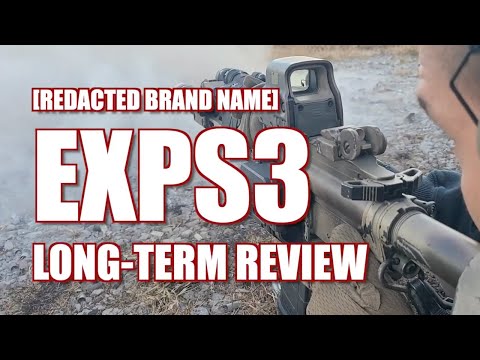
This comprehensive review of the EOTech EXPS3 holographic weapon sight highlights its advanced features, particularly its superior parallax control and versatile reticle design, making it ideal for offensive applications. The instructor emphasizes its effectiveness in various lighting conditions, including with night vision, and its ability to provide crucial data for dynamic shooting scenarios. While acknowledging its power requirements and potential drawbacks for rapid deployment in certain situations, the review positions the EXPS3 as a top-tier optic for skilled users who can leverage its minutiae for a tactical edge.
This video emphasizes the critical role of vision in accurate shooting, detailing how to rapidly acquire targets, use vision to guide body mechanics, and apply urgency. It also covers confirmation of the sight picture and the nuances of trigger control, including reset. A key focus is maintaining proper optic index to prevent parallax errors, especially with red dot sights, and the importance of understanding your specific zero point.
This video features Rex and Joel discussing the concept of parallax in firearms optics. While the exact context and demonstrated firearms are not provided, the discussion suggests an in-depth look at how parallax can affect aiming accuracy. The description also includes promotional links for Cole-Tac and Precision Rifle Network, offering discounts and affiliate information, indicating a potential focus on precision shooting and related gear.
This video discusses the utility of the EOTech EXPS3 optic, particularly in low-light conditions. It highlights the optic's minimal parallax and effective light transmission for reticle visibility. The speaker clarifies that 'night vision settings' on most optics are simply low brightness settings, and while the EXPS3 has a dedicated NV button, it acts as a hotkey to its lowest setting. The video emphasizes the advantage of the EXPS3's reticle size and illumination for target acquisition in darkness, even when dealing with muzzle flash or light pollution.
This video, titled "@mobilegamersunite parallax does not matter, especially for defensive purposes at close range...", discusses the relevance of parallax in firearm aiming, particularly for defensive scenarios at close distances. The title suggests a focus on practical application rather than theoretical accuracy, implying a discussion relevant to self-defense or tactical shooting contexts.
Gun Laws by State
Read firearms regulations for all 50 states + D.C.
Find Gun Dealers
Search licensed FFL dealers near you.