This video debunks the common claim of 'parallax-free' optics. It explains that any lens system involving light refraction will inherently have some parallax. The degree of parallax increases with higher magnification. While manufacturers can reduce parallax, it cannot be entirely eliminated. Parallax is defined as the apparent shift of a target relative to the reticle when the observer's eye position changes.
This video provides an expert overview of the Gideon Optics Mediator XL optic, presented by Johnny Q. It details the unique grid structure designed to reduce glare, its removability, and technical specifications including 10 brightness settings (8 daylight, 2 NV), motion sensing with auto-off, extended battery life (up to 50,000 hours), and a 3 MOA dot/68 MOA circle reticle. The demonstration covers live-fire performance and pricing with a discount code.
This guide details the practical field testing of the Vector Optics Continental 1-10x24 LPVO, emphasizing its performance in realistic scenarios beyond static range tests. Instruction from an experienced shooter highlights key evaluation criteria like optical clarity, eye relief challenges, and illumination effectiveness, providing actionable insights for users considering this optic for versatile applications.
This guide details how to identify and understand a subtle but critical issue in Low Power Variable Optics (LPVOs): image alignment or 'image shift' at 1x magnification. It explains how to differentiate this from true 'fish-eye' distortion, the importance of proper diopter adjustment, and how to test for this anomaly. The guide also touches upon the technical reasons behind image shift, often related to optical centering and turret adjustments, as explained by industry experts.
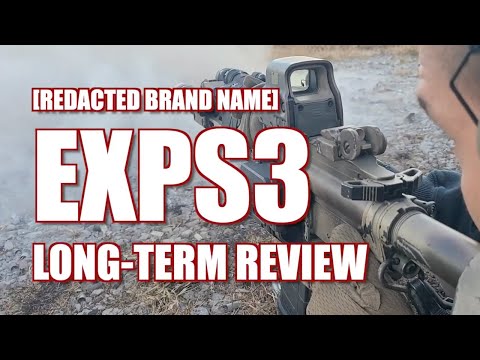
This comprehensive review of the EOTech EXPS3 holographic weapon sight highlights its advanced features, particularly its superior parallax control and versatile reticle design, making it ideal for offensive applications. The instructor emphasizes its effectiveness in various lighting conditions, including with night vision, and its ability to provide crucial data for dynamic shooting scenarios. While acknowledging its power requirements and potential drawbacks for rapid deployment in certain situations, the review positions the EXPS3 as a top-tier optic for skilled users who can leverage its minutiae for a tactical edge.
This video, titled 'New Meopta Scopes for 2025', focuses on upcoming optics from the manufacturer Meopta. The description includes the hashtags #meopta and #pewpew, indicating a firearm enthusiast audience interested in shooting accessories. The content is expected to cover new scope models planned for release in 2025, likely detailing features, specifications, and potential applications for hunters, sport shooters, or tactical users.
This video from Geauga Firearms Academy discusses red dot sight brightness settings, particularly for pistol-mounted optics. The instructor argues against relying on auto-adjust features, preferring manual control to ensure the reticle is always visible, even if slightly too bright. He emphasizes that in a self-defense scenario, a visible, albeit bright, dot is preferable to one that is too dim to acquire.
This YouTube Short addresses a common question among firearm enthusiasts: the difference between First Focal Plane (FFP) and Second Focal Plane (SFP) reticles in optics. While the description is minimal, the title clearly indicates a comparative or explanatory approach to these two distinct reticle designs used in scopes. This content is highly relevant to anyone looking to understand or choose rifle scopes for various shooting applications.
This video explains the differences between prism optics and red dot sights, focusing on their advantages and disadvantages for practical shooting. It highlights how prism optics can be beneficial for individuals with astigmatism due to their etched reticles and offers more generous eye relief than red dots. The discussion also covers durability, magnification options, and considerations for choosing between prisms, red dots, and LPVOs.
This video from 1st Shot Tactical provides an expert comparison between holographic sights (like EOTech) and red dot sights (like the Holosun 510C). It highlights that holographic sights use a 'fuzzier' reticle for target focus and are superior for night vision, while red dots offer a crisp, bright reticle. Both are presented as viable options, with holographic sights being the more expensive, specialized choice for NVG use.
This video analyzes reticle options specifically for turkey hunting shotguns. It highlights various reticle choices available for shotgun optics, aiming to help viewers make informed decisions for their turkey hunting setups. The content is geared towards shotgun hunters looking to optimize their firearm for this specific application.
This video presents a blind comparison of two LPVOs: the Monstrum Archangel and the Sig Sauer Tango-MSR, both 1-6x magnification. The host, identified as a specialized tactical gear reviewer from 1st Shot Tactical, challenges the notion that budget optics are always inferior by showcasing their performance side-by-side. The comparison focuses on reticle clarity and zoom capabilities.
Gun Laws by State
Read firearms regulations for all 50 states + D.C.
Find Gun Dealers
Search licensed FFL dealers near you.