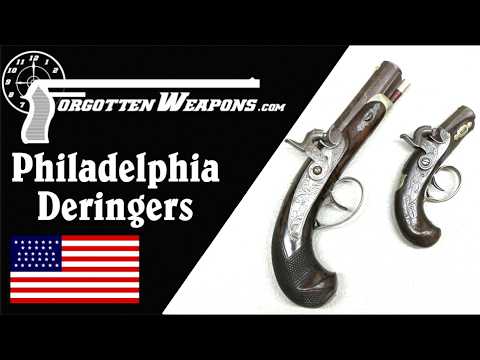
This video from Forgotten Weapons explores the history and technical aspects of Henry Deringer's percussion pocket pistols. Ian McCollum details Deringer's career, the transition from flintlock to percussion, and the design features that made these pistols popular defensive tools. The discussion covers their mechanical operation, common calibers and barrel lengths, and the significant impact of Deringer's brand, even leading to trademark infringement lawsuits over counterfeit models.
This video provides an in-depth look at a double-barrel percussion pistol from the Victorian era, manufactured by Joseph Riley. The expert highlights its features, including its .58 caliber bore, box lock action, and decorative elements. The discussion also touches upon its intended use as a self-defense or traveling pistol and the historical context of its maker, Joseph Riley, an Irish immigrant who became a prominent London gunmaker.
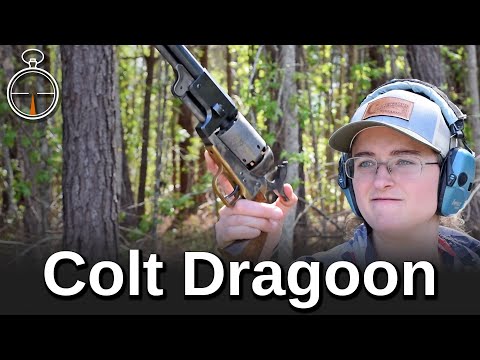
This guide details the loading and safety procedures for a Colt Dragoon reproduction, as demonstrated by Mae on C&Rsenal. It covers proper black powder loading, bullet seating, capping, and the use of safety notches. The video highlights improvements over the Colt Walker, such as a shorter barrel and cylinder, and a modified lever latch. Mae's high authority level and demonstration of proper technique provide valuable insights for users of this historical firearm reproduction.
This video showcases an antique 1800s gambling set, highlighting a single-shot percussion pistol with engraved steel finish and checkered wood grip. The set also includes traditional gambling accessories like dice, dominoes, and chips, presented within a vintage wooden box. The presentation focuses on the aesthetic and historical value of these antique items.
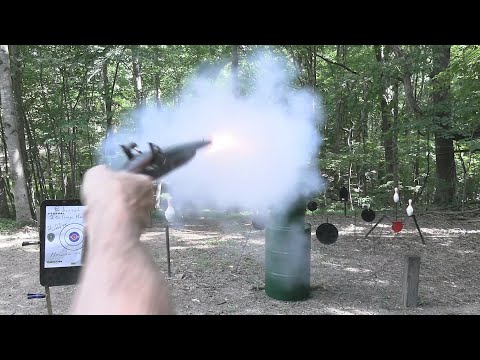
This video demonstrates the loading and firing of a Pedersoli Howda pistol, a double-barreled percussion firearm. The presenter, hickok45, showcases various loads, including birdshot and buck-and-ball, against targets like trash cans. He details the process of loading black powder, wads, and projectiles, emphasizing techniques for securing the loads, especially in the second barrel fired, to prevent shifting due to recoil. The video also touches upon the historical context and intended use of the Howda pistol as a powerful close-range firearm.
Jonathan Ferguson of the Royal Armouries examines a pair of highly unusual percussion pistols with steeply angled, near-vertical grips, often referred to as 'saw handle' grips. These designs, exemplified by the Vassalon brothers' work circa 1855, were driven by the need to accommodate a V-shaped mainspring within the grip, a design paralleled in modern revolvers. The pistols feature precise target sights and 13-groove rifling, suggesting a focus on accuracy, though their small size and short barrels limit their practical range for self-defense. The video also touches on the historical context of pistol design evolution and the potential refinishing of these rare examples.
This video details a pair of C. Lancaster percussion pocket pistols from circa 1850, highlighting their design, loading mechanism, and historical context. The pistols feature a turn-off barrel system for loading powder and ball, a flip-down trigger, and a percussion firing system. The presentation emphasizes their concealed carry nature and the accessories provided, including a powder flask, bullet mold, and a spanner that doubles as a nipple wrench. The unique casing suggests they may have been intended for a woman, offering a glimpse into historical personal defense.
This video from Brownells Gun Techs explores a pair of exquisite Jules Manceaux dueling pistols from 1843. The presentation-grade percussion pistols are heavily engraved and inlaid with gold, showcasing exceptional craftsmanship. The description highlights their historical significance, having been presented by King Louis Philippe to English naval hero Capt. Thomas Cochrane, the inspiration for Patrick O'Brian's 'Master and Commander' novels. The accompanying accessories, including the presentation box, nipple wrench, bullet mold, powder measure, and primer box, are equally elaborate, making the entire set a masterpiece of the gunmaker's art.
This video examines a Deringer Philadelphia percussion pistol from the 1850s-1860s, highlighting its historical significance as being similar to the firearm used by John Wilkes Booth to assassinate President Abraham Lincoln in 1865. The presenter, a firearms instructor, details the gun's construction, caliber, and distinguishing features like engraving and a pineapple motif, comparing it directly to known details of Booth's weapon. The discussion extends to the historical context of the assassination, including the original kidnapping plot and the subsequent assassination plan targeting multiple high-ranking officials.
This guide details the operation of the WW Marston Breechloading Pistol, a unique single-shot firearm from the early 1850s. It covers loading the specialized leather-base cartridge, capping the percussion system, and firing the weapon. The pistol's innovative breech mechanism and cartridge design are highlighted, offering a glimpse into early metallic cartridge development.
This guide details the loading and firing procedure for the US Model 1836 R. Johnson percussion pistol, a historical military firearm. It covers using black powder, patches, and a lead ball, emphasizing the unique swivel ramrod feature. The instruction comes from hickok45, a recognized expert in historical firearms testing, offering insights into its historical context and practical use.
This video features the Gun Talk crew recreating AC/DC's "Back in Black" using Springfield Armory XD(M) 9mm pistols as percussion instruments in place of a snare drum. Ryan Gresham plays the "drums" with the pistols, while Jace Crosby handles guitar and Jake Stone plays bass. The unique approach blends music and firearms in an entertaining way.
Gun Laws by State
Read firearms regulations for all 50 states + D.C.
Find Gun Dealers
Search licensed FFL dealers near you.