This video challenges the common perception of the .38 Special as underpowered by analyzing its performance in realistic, short-barreled snub-nose revolvers. It emphasizes that traditional ballistic testing from longer barrels doesn't reflect real-world carry and use. The discussion highlights how ammunition selection, particularly wadcutters and carefully chosen hollow-points, along with understanding recoil physics and hit probability, are crucial for effective .38 Special performance in defensive scenarios.
This video emphasizes the critical importance of understanding projectile behavior within a home defense context. It explains how standard interior walls offer minimal resistance to bullets, leading to over-penetration risks. The instructor strongly advocates for hollow-point ammunition due to its design for expansion and energy dump, significantly reducing the chance of striking unintended targets. Plus P ammunition is cautioned against for home defense if multiple people are present, due to its potential for increased penetration.
This video explores the resurgence of the .38 Special cartridge and revolvers, challenging the notion that they are obsolete. The presenter highlights the reliability, simplicity, and historical effectiveness of revolvers, particularly for self-defense and concealed carry, contrasting them with modern semi-automatic pistols. It details specific revolver models and modern .38 Special ammunition, including Plus P loads, that offer improved performance.
This video provides a comprehensive breakdown of ammunition, explaining its four core components: case, primer, powder, and projectile. It clarifies the meaning and limitations of caliber, highlighting critical differences between seemingly similar cartridges like .223 Remington and 5.56 NATO. The guide also details various bullet types (FMJ, JHP, Soft Point, Frangible, Ballistic Tip) and their applications, along with specialty rounds like +P and subsonic, emphasizing safe and informed ammunition selection based on firearm compatibility and intended use.
This video critiques Sig Sauer's business practices and offers a specific, high-volume test of their M17 pistol. The speaker, a Sergeant First Class in the US Army, expresses strong dissatisfaction with Sig Sauer's perceived unethical conduct and marketing strategies, particularly concerning their relationship with the Army Marksmanship Unit. He contrasts his own independent content creation with that of affiliated channels, proposing a 12,000-round test of the M17 with specific ammunition as his sole offer to the company.
This video provides a detailed ballistic gel test and review of Buffalo Bore .40 S&W +P 155 grain JHP ammunition. The instructor conducts velocity tests from both a full-size and compact Glock, analyzes terminal performance through a heavy clothing barrier and ballistic gel, and discusses projectile expansion, penetration, and energy transfer. The ammunition is praised for its high performance, exceeding expectations for the .40 S&W caliber.
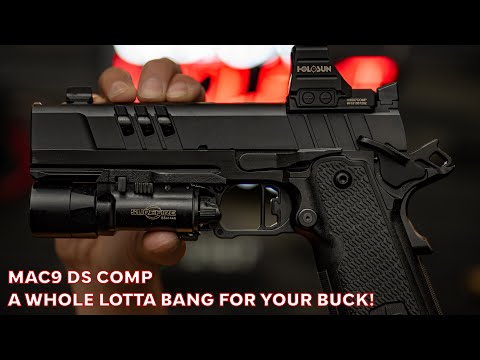
This review of the MAC 9 DS Comp by QVO Tactical highlights its value proposition in the 2011 market. While not matching the fit and finish of premium brands, it offers significant features for its price point. The review emphasizes the importance of using hotter ammunition (like 90-grain Plus P) to optimize the firearm's cycling speed and performance, especially with the comp. It also covers accuracy testing, shooting drills, and a detailed look at its features and potential upgrades.
This video outlines five essential characteristics for selecting a concealed carry pistol. Key considerations include compactness, affordability for training, lightweight construction (favoring polymer frames), compatibility with Plus P ammunition for increased energy, and overall reliability, with Glock and Kix being cited as examples of dependable brands.
This video from Civilian Tactical outlines five essential features for a concealed carry handgun: avoiding excessive bulk from accessories, affordability for training, lightweight design for comfort, compatibility with +P ammunition for increased energy, and paramount reliability. The instructor emphasizes that while features like red dots and lights are popular, they can compromise concealability, and highlights the importance of cost-effective ammunition for practice. Reliability, demonstrated by brands like Glock and Canik with thousands of rounds fired without issue, is presented as the most critical factor.
This guide from Geauga Firearms Academy explains essential ammunition concepts for new gun owners. It covers identifying firearm caliber, understanding bullet weight (grain), differentiating between training and self-defense rounds (hollow points), and the implications of case material (brass, aluminum, steel). The instructor emphasizes using quality factory ammunition and recommends replacing self-defense rounds annually.
This video conducts a ballistic gel test comparing Hornady's 9mm 138gr Backcountry Defense and Underwood's 9mm 147gr Hard Cast Plus P ammunition. The test measures velocity, penetration, and projectile integrity. The presenter, an experienced shooter, highlights the performance characteristics of each round for potential dangerous game defense scenarios, emphasizing penetration and lack of expansion.
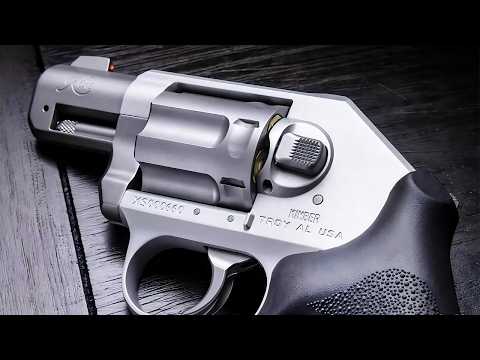
This video reviews five .38 Special revolvers suitable for concealed carry and self-defense in 2025. It highlights the Heritage Rosco for its affordability and reliability, the S&W Model 36 Classic for its iconic design and modern updates, the Kimber K6s for its lightweight build and capacity, the Colt Cobra for its stainless steel construction and balance, and the Taurus 850 for its simplicity and DAO operation. The presenter emphasizes manageable recoil, stopping power, and practice suitability of the .38 Special caliber.
Gun Laws by State
Read firearms regulations for all 50 states + D.C.
Find Gun Dealers
Search licensed FFL dealers near you.