This video debunks common myths in women's self-defense, emphasizing that there's no 'secret pill' or quick fix. Instructor Kim highlights that true self-defense requires a lifelong commitment to training and continuous skill development. The primary focus should be on cultivating a strong mindset, developing situational awareness, and avoiding dangerous situations altogether. For physical training, the video recommends seeking martial arts that are 'pressure tested' and proven effective against larger opponents, rather than those focused solely on point-based competition.
Boondock Ballistician critically analyzes claims of 'record-breaking' 5.56mm ammunition, particularly from Shell Tech and Badlands Munitions. The expert instructor debunks inflated velocity and pressure figures, emphasizing the dangers of misinformation for reloaders and highlighting that standard brass-cased ammunition can achieve similar velocities within safe pressure limits.
This video demonstrates the extreme danger of using modern smokeless gunpowder in a muzzleloader designed for black powder. Lead instructor Scott from Kentucky Ballistics, with expertise signaled by his specialized destructive testing, shows through a catastrophic failure that modern powders create pressures far exceeding the design limits of muzzleloaders. The experiment highlights critical firearm safety and the distinct properties of different propellant types.
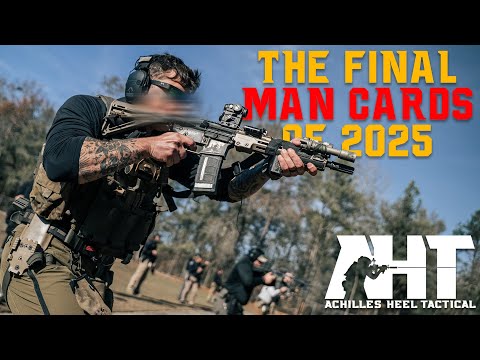
This video details the 'Man Card' drill, developed by Rick Crawley of Achilles Heel Tactical, to test shooter efficiency under pressure. The drill involves precise timing for pistol and rifle presentations from various ready states, culminating in a rifle-to-pistol transition. Achieving a 'Man Card' signifies a high level of performance on demand, with strict time limits and a C-size cardboard target. The video features demonstrations and student attempts, highlighting the difficulty and rarity of earning this qualification.
This guide details a grip testing protocol for handgun shooters, emphasizing consistent pressure and tension for predictable recoil management. Developed by a USPSA Grandmaster, it focuses on a 'pressure test' drill to ensure the grip remains stable during aggressive firing, leading to faster and more accurate follow-up shots.
This guide, informed by USPSA Grandmaster Mark Smith, details how to develop a robust firearm grip that remains consistent under pressure. It emphasizes grip as a dynamic element, crucial for sight return and recoil management, enabling faster follow-up shots. The guide outlines four pressure techniques and live-fire testing methods to build a durable grip suitable for competitive and tactical scenarios.
Ben Stoeger explains that 50 rounds per week is insufficient for actual skill development but can serve as a valuable tool for pressure testing existing training. He recommends using this limited ammunition to perform drills like 'El Presidente,' analyzing performance through video and observation, and then returning to dry fire for genuine skill improvement.
This video covers day four of an EFC Level 1 instructor course, focusing on weapon-based entanglement blocks. Participants practice moving in and out of space, weapon deflection, retention, knife defense, and drawing under duress. The training emphasizes earning draws during entanglements and utilizes Alien Gear holsters for weapon retention drills. The course is designed for officers to understand and teach these techniques.
This video explores the potential of modifying a 12-gauge Orion flare gun to fire a modified shotgun shell. The host, demonstrating experienced authority, details the safety features of the flare gun, specifically a chamber bump designed to prevent standard shotgun shell seating. The experiment involves preparing a shortened 12-gauge shell to bypass this safety mechanism and testing the primer's pressure compared to a flare primer. The results indicate significantly higher pressure and recoil than typical flare usage.
This guide details a knife defense technique from Rapido Realismo Kali, emphasizing an offensive mindset. The core principle is to 'foul' an attacker's draw by immediately pinning their weapon hand and striking before the knife is deployed. The technique focuses on controlling the weapon arm and transitioning to a takedown or full control, stressing the importance of pressure testing and an aggressive approach for effectiveness.
This expert analysis from Banana Ballistics compares the .277 Fury and .270 Winchester cartridges through rigorous testing. The .277 Fury, despite a shorter barrel, demonstrated competitive performance, though the .270 Winchester showed higher velocity and deeper penetration in some steel tests. The host highlights the .277 Fury's potential linked to its high-pressure steel-base variant.
This interview with Mark Serbu addresses the safety of the RN-50 firearm, particularly in light of an incident involving Scott from Kentucky Ballistics. The consensus points to a misloaded cartridge, likely using pistol powder in a 50 BMG case, leading to extreme over-pressurization (estimated at 190,000 PSI). Serbu explains that 50 BMG's normal pressure is around 55,000 PSI and discusses the difference in energy release between various propellants and explosives, emphasizing that impact loading from rapid-burn powders can be destructive.
Gun Laws by State
Read firearms regulations for all 50 states + D.C.
Find Gun Dealers
Search licensed FFL dealers near you.