This video provides an in-depth look at the TRW Low Maintenance Rifle (XLMR), an experimental firearm developed by ARPA in 1969. The rifle features a unique roller-locked, open-bolt design and was initially chambered for the 5.6mm XM216 flechette cartridge, aiming for high muzzle velocity and extended point-blank range. The presenter, Ian McCollum, details its unconventional side-mounted magazine and gas tube, its M60-derived components, and its disassembly process, highlighting its rarity as only six were manufactured.
This guide details the field stripping process for the CZ 482 pistol, a precursor to the vz.52. The video, presented by Ian McCollum of Forgotten Weapons, provides an expert-level demonstration of the unique roller-locked action and its disassembly. The CZ 482 is noted for its high-quality machining and finish compared to its successor.
This entry details the CZ Vz. 52 pistol's near adoption by Switzerland, as explained by firearms expert Ian McCollum. The Vz. 52 featured a roller-locked, single-action mechanism that appealed to Swiss design sensibilities, but its double-action capability was a point of contention. Ultimately, political shifts in Czechoslovakia following the communist takeover made procurement from the Eastern Bloc unfeasible for Western-aligned Switzerland.
This video provides a practical demonstration of shooting four classic Combloc pistols: the Makarov, CZ 70, CZ 52, and TT Tokarev. The instructor, exhibiting high proficiency, showcases safe firearm handling and target engagement at an outdoor range. The demonstrations highlight the distinct operating mechanisms and calibers of each firearm, offering insights into their historical significance and performance characteristics.
This discussion delves into the growing popularity and utility of pistol caliber carbines (PCCs) for home defense and recreational shooting. Experts highlight their advantages in reduced recoil, cost-effectiveness with 9mm ammunition, and ease of use compared to traditional rifles. The Springfield Armory Kuna is examined as a notable new entry in the PCC market, featuring a roller-locked system known for reliability, though its complex disassembly is noted. The conversation also touches on the practical accuracy requirements for self-defense scenarios, emphasizing that minute-of-bad-guy accuracy is often sufficient.
This video showcases the MG 42 machine gun firing yellow tracer rounds from various angles, including over-the-shoulder, side profile, downrange, and first-person views. It highlights the weapon's high rate of fire (1,200–1,500 rounds/min) and the visual impact of its tracer ammunition on targets like appliances and steel silhouettes. The footage emphasizes the weapon's action and the distinct visual signature of tracer rounds in flight.
This video showcases the impressive firepower of a twin MG 42 machine gun mount, demonstrating its high rate of fire and mechanical operation. The speaker, exhibiting high authority and expertise in NFA-regulated firearms, highlights the dual-gun setup's capabilities. The content also includes a political endorsement for Bernie Moreno, emphasizing support for the Second Amendment.
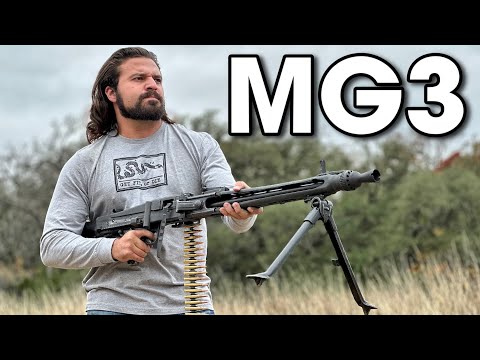
This guide details the operational procedure for the MG3 machine gun, as demonstrated by Pew Pew Tactical. It covers essential steps from shouldering and charging the weapon to loading the belt-fed ammunition and preparing for full-auto fire. The instruction emphasizes proper technique for safety and effective operation, highlighting the importance of the bipod for stability and correct manual of arms.
This expert-level entry details the live fire demonstration of an MG 42 machine gun, emphasizing its recoil-operated, roller-locked action and belt-fed mechanism. The video showcases the visual impact of tracer rounds in both real-time and slow motion, offering insights into the weapon's high rate of fire (approx. 1,200–1,500 rounds/min) and the mechanics of its operation. The demonstration highlights the use of specialized equipment and tracer ammunition, indicative of advanced firearms handling.
This guide details the field stripping and operational overview of the Heckler & Koch MG3 machine gun, presented by Brandon Herrera. It covers the disassembly process, including removing the stock, recoil spring, and bolt carrier group. The guide also touches upon the MG3's roller-locked, short recoil operating system, its quick-change barrel feature, and its belt-fed mechanism. Advanced users will find the detailed breakdown and operational insights valuable.
This guide details the field stripping and examination of a rare 9x19mm Parabellum prototype vz. 70 pistol, a variant of the Czech vz. 52. Expert Ian McCollum highlights the roller-locked action, specific modifications for the 9mm cartridge like a longer ejector, and the historical context of its development for export. The guide emphasizes safety during disassembly and provides insights into the mechanical differences from the standard vz. 52.
This video provides a concise, expert-level overview of the MG42, famously dubbed 'Hitler's Buzzsaw.' The host, identified as a knowledgeable firearms collector and reviewer, demonstrates key operational features, including charging, trigger pull, and the quick-change barrel system. Technical details such as its 8mm Mauser caliber, 50-round belt capacity, and stamped steel construction are highlighted, along with its design lineage and inspiration for later firearms like the M60.
Gun Laws by State
Read firearms regulations for all 50 states + D.C.
Find Gun Dealers
Search licensed FFL dealers near you.