This video details the fascinating acquisition of the W.W. Greener company and its assets by Val Forgett of Navy Arms. It highlights the strategic business dealings, the discovery of hidden assets like the Greener Police Gun, and the acquisition of unique historical firearms such as a WWI sniper variant of the .280 Ross rifle. The narrative emphasizes the historical context of surplus firearms and the shrewd business acumen involved in acquiring a storied gunmaker's legacy.
This entry details the Huot Automatic Rifle, a conversion of the Ross straight-pull rifle into an automatic machine gun. Expertly explained by Ian McCollum, it highlights the unique 25-round ratchet-driven drum magazine and the gas-operated cycling mechanism. The video also covers the innovative venturi-effect cooling system integrated into the barrel shroud.
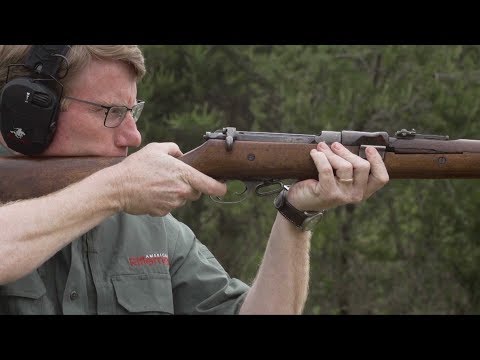
This "I Have This Old Gun" segment from American Rifleman Television explores the history and evolution of the Canadian Ross Rifle, specifically the Mk III model. The video details Canada's desire for its own distinct military equipment in the early 20th century, leading to the development of the Ross straight-pull bolt-action rifle. It highlights inventor Sir Charles Ross's character, early design flaws, and improvements made by the Mk III. The segment also discusses the rifle's challenges during trench warfare in World War I due to mud, ultimately leading to its replacement by the Lee-Enfield SMLE. The video concludes by noting the rifle's eventual retirement from Canadian service.
This video demonstrates how the bolt of a Ross Rifle can be incorrectly reassembled, leading to a dangerous unsecured breech. The presenter shows that by rotating the bolt head less than a quarter turn during reassembly, the locking lugs will not engage properly. This allows the bolt to be closed and the safety to be set to a position that would normally secure the action, yet the breech remains unsecured and can be opened without an unlocking cycle, posing a significant risk of firing out of battery.
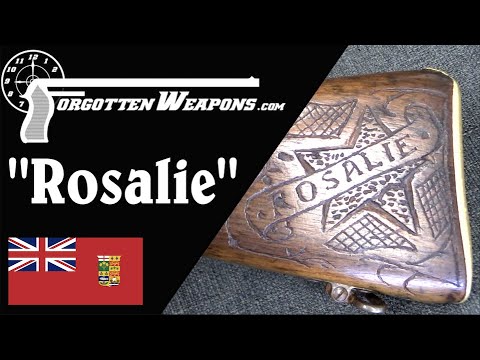
This entry details the unique story of 'Rosalie,' a trench art SMLE rifle. The rifle features extensive carvings by soldier Henri Le Car, documenting his WWI experiences and unit history. Expert Ian McCollum highlights the rifle's improbable survival and eventual reunion with its creator, showcasing it as a rare piece of military history and personal artistry.
This entry details the historical use of a Martello Tower in Quebec City as a backstop for testing Ross Rifles by Sir Charles Ross. The video highlights patched bullet holes in the tower as physical evidence of this practice, stemming from a dispute over a water tower. The content offers insights into the personality of Sir Charles Ross and the historical context of firearms development in Canada.
This video reviews the book 'Arms & Accoutrements of the Mounted Police 1873-1973' by Phillips and Fletcher. It highlights the historical context of the Northwest Mounted Police, their transition to the RCMP, and the firearms and equipment they utilized, drawing parallels to the American Wild West. The book covers a wide range of items from revolvers and rifles to machine guns, artillery, and personal accoutrements.
This video reviews 'The Ross Rifle Story' by Chadwick Phillips and Dupuis, a comprehensive but poorly organized reference for collectors. It details the history of the Ross rifle, its development by Sir Charles Ross in Canada around the turn of the century, its adoption by Canadian troops for WWI, and its eventual withdrawal from combat in 1916 due to technical and political issues. The book covers three major patterns of the Ross rifle (Mark I, Mark II, Mark III) and commercial sporting versions, though its information is difficult to access due to its structure.
This video offers an in-depth historical exploration of the Canadian-made Ross Rifle, a significant firearm in Canadian military history. The content focuses on the origins and development of this particular rifle, providing viewers with detailed insights into its background and significance.
This Q&A episode from C&Rsenal addresses numerous viewer questions about World War I firearms. Key topics include the impact of designers like Ferdinand von Mannlicher on modern firearms, the prevalence of manually operated rapid-fire weapons, the issuance of ammunition in clips versus loose, and which rifles are considered to have overstayed their utility. The discussion also delves into the reasons behind the slow development of automatic arms during WWI, the design of hypothetical WWI rifles, the effectiveness of machine guns like the Maxim, and the prevalence of personal weapons on the battlefield. The hosts also touch upon manufacturing capabilities, the rarity of emergency use rifles in WWI compared to WWII, and the challenges of filming and collecting historical firearms.
This video provides an in-depth look at the Canadian Ross Rifle Mk III, a bolt-action rifle notable for its straight-pull mechanism and use of stripper clips. Part of the "WWI Primer" series, the content focuses on the operational mechanics and historical context of this firearm. The description also includes links to creator support platforms like Patreon and SubscribeStar, as well as credits for music and design.
This video reviews Paul Scarlata's book 'Mannlicher Military Rifles,' offering insights into the design and history of Mannlicher firearms, particularly the Austrian M95 carbine. The book covers biographical information on Ferdinand Ritter von Mannlicher, early rifle designs, military production models, and comparisons with other straight-pull rifles. It also touches on the availability and cost of M95 carbines in the US and the challenges of sourcing ammunition.
Gun Laws by State
Read firearms regulations for all 50 states + D.C.
Find Gun Dealers
Search licensed FFL dealers near you.