This analysis of a fight at Popeye's highlights the extreme dangers of knife combat. The video emphasizes that knives are not reliable defensive tools due to their limitations in stopping determined attackers and the potential for unnoticed injuries. It details defensive techniques against a knife, including limb control and disarmament, while strongly advocating for firearms as a superior self-defense option when legally permissible. The discussion also touches on the legal ramifications of using force and the importance of recognizing the totality of circumstances in a violent encounter.
This video analyzes a self-defense incident where a clerk successfully defended himself against an armed robber. It highlights the importance of situational awareness, the risks of staged firearms, and the legal justification for using deadly force. The analysis emphasizes that while the clerk won the fight, luck played a significant role due to factors like the firearm's placement and the robber's actions.
This video demonstrates a close-quarters combat technique where a knife is used as a secondary weapon when an adversary attempts to gain control of a pistol. The instructor emphasizes drawing a knife instead of a pistol when a firearm is compromised at close range, highlighting the knife's advantage in retention and its ability to create space for re-engagement with a firearm.
This video analyzes a pharmacy robbery in Brazil where the clerk used a chair as an environmental weapon to deter an armed assailant. It emphasizes the importance of situational awareness in transitional spaces and the tactical considerations when facing a knife threat versus a firearm. The analysis highlights the effectiveness of improvised weapons when no other options are available, while also cautioning against pursuing fleeing suspects.
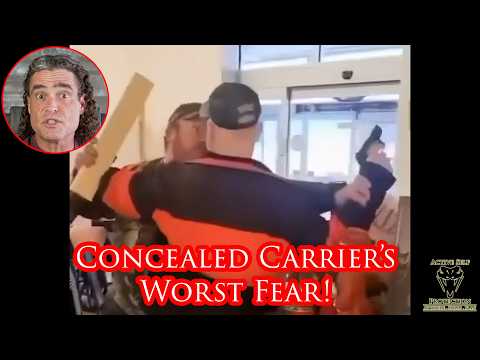
This video analyzes a physical altercation involving a firearm and a two-by-four, emphasizing the critical importance of grappling skills in self-defense scenarios where firearms may become ineffective. It highlights techniques for defending against an armed attacker at close range, including controlling the weapon and dominating the attacker's arm. The analysis suggests that even basic grappling proficiency can significantly increase survival chances in such volatile situations.
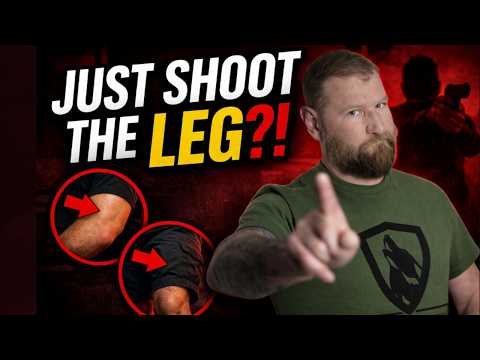
This video from Geauga Firearms Academy debunks the myth of shooting specific body parts like the hand or leg to stop a threat. Instructor Kim explains that the primary goal of using deadly force is to stop the threat, not to kill. He emphasizes that under extreme stress, aiming for small targets like hands or legs is ineffective due to reduced accuracy and the presence of vital arteries in those areas. The instruction highlights that center mass is the recommended target area because it's the largest and most accessible under duress, a principle used by law enforcement and military. The video also stresses the importance of de-escalation and using alternative, less-lethal methods if available before resorting to deadly force.
This video debunks five dangerous firearm myths prevalent in social media and general discourse. It explains why warning shots and shooting to wound are ineffective and potentially lethal mistakes. The instructor also clarifies that caliber size isn't always paramount, people don't always drop when shot, and one should train to perform at their worst under stress.
This video debunks common, detrimental firearm advice, emphasizing that simply shooting more does not guarantee improvement without proper instruction. It highlights the dangers of 'shoot to wound' and 'warning shots,' stressing that effective self-defense requires neutralizing threats. The importance of concealed carry insurance and maintaining situational awareness is underscored, alongside practical advice on firearm selection and preparedness beyond just the weapon itself.
This video, featuring Chief Instructor Ernie Medina of Tap Rack Bang, provides expert tactical guidance on how to stack the odds in your favor during a gunfight. Medina emphasizes the critical importance of recognizing pre-attack signals for early reaction and repositioning. He details the difference between cover and concealment, using examples like sand-filled barrels versus empty ones, and stresses the advantage of supported shooting stances for accuracy at distance, citing the example of Elijah Dickens in the Indiana Mall shooting.
This video from Tactical Rifleman demonstrates how bullets interact with a car hood, emphasizing unpredictable ricochet and deflection. The expert instructor highlights that a car hood is not a reliable shooting platform and rounds fired at an angle will deflect, potentially missing targets behind the vehicle. The demonstration shows that even a target placed a few feet behind the car was not hit by deflected rounds.
This video critiques a specific self-defense maneuver where a firearm is pinned against the chest by an attacker. The speaker, demonstrating experienced authority, explains the risky 'disengage the slide' technique, pushing the barrel back towards the aggressor. However, he strongly advises against this method, stating it's 'bold' and relies on the attacker's inaction, and emphasizes that 'better ways' exist to escape such a dangerous situation.
This video demonstrates a self-defense scenario where the presenter, SHORTSHOT TONY, implies the use of a handgun, possibly a Sig Sauer P320, equipped with a red dot optic. He highlights the importance of being prepared, mentioning his reliance on AMMO² for ammunition stockpiling. The content touches on personal safety and preparedness in potentially dangerous situations.
Gun Laws by State
Read firearms regulations for all 50 states + D.C.
Find Gun Dealers
Search licensed FFL dealers near you.