This YouTube video aims to answer a specific and technical question within the firearms community: 'How Hot Can A Suppressor Get?'. The content will likely explore the thermal properties of firearm suppressors, potentially discussing factors that influence temperature buildup, heat dissipation, and the effects of sustained firing. While the description is minimal, the title indicates a focus on practical knowledge for firearm owners and enthusiasts who utilize suppressors.
This video explores the visual phenomenon of bullet vapor trails, explaining their formation due to rapid air displacement and moisture condensation. It provides a unique perspective by showcasing the shot from both the shooter's over-the-shoulder view and the target's viewpoint, including a staged hit. The content aims to answer the question of whether these trails are visible from different angles at a 500-yard distance, offering insights into bullet physics and long-range shooting.
This video explores the differences between subsonic and supersonic ammunition, a crucial topic for firearm enthusiasts. While no specific firearms or calibers are explicitly mentioned in the provided title and description, the video's focus on ammunition types strongly suggests a comparison and explanation of their ballistic properties. This content is highly relevant for anyone interested in understanding ammunition performance, potentially impacting areas like shooting dynamics, sound suppression, and terminal ballistics.
This video from Iraqveteran8888 tackles the common question of whether bullets fly straight. Eric aims to provide clarity on the projectile's trajectory. The description also includes various links to the creator's Amazon store, Patreon, merchandise, and social media channels, along with standard disclaimers regarding responsible firearm use and legal compliance.
This video from the VSO Gun Channel explores the science behind changes in firearm accuracy and how they can affect the point of impact. As an educational resource, VSO focuses on responsible gun ownership and safety, providing objective content based on testing and evaluation. The description emphasizes that VSO is not in the business of selling firearms but rather serves as an independent research and development consulting service. The content aims to offer common-sense knowledge for viewers, particularly those potentially influenced by societal breakdowns.
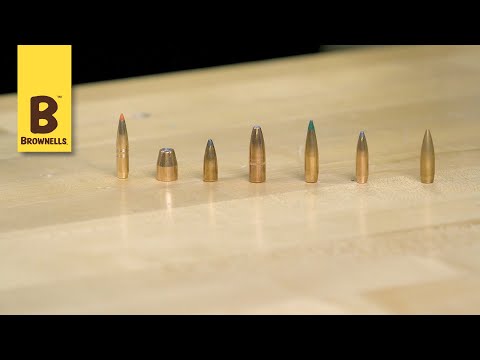
This video from Brownells Gun Techs explains the concept of Ballistic Coefficient (BC), a crucial factor in understanding bullet performance, especially for long-range shooting. Caleb and Steve detail what BC represents – a bullet's ability to overcome drag and wind resistance – and how it's typically expressed as a decimal less than one. They highlight that a higher BC number indicates a more efficient bullet that flies flatter and is less affected by external forces. The explanation includes practical examples, contrasting the BC of a long, narrow target bullet with a short, squat .45 ACP round. The video emphasizes BC's importance for distance shooting while noting it's less critical for close-range engagements, with Caleb offering insights into why a high BC bullet isn't always the optimal choice.
This video demonstrates a method for creating velocity versus charge weight graphs using Google Sheets. The creator explains their process for load development, which is a crucial aspect of precision shooting and handloading for firearms enthusiasts. The focus is on data visualization to optimize ammunition performance.
You've reached the end! 7 videos loaded.
Gun Laws by State
Read firearms regulations for all 50 states + D.C.
Find Gun Dealers
Search licensed FFL dealers near you.