This video critiques AI-generated content regarding firearms, highlighting inaccuracies in explanations of vertical grips, pistol optics, and short-barreled shotguns. The presenter, with apparent expertise in firearms, corrects the AI's misconceptions about weapon handling, ballistics, and legal regulations. Key takeaways include the reasons for reduced vertical grip use on modern AR platforms due to evolving grip techniques, the actual reasons police departments may not issue red dots, and the physics behind bullet trajectory and shotgun performance.
This video highlights critical firearm safety failures and explains the concept of 'height over bore.' It demonstrates how the difference in height between a firearm's optic and its barrel affects bullet impact, especially at close ranges. The content emphasizes the importance of understanding this principle and adhering to the four fundamental rules of gun safety to prevent accidents.
This video announces Kaya's addition to the TFBTV team, highlighting his extensive background in law enforcement, including roles as a police officer, Illinois State Trooper, CSI, and FBI Special Agent. Kaya also shares his transition into the firearms industry and his plans for a dedicated channel focusing on firearm testing, training, and even automotive content, leveraging his diverse expertise.
This expert guide details a test to determine the precision of shooting through a vehicle windshield. It covers the methodology for testing both hollow point and FMJ ammunition, highlighting the significant deflection observed with hollow points and the improved accuracy with FMJ rounds. The instruction emphasizes safe firearm handling and awareness of potential hazards like glass dust.
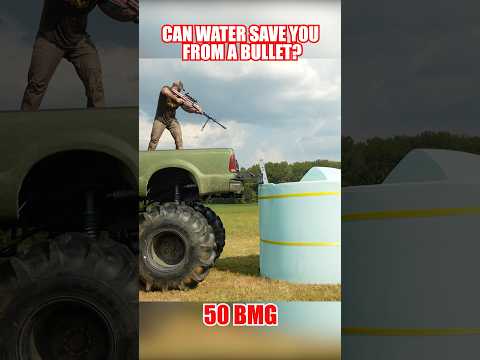
This video tests the myth of water being bulletproof by firing various firearms, from 9mm handguns to a .50 BMG rifle, into a water tank. Results show that even high-powered rounds like the .50 BMG are significantly slowed or stopped by water, failing to penetrate to the target. The tests demonstrate water's effectiveness in dissipating projectile energy.
This video debunks the 'bullet rise' fallacy, explaining that bullets do not rise due to aerodynamic lift. Instead, they travel in a straight line until gravity pulls them down. The instructor emphasizes that for typical self-defense distances, factors like Earth's curvature are immeasurable and irrelevant. The focus should be on windage adjustments, as most handguns lack elevation adjustment.
This video emphasizes the critical importance of safe firearm handling, particularly during dynamic shooting scenarios. It highlights that competency in manipulations is as vital as marksmanship to prevent self-inflicted injuries. The instructor stresses treating every round as potentially armor-piercing, considering what lies beyond the target to avoid unintended consequences.
This video debunks claims made by Candace Owens regarding the firearm used in Charlie Kirk's death. The speaker, acting as a firearms instructor and SEO strategist, explains the differences between death certificates and autopsy reports, emphasizing that death certificates do not typically list specific firearms or calibers. The video also addresses the complexities of bullet trajectory, explaining how factors like tissue, bone, and fragmentation can alter a bullet's path, making simplistic claims about "seven necks" inaccurate. It highlights that autopsy reports are sealed during active investigations and that hospital staff are not forensic investigators.
This live Q&A session from Paramount Tactical's Dangerous Liberty podcast delves into the security aspects and ballistic analysis surrounding an incident involving Charlie Kirk. The discussion debunks conspiracy theories, analyzes the shooter's line of sight and bullet trajectory, and explores the effectiveness of various ammunition types and body armor. The host also touches on the importance of self-reliance and preparedness, highlighting EDC items.
This video demonstrates an experimental technique for attempting to curve a .50 BMG projectile through custom-bent galvanized steel pipes using a Serbu RN50 rifle. The experiment highlights the immense power of the .50 BMG round, showing a pipe rupture on a sharp bend and a successful navigation of a more gradual curve. The presenter, Edwin Sarkissian, showcases proficient handling of high-caliber firearms and an understanding of breech-loading mechanics, emphasizing safety with proper protection and remote firing.
This episode of Dangerous Liberty Podcast features a deep dive into the Charlie Kirk shooting incident, analyzing various theories and evidence. Hosts Gary and Marcus discuss ballistics, muzzle flash, audio triangulation, and historical government programs like MK Ultra to explore potential patterns of deception and manipulation. They critically examine claims made by 'Range Day Bro' and other online analyses, emphasizing the importance of rigorous investigation and avoiding confirmation bias.
This episode of Dangerous Liberty features a detailed discussion with Zeb Boykin analyzing the shooting incident involving Charlie Kirk. The conversation delves into ballistics, potential shooter locations, the physics of bullet trajectories, and the plausibility of various theories including body armor, muzzle flashes, and specialized weapon systems. The speakers emphasize critical thinking and evidence-based analysis over speculation, highlighting the complexities of forensic investigation and the challenges of discerning truth from misinformation.
Gun Laws by State
Read firearms regulations for all 50 states + D.C.
Find Gun Dealers
Search licensed FFL dealers near you.