This video breaks down various self-defense ammunition types, moving beyond traditional hollow points. It details the pros and cons of frangible bullets, EFMJ, JSP, JHP, SJHP, lead semi-wadcutter hollow points, ballistic tips, solid copper hollow points, and fluid transfer monolithic (FTM) bullets. The discussion emphasizes terminal performance, penetration, expansion characteristics, and suitability for different self-defense scenarios.
This video from Farewell Firearms Training tests the barrier-blind capabilities of G9 5.56 54-grain solid copper hollow-point ammunition against standard 55-grain FMJ rounds when fired through a car windshield. The test demonstrates that standard FMJ rounds fragment significantly upon impact with glass, leading to poor terminal ballistics, while the G9 solid copper rounds largely maintain their integrity, suggesting superior performance in barrier penetration scenarios.
This video details a ballistics test of Steinel 185-grain solid copper hollow-point .45 ACP ammunition fired from two 1911 pistols: a Taurus Commander with a 4.25-inch barrel and a Rock Island Armory with a 5-inch barrel. The test measured velocity, gel penetration, and projectile expansion, comparing the performance between the two barrel lengths. The presenter, experienced in ammunition testing, provides insights into the ammunition's performance relative to advertised specifications and its effectiveness.
This video details a ballistics gel test of Steinel 380 ACP 80-grain solid copper hollow-point ammunition fired from a Ruger LCP MAX (2.8-inch barrel) and an M&P Shield EZ (3.5-inch barrel). The test highlights significant bullet expansion but limited penetration, falling short of FBI standards. A critical safety incident involving a squib load from the Steinel ammunition is also documented, emphasizing the potential dangers of ammunition malfunctions.
This ballistic gel test compares Super Vel 9mm +P 115-grain Jacketed Hollow Point (JHP) and Solid Copper Hollow Point (SCHP) ammunition. While both rounds expanded well, the SCHP demonstrated superior penetration and a more consistent wound channel. The JHP achieved 10.25-10.375 inches of penetration, while the SCHP reached 13 inches. Both projectiles expanded significantly, with the JHP measuring 5/8 inch and the SCHP measuring 3/4 inch in diameter.
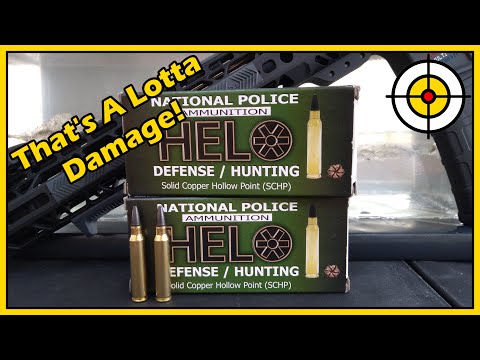
This video details a ballistic gel test of National Police Ammunition's .223 Remington 62-grain Helo rounds. The test compares performance from a 16.5-inch and a 10.5-inch AR-15 barrel, measuring velocity with a chronograph and observing bullet expansion and penetration in ballistic gel. The instructor highlights the solid copper construction and hollow point design, noting their effectiveness in creating significant wound channels.
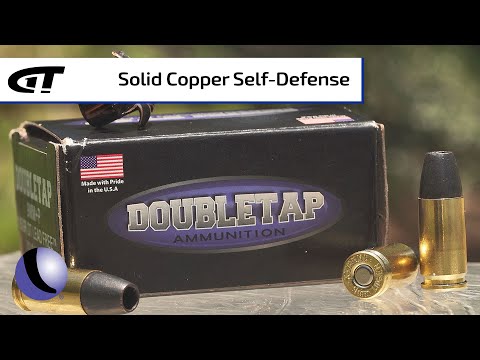
This Guns & Gear episode features DoubleTap Ammunition's solid-copper hollow point defensive loads. The video highlights how these rounds are designed to expand effectively while preventing over-penetration, making them suitable for defensive use. It also promotes subscribing to Gun Talk for more content and details on their various platforms.
This video by Kit Badger explains the fundamental differences between various types of ammunition, focusing on their intended applications. It differentiates between 'ball' or full metal jacket (FMJ) ammunition, ideal for training due to its lower cost and durability, and hollow point ammunition, designed for defensive use. Hollow points are further categorized into internal and external types, both engineered to expand upon impact, creating larger wound channels and imparting more kinetic energy to stop a threat while minimizing over-penetration. The instructor emphasizes choosing ammunition based on purpose, recommending reputable manufacturers for reliability and safety.
Andrew Betts of AR15.com provides an expert guide to selecting the top 5 home defense loads for .223/5.56mm firearms. The guide emphasizes reliability, adequate penetration (minimum 12 inches), and effective tissue disruption through expansion or fragmentation. Betts details specific ammunition types, from budget-friendly Russian options to premium bonded soft points, offering data-driven insights based on ballistic gel testing.
This expert analysis from TFB TV details the performance of the Asym .45 Auto 185gr TAC-XP solid copper hollow point ammunition. Through rigorous ballistic gel and heavy clothing testing, the ammunition demonstrated excellent penetration, consistent expansion, and 100% weight retention. The test, conducted using a Springfield Armory XD-45, highlights the round's potential for self-defense applications, with a professional assessment of its terminal ballistics.
This review tests Prograde's .45 Auto 185 gr TAC-XP solid copper hollow point ammunition fired from a standard 1911 A1. The test involved shooting into ballistic gel and through four layers of denim to simulate heavy clothing. The ammunition demonstrated excellent performance, achieving good penetration, perfect weight retention, and excellent expansion, exceeding FBI minimum standards.
Ed Combmes of Concealed Carry Magazine reviews the PHD defensive cartridge from Cutting Edge Bullets, designed for micro polymer frame .380 ACP pistols like the Ruger LCP. The video highlights the ammunition's solid copper construction, designed to mimic a jacketed hollow point with four cuts that create 'petals' upon impact. Testing in an FBI block demonstrated significant wound channel disruption and approximately 12 inches of penetration from the base projectile, with detached petals creating secondary wound channels.
Gun Laws by State
Read firearms regulations for all 50 states + D.C.
Find Gun Dealers
Search licensed FFL dealers near you.