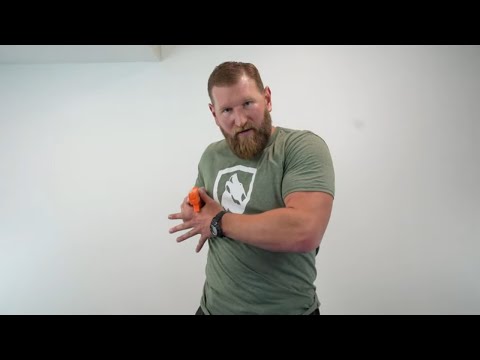
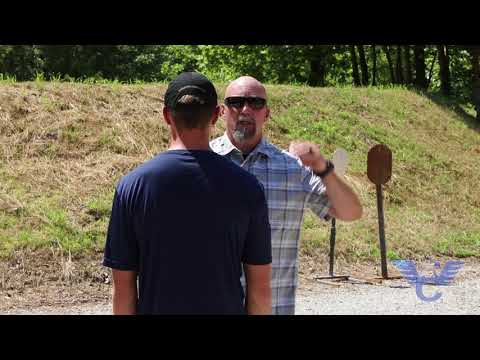
This video details a real-world self-defense scenario where a USCCA member intervened in a kidnapping attempt. The member, Nick, demonstrated tactical awareness and firearm proficiency by performing a 'slow draw' from cover and issuing commands. The incident escalated to a deadly force confrontation, highlighting the critical importance of preparedness and decisive action in life-threatening situations.
This video demonstrates a technique for safely drawing and deploying a pistol from a truck bed dwelling, emphasizing situational awareness and proper body positioning to avoid self-injury. The instructor highlights the importance of a security holster with a grip lock for quick access and safe storage. Key techniques include drawing the firearm without pointing it at oneself, adopting a stable shooting stance by pulling knees up, and safe re-holstering procedures.
This video details the manufacturing process of a QVO Tactical pocket holster for the S&W Bodyguard 2.0, showcasing techniques from Kydex forming to 3D printing of retention components. Roger Barrera, owner of QVO Tactical, demonstrates the full workflow and a live-fire draw from a pocket, highlighting the effectiveness of the 3D printed pocket hook for secure carry. The instruction is professional and authoritative, reflecting deep expertise in holster design and production.
This video from Active Self Protection analyzes a self-defense incident where a father successfully defended his family against armed robbers. Hosts John Correia and Stephannie Weidner, experts in self-defense, break down the tactical decisions made by the defender, emphasizing the importance of being armed, situational awareness in transitional spaces, and employing techniques like purposeful compliance and visual barriers for a safe firearm draw. The analysis also covers the legal and tactical considerations of engaging fleeing suspects and the necessity of proficiency at various distances.
This video breaks down the nuances of a defensive firearm draw, emphasizing its critical differences from competitive shooting. The instructor, Neil from Dragon Farms Academy, highlights the importance of firearm retention, situational awareness, and the ability to draw with one hand if necessary. He advises against common drawing errors like 'fishing' and 'bowling', advocating for a more efficient and controlled method that prioritizes keeping the weapon secure.
This video, featuring criminal defense attorney Tom Grieve, breaks down a self-defense scenario using surveillance footage. It emphasizes the critical importance of timing and tactical advantage when deciding to engage a threat. The discussion covers drawing and firing from compromised positions, the pros and cons of appendix carry, and the necessity of extensive training to handle real-world, unconventional situations effectively.
This video emphasizes the critical importance of 'perfect practice' when training for self-defense with a knife. It highlights common mistakes like ingraining incorrect movements through repetitive, flawed practice. The instruction stresses the need for external observation, focusing on a direct, linear draw, and prioritizing efficient motion over speed. The use of training partners is strongly recommended to identify and correct errors before they become ingrained habits, ultimately ensuring readiness in a critical situation.
This video analyzes a self-defense incident where victims successfully counter-ambushed armed robbers. It highlights the importance of situational awareness, particularly regarding motorcycle threats, and demonstrates tactical techniques like weapon retention and concealed draws. The analysis is presented by John Correia of Active Self Protection, emphasizing evidence-based defensive strategies.
Mike Ccleaner, a member of Team Wilson Combat, demonstrates a critical tactical technique for drawing a handgun while moving off-line around another person. The method emphasizes maintaining control of your muzzle direction and the individual's movement to prevent accidental injury. Key principles include using a clearing hand to manage the person's space and body, and adjusting the draw mechanics based on the threat's direction to avoid self-coverage.
This video from Active Self Protection analyzes a self-defense incident where an off-duty officer successfully deters ATM muggers. Instructor John Correia highlights the importance of situational awareness, tactical timing, and proper gear readiness. The analysis also provides a critique of the officer's firearm draw and detention technique, offering valuable lessons for armed citizens.
This guide details safe firearm drawing techniques from a vehicle's driver's seat, addressing two scenarios: immediate engagement of a close threat and exiting the vehicle with weapon drawn. Key principles include maintaining muzzle discipline in confined spaces, clearing the seat belt before exiting, and using the steering wheel for leverage. The instruction emphasizes a consistent drawing method to avoid flagging oneself or passengers.
This video details self-defense strategies for individuals with mobility impairments, specifically wheelchair users, as demonstrated by Tommy Carnline and instructed by Wes Doss, Ph.D. It covers scenario-based training using Simunition, live-fire range practice focusing on adapted drawing techniques, and highlights essential gear for personal defense. The instruction emphasizes superior tactics and situational awareness to compensate for physical limitations.
You've reached the end! 12 videos loaded.
Gun Laws by State
Read firearms regulations for all 50 states + D.C.
Find Gun Dealers
Search licensed FFL dealers near you.